5-Fluorouracil → HCID 11813238, compound
Reaction equation

[F:1][C:2]1[C:3](=[O:9])[NH:4][C:5](=[O:8])[NH:6][CH:7]=1.C[Si](C)(C)N[Si](C)(C)C.S([O-])([O-])(=O)=O.[NH4+].[NH4+].C(O[CH:30]1[O:47][C@@H:46]([CH2:48][O:49][C:50](=[O:57])[C:51]2[CH:56]=[CH:55][CH:54]=[CH:53][CH:52]=2)[C@@H:36]([O:37][C:38](=[O:45])[C:39]2[CH:44]=[CH:43][CH:42]=[CH:41][CH:40]=2)[C@@H:31]1[O:32][C:33](=[O:35])[CH3:34])(=O)C.FC(F)(F)S(O[Si](C)(C)C)(=O)=O>ClCCCl.C(Cl)(Cl)Cl.C(Cl)Cl.CO>[C:33]([O:32][C@H:31]1[C@H:36]([O:37][C:38](=[O:45])[C:39]2[CH:44]=[CH:43][CH:42]=[CH:41][CH:40]=2)[C@H:46]([CH2:48][O:49][C:50](=[O:57])[C:51]2[CH:56]=[CH:55][CH:54]=[CH:53][CH:52]=2)[O:47][C@@H:30]1[N:6]1[CH:7]=[C:2]([F:1])[C:3](=[O:9])[NH:4][C:5]1=[O:8])(=[O:35])[CH3:34]Participants
Reactant 5


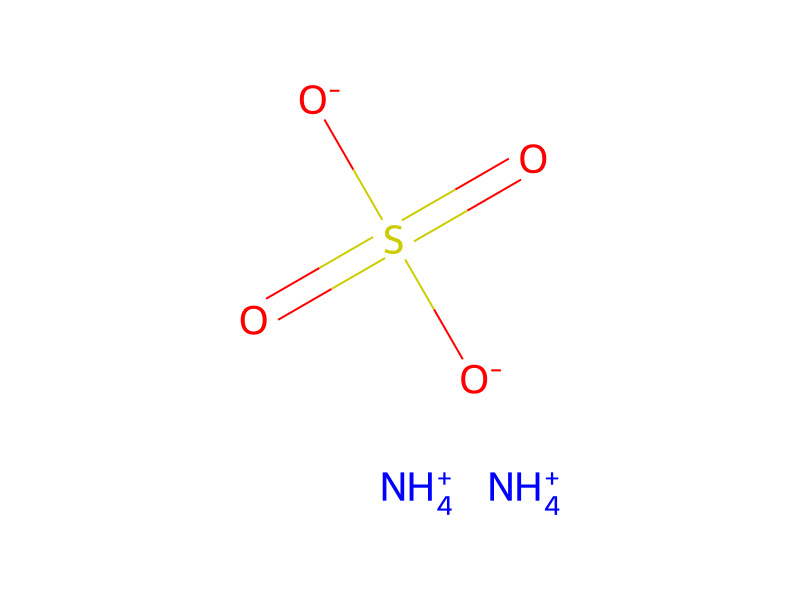

Product 1

Reagents, catalysts & solvents 4




Procedure
A suspension of 5-fluorouracil (5.0 g, 38.4 mmol) was treated with hexamethyldisilazane (HMDS, 260 mL) and a catalytic amount of ammonium sulfate during 18 h under reflux. After cooling to room temperature, the mixture was evaporated under reduced pressure, and the residue obtained as a colorless oil was diluted with anhydrous 1,2-dichloroethane (260 mL). To the resulting solution was added 1,2-di-O-acetyl-3,5-di-O-benzoyl-L-xylofuranose 1 (11.3 g, 25.6 mmol) [Ref.: Gosselin, G.; Bergogne, M. -C.; Imbach, J.-L., “Synthesis and Antiviral Evaluation of β-L-Xylofuranosyl Nucleosides of the Five Naturally Occurring Nucleic Acid Bases”, Journal of Heterocyclic Chemistry, 1993, 30 (October-November), 1229-1233] in anhydrous 1,2-dichloroethane (130 mL), followed by addition of trimethylsilyl trifluoromethanesulfonate (TMSTf, 9.3 mL, 51.15 mmol). The solution was stirred for 6 h at room temperature under argon atmosphere, then diluted with chloroform (1 L), washed with the same volume of a saturated aqueous sodium hydrogen carbonate solution and finally with water (2×800 mL). The organic phase was dried over sodium sulphate, then evaporated under reduced pressure. The resulting crude material was purified by silica gel column chromatography [eluent: stepwise gradient of methanol (0-4%) in methylene chloride] to give 2 (11.0 g, 84% yield) as a white foam; mp=96-98° C.; UV (ethanol): λmax=228 nm (ε=25900) 266 nm (ε=9000), λmin=250 nm (ε=7200); 1H-NMR (DMSO-d6): δ 11.1 (br s, 1H, NH), 8.05 (1H, H-6, J6-F5=6.8 Hz), 7.9-7.4 (m, 10H, 2 C6H5CO), 5.99 (d, 1H, H-1′, J1′-2′=3.1 Hz), 5.74 (dd, 1H, H-3′, J3′-2′=4.2 Hz and J3′-4′=2.3 Hz), 5.54 (t, 1H, H-2′, J2′-1′=J2′-3′=2,9 Hz), 4.8-4.6 (m, 3H, H-4′, H-5′ and H-5″); MS: FAB>0 (matrix GT) m/z 513 (M+H)+, 383 (S)+, 105 (C6H5CO)+; FAB<0 (matrix GT) m/z 511 (M−H)−, 469 (M−CH3CO)−, 129 (B)−, 121 (C6H5CO2)−; [α]D20=−91 (c, 0.88 DMSO); Anal C25H21FN2O9 (C,H, N, F).
Workup
- customthe mixture was evaporated under reduced pressure
- customthe residue obtained as a colorless oil
- washwashed with the same volume of a saturated aqueous sodium hydrogen carbonate solution and finally with water (2×800 mL)
- dry with materialThe organic phase was dried over sodium sulphate
- customevaporated under reduced pressure
- customThe resulting crude material was purified by silica gel column chromatography [eluent
Sources & evidence
- ORD record
- ord-037931f403064f6c9257ca66b10258aa
- Source dataset
- uspto-grants-2005_05
- Patent number
- US06896900B2
Reaction notes
Loading…