Acridan → Acridine, 10-(4-fluorophenyl)-9,10-dihydro-
Reaction equation

[CH:1]1[C:14]2[CH2:13][C:12]3[C:7](=[CH:8][CH:9]=[CH:10][CH:11]=3)[NH:6][C:5]=2[CH:4]=[CH:3][CH:2]=1.C(P(C(C)(C)C)C(C)(C)C)(C)(C)C.CC(C)([O-])C.[Na+].Br[C:35]1[CH:40]=[CH:39][C:38]([F:41])=[CH:37][CH:36]=1>C1(C)C=CC=CC=1.CC([O-])=O.CC([O-])=O.[Pd+2]>[F:41][C:38]1[CH:39]=[CH:40][C:35]([N:6]2[C:7]3[C:12](=[CH:11][CH:10]=[CH:9][CH:8]=3)[CH2:13][C:14]3[CH:1]=[CH:2][CH:3]=[CH:4][C:5]2=3)=[CH:36][CH:37]=1Participants
7






Procedure
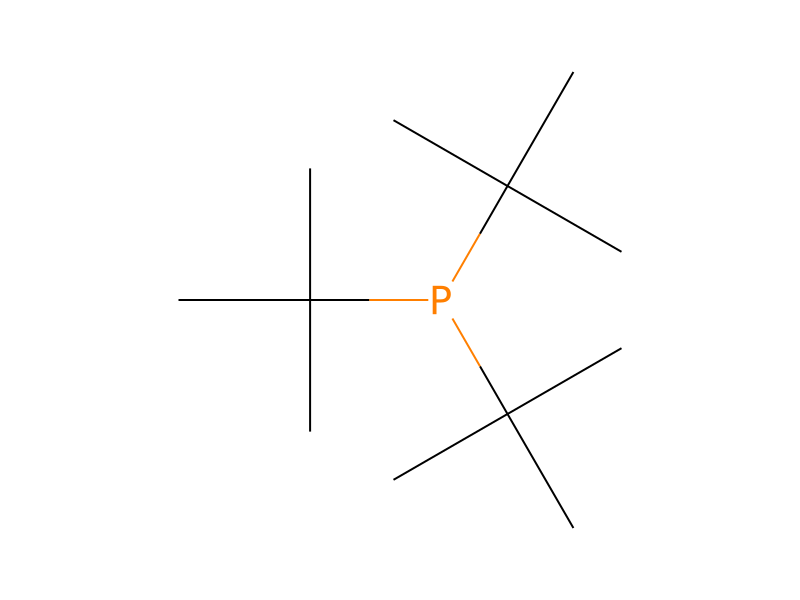
9.0 g of acridan (49.6 mmol), 446 mg of Pd(OAc)2 (2 mmol), 321 mg of tri-t-butylphosphine, 7.16 g of sodium t-butoxide (74 mmol), and 9.6 g of 1-bromo-4-fluorobenzene (54 mmol) in 90 mL of dry toluene was stirred under argon at room temperature for 2 h. TLC showed the absence of starting material. The reaction mixture was filtered through a Büchner funnel and the solid washed with CH2Cl2. The filtrate was then concentrated in vacuo and the residue was taken up in CH2Cl2 and refiltered. The filtrate was concentrated to dryness and chromatographed on silica gel in 5% ethyl acetate in hexanes, changing to CH2Cl2. Fractions containing product were combined and concentrated to dryness to afford N-(4′-fluorophenyl)acridan.
Workup
- filtrationThe reaction mixture was filtered through a Büchner funnel
- washthe solid washed with CH2Cl2
- concentrationThe filtrate was then concentrated in vacuo
- concentrationThe filtrate was concentrated to dryness
- customchromatographed on silica gel in 5% ethyl acetate in hexanes
- additionFractions containing product
- concentrationconcentrated to dryness
Sources & evidence
- ORD record
- ord-a333a6bf0420455f909aafa9a549fdd3
- Source dataset
- uspto-grants-2002_06
- Patent number
- US06410732B2
Reaction notes
Loading…