Ammonium Bicarbonate → Cerous carbonate
Reaction equation

[C:1](=[O:4])([O-:3])[O-:2].[NH4+].[NH4+].[C:7](=[O:10])([O-:9])[OH:8].[NH4+].[Ce:12].[N+]([O-])([O-])=O.[Ce+3].[N+]([O-])([O-])=O.[N+]([O-])([O-])=O>>[C:1](=[O:2])([O-:4])[O-:3].[Ce+3:12].[C:7](=[O:8])([O-:10])[O-:9].[C:1](=[O:2])([O-:4])[O-:3].[Ce+3:12]Participants


Procedure
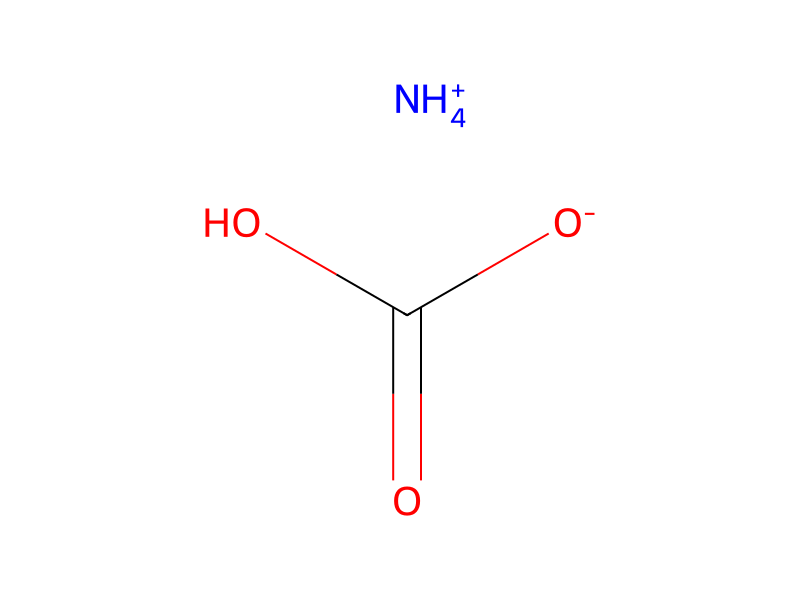
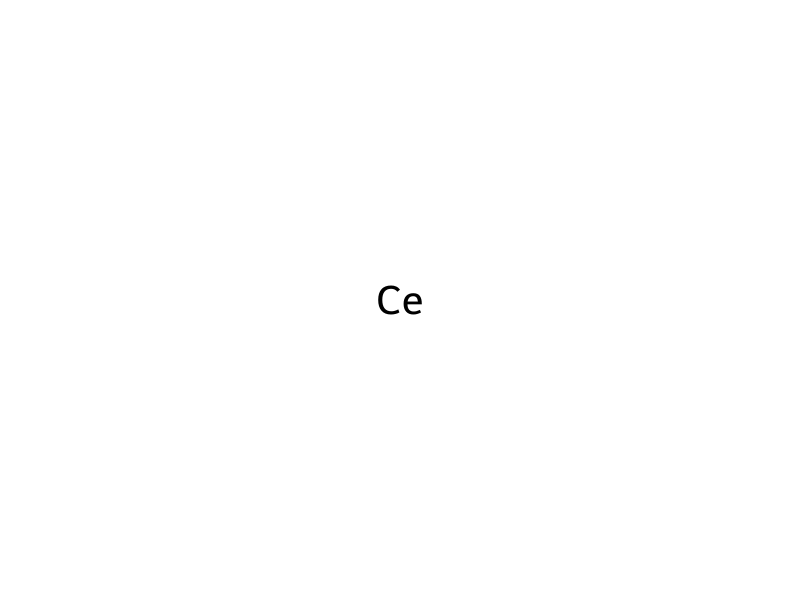
First, ammonium carbonate or ammonium hydrogencarbonate is added to a cerium salt solution such as an aqueous solution of cerium nitrate, to yield cerium carbonate precipitates. Then, the precipitates are washed, filtered, dried and heated to give cerium oxide. The heating temperature should be 400° C. or more to thermally decompose cerium carbonate. The size of the cerium oxide particles thus obtained is not significantly different from the size of the cerium carbonate particles. For example, when cerium carbonate in the form of a plate crystal aggregate having an average particle diameter of several tens nanometers is heated at 700° C., cerium oxide particles in the form of a plate crystal aggregate having an average particle diameter of several tens nanometers are obtained. Then, the resulting cerium oxide is dry-milled with a jet mill or wet-milled with a bead mill, to make it particles microparticulated in the range of several nanometers to several hundreds nanometers.
Sources & evidence
- ORD record
- ord-d8b5c23e70434f1eb051fe62aafe8119
- Source dataset
- uspto-grants-2012_12
- Patent number
- US08328893B2
Reaction notes
Loading…