Water → 4-Nitrophenyl thiomorpholine-4-carboxylate
Reaction equation

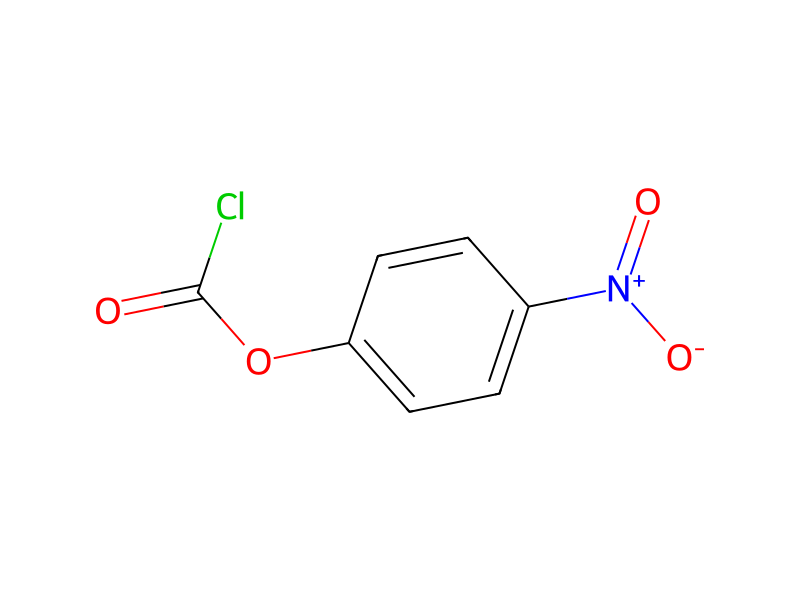
[NH:1]1[CH2:6][CH2:5][S:4][CH2:3][CH2:2]1.C(N(CC)CC)C.Cl[C:15]([O:17][C:18]1[CH:23]=[CH:22][C:21]([N+:24]([O-:26])=[O:25])=[CH:20][CH:19]=1)=[O:16].O>ClCCl.C(OCC)(=O)C>[N:1]1([C:15]([O:17][C:18]2[CH:19]=[CH:20][C:21]([N+:24]([O-:26])=[O:25])=[CH:22][CH:23]=2)=[O:16])[CH2:6][CH2:5][S:4][CH2:3][CH2:2]1Participants
7






Procedure
7.7 g (74.4 mmol) of thiomorpholine were initially charged in 100 ml of dichloromethane and, while cooling with an ice bath, admixed with 20.7 ml (15.1 g, 148.8 mmol) of triethylamine. 10.0 g (49.6 mmol) of 4-nitrophenyl chloroformate were added in portions. The reaction mixture was stirred at RT for one hour, and admixed with water and ethyl acetate. The organic phase was removed, washed with 1 N hydrochloric acid and saturated aqueous sodium chloride solution, dried over sodium sulphate, filtered and concentrated under reduced pressure. Yield: 13.2 g (99% of theory)
Workup
- temperaturewhile cooling with an ice bath
- customThe organic phase was removed
- washwashed with 1 N hydrochloric acid and saturated aqueous sodium chloride solution
- dry with materialdried over sodium sulphate
- filtrationfiltered
- concentrationconcentrated under reduced pressure
Sources & evidence
- ORD record
- ord-3e18799db951460d901d060ce46f666f
- Source dataset
- uspto-grants-2012_06
- Patent number
- US08202862B2
Reaction notes
Loading…