Triethylamine → Methyl 2,6-dichloro-4-(methylcarbamoyl)benzoate
Reaction equation

[Cl:1][C:2]1[CH:3]=[C:4]([CH:8]=[C:9]([Cl:15])[C:10]=1[C:11]([O:13][CH3:14])=[O:12])[C:5](O)=[O:6].C(Cl)(=O)C(Cl)=O.Cl.CN.[CH2:25]([N:27](CC)CC)C>CN(C)C=O.ClCCl>[Cl:1][C:2]1[CH:3]=[C:4]([C:5](=[O:6])[NH:27][CH3:25])[CH:8]=[C:9]([Cl:15])[C:10]=1[C:11]([O:13][CH3:14])=[O:12]Participants
Reactant 4



Product 1

Reagents, catalysts & solvents 2


Conditions
- Temperature
- 0 °C
Procedure
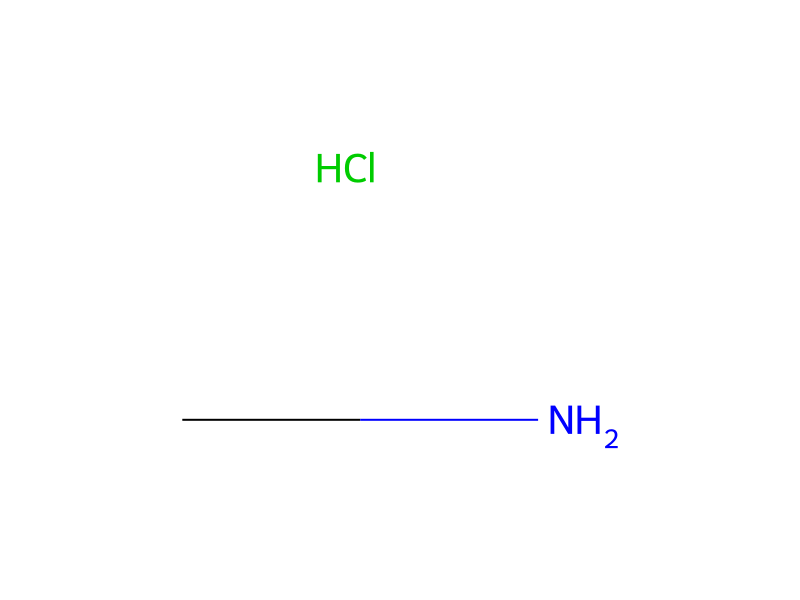
A solution of 3,5-dichloro-4-(methoxycarbonyl)benzoic acid (400 mg, 1.6 mmol) in dimethylformamide and dichloromethane was treated with oxalyl chloride (0.16 ml, 1.9 mmol) drop wise at room temperature followed by stirring at same temperature for 30 minutes. The reaction mixture was concentrated under vacuum. The residue was dissolved in dichloromethane, cooled to 0° C. and methylamine hydrochloride (118 mg, 1.7 mmol) was added followed by the drop wise addition of triethylamine (0.33 ml, 2.4 mmol) at the same temperature. The reaction mixture was allowed to warm to room temperature, stirred for 1 hour and concentrated under vacuum. The residue was treated with ice-cooled aqueous sodium bicarbonate solution (5%). The precipitated solid was filtered, washed with water, and dried to yield methyl 2,6-dichloro-4-(methylcarbamoyl)benzoate (340 mg, 70%) as a pale yellow solid.
Workup
- concentrationThe reaction mixture was concentrated under vacuum
- dissolutionThe residue was dissolved in dichloromethane
- temperatureto warm to room temperature
- stirringstirred for 1 hour
- concentrationconcentrated under vacuum
- additionThe residue was treated with ice-
- temperaturecooled aqueous sodium bicarbonate solution (5%)
- filtrationThe precipitated solid was filtered
- washwashed with water
- customdried
Sources & evidence
- ORD record
- ord-4a94a2568e69457a8ffb827aa719b936
- Source dataset
- uspto-grants-2016_06
- Patent number
- US09364466B2
Reaction notes
Loading…