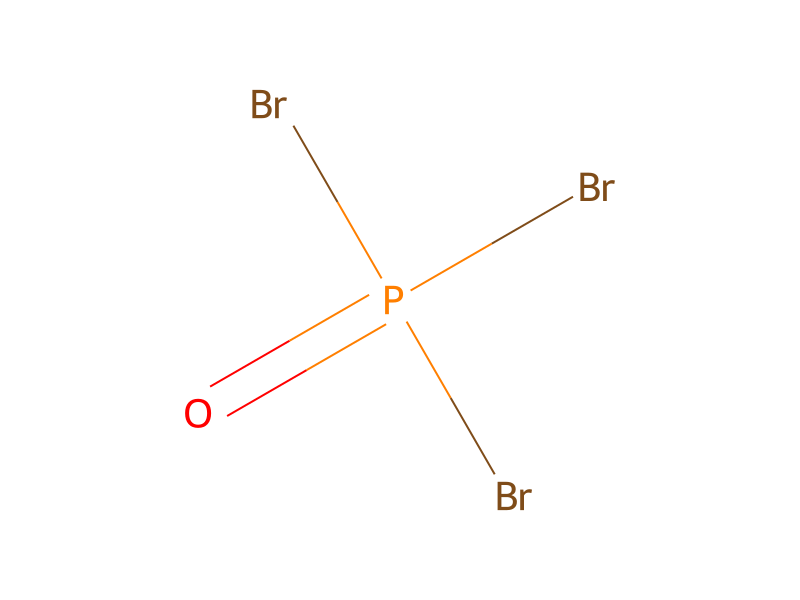
Phosphorus oxybromide → 4-Bromo-1-(2-cyclopropyl-3-methylimidazo[1,2-a]pyridin-6-yl)-2(1h)-pyridinone
Reaction equation

[CH:1]1([C:4]2[N:5]=[C:6]3[CH:11]=[CH:10][C:9]([N:12]4[CH:17]=[CH:16][C:15](O)=[CH:14][C:13]4=[O:19])=[CH:8][N:7]3[C:20]=2[CH3:21])[CH2:3][CH2:2]1.P(Br)(Br)([Br:24])=O>CN(C=O)C.CCOC(C)=O.O>[Br:24][C:15]1[CH:16]=[CH:17][N:12]([C:9]2[CH:10]=[CH:11][C:6]3[N:7]([C:20]([CH3:21])=[C:4]([CH:1]4[CH2:3][CH2:2]4)[N:5]=3)[CH:8]=2)[C:13](=[O:19])[CH:14]=1Participants
6
Reactant 2

Product 1

Reagents, catalysts & solvents 3



Conditions
- Temperature
- 110 °C
Procedure
To a solution of 1-(2-cyclopropyl-3-methylimidazo[1,2-a]pyridin-6-yl)-4-hydroxypyridin-2(1H)-one (3.0 g) in DMF (25 ml) was added phosphorus oxybromide (2.17 ml) at room temperature, and the mixture was stirred at 110° C. for 1 h. The mixture was diluted with EtOAc and water, quenched with saturated NaHCO3 solution, and extracted with EtOAc. The organic layer was separated, washed with water and brine successively, dried over MgSO4 and concentrated in vacuo. The residue was purified by column chromatography (hexane/EtOAc) to give the title compound (0.70 g) as a pale yellow solid.
Workup
- customquenched with saturated NaHCO3 solution
- extractionextracted with EtOAc
- customThe organic layer was separated
- washwashed with water and brine successively
- dry with materialdried over MgSO4
- concentrationconcentrated in vacuo
- customThe residue was purified by column chromatography (hexane/EtOAc)
Sources & evidence
- ORD record
- ord-e529529464ca47e2b33a049c12956793
- Source dataset
- uspto-grants-2016_06
- Patent number
- US09365540B2
Reaction notes
Loading…