Imidazole → tert-Butyl(chloro)phenylsilane
Reaction equation

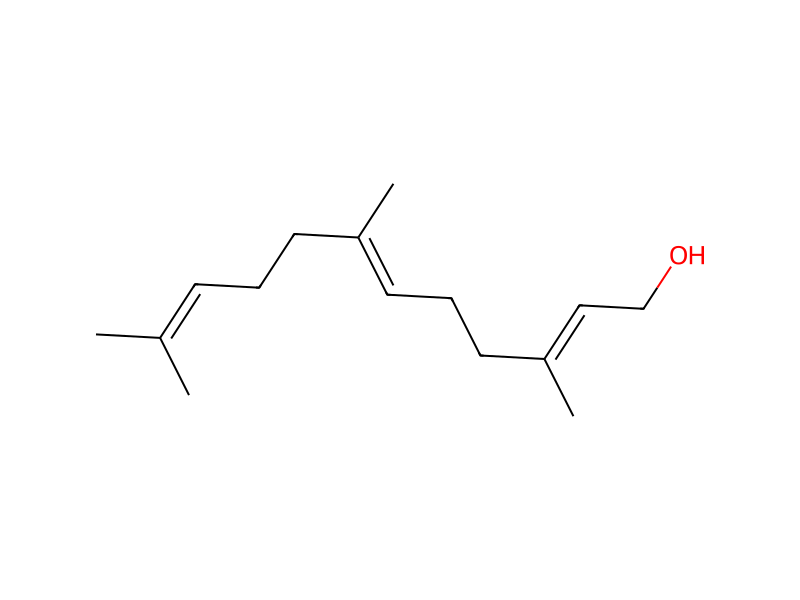
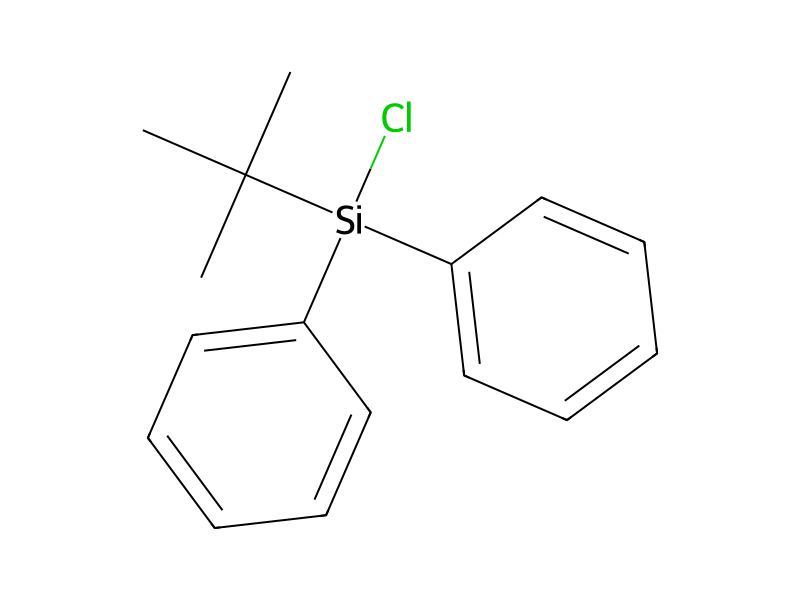
OCC=C(CCC=C(CCC=C(C)C)C)C.N1C=CN=C1.CN(C)C=O.[Si:27]([Cl:44])([C:40]([CH3:43])([CH3:42])[CH3:41])(C1C=CC=CC=1)[C:28]1[CH:33]=[CH:32][CH:31]=[CH:30][CH:29]=1>ClCCl>[C:40]([SiH:27]([C:28]1[CH:33]=[CH:32][CH:31]=[CH:30][CH:29]=1)[Cl:44])([CH3:43])([CH3:41])[CH3:42]Participants
Reactant 4


Product 1

Reagents, catalysts & solvents 1

Procedure
Synthesis was carried out with farnesol as a starting material. A protective group was bonded to the hydroxy group of farnesol using imidazole, anhydrous dimethylformamide, anhydrous dichloromethane, and tert-butyldiphenylsilyl chloride (TBDPS) to obtain a TBDPS-protected form (compound represented by (di) below) (yield: 99%). Next, this compound was reacted with m-chloroperbenzoic acid in an anhydrous dichloromethane solvent to obtain an epoxy form (compound represented by (dii) (below) (yield: 29%). Next, the epoxy was subjected to periodic acid oxidation using orthoperiodic acid in a mixed solvent of ether and tetrahydrofuran to obtain an aldehyde form (compound represented by (diii) below) (yield: 73%). A Grignard reagent was prepared from ethyl iodide and magnesium in an anhydrous ether solvent and then reacted with the aldehyde to form an alcohol form (compound represented by (div) below) (yield: 80%). The secondary hydroxy group of the racemic alcohol form and (S)-MaNP acid were subjected to reaction in the presence of N,N-dicyclohexylcarbodiimide, 4-dimethylaminopyridine, and (+)-10-camphorsulfonic acid in an anhydrous dichloromethane solvent to obtain diastereomers. Then, the diastereomers were optically resolved by HPLC, and the absolute configuration was determined by NMR to optically obtain a compound represented by (dv) below (yield: 80%). The TBDPS protective group was then deprotected using tetra-n-butylammonium hydrate in anhydrous tetrahydrofuran to obtain a diol form (compound represented by (dvi) below) (yield: 80%). Next, the primary hydroxy group was replaced by chlorine using N-chlorosuccinimide and dimethyl sulfide in an anhydrous dichloromethane solvent at −40° C. or lower to obtain a chloride (compound represented by (dvii) below) (yield: 80%). Next, the chloride was diphosphorylated using tris-tetra-n-butylammonium hydrogen pyrophosphate in anhydrous acetonitrile to obtain a compound represented by (dviii) below (compound represented by the formula (D)) as the substance of interest (yield: 46%).
Workup
- customSynthesis
Sources & evidence
- ORD record
- ord-612f6891c1224868be8fc4cff2488e02
- Source dataset
- uspto-grants-2016_06
- Patent number
- US09371342B2
Reaction notes
Loading…