Triethylamine → HCID 131735950, compound
Reaction equation

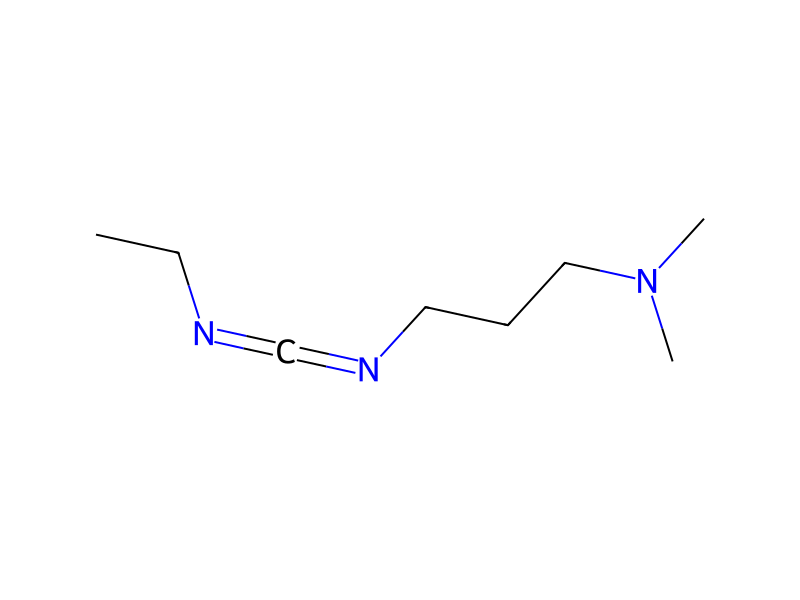
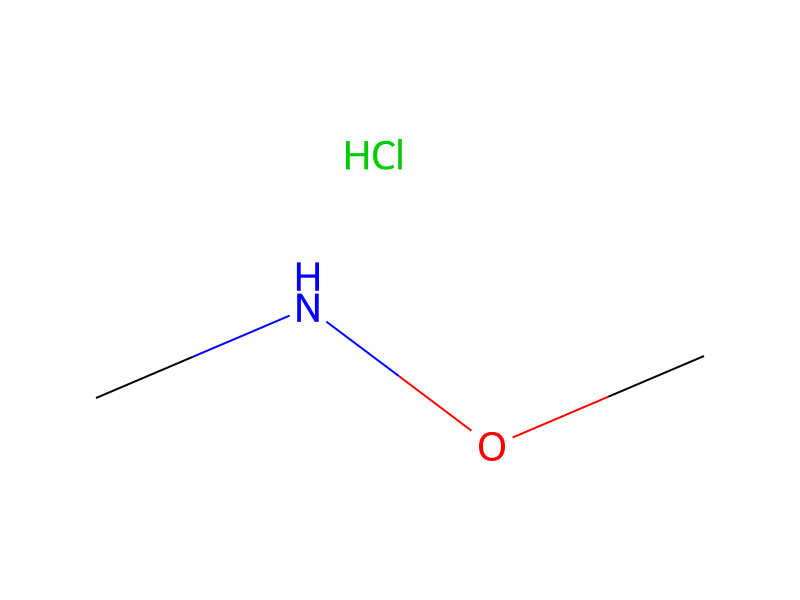
[Br:1][C:2]1[CH:7]=[C:6]([CH:8]=[CH:9][C:10]([OH:12])=O)[CH:5]=[CH:4][N:3]=1.Cl.[CH3:14][NH:15][O:16][CH3:17].C1C=CC2N(O)N=NC=2C=1.CCN=C=NCCCN(C)C.C(N(CC)CC)C>CN(C)C=O>[Br:1][C:2]1[CH:7]=[C:6]([CH:8]=[CH:9][C:10]([N:15]([O:16][CH3:17])[CH3:14])=[O:12])[CH:5]=[CH:4][N:3]=1Participants
Reactant 5



Product 1

Reagents, catalysts & solvents 1

Procedure
3-(2-Bromo-pyridin-4-yl)-acrylic acid (5.0 g, 21.9 mmol) prepared in Step 1, N,O-dimethylhydroxylamine hydrochloride (2.4 g, 24.1 mmol), HOBT (5.9 g, 43.9 mmol), EDAC (8.4 g, 43.9 mmol) and triethylamine (9.1 mL, 65.8 mmol) were added to N,N-dimethylformamide (100.0 mL). The reaction mixture was stirred at room temperature for 18 hours, quenched with a saturated solution of ammonium chloride, and then extracted with ethyl acetate. The extract was washed with brine, dried on anhydrous magnesium sulfate, and then concentrated under reduced pressure to give a yellow liquid residue. The resulting residue was purified by silica gel column chromatography (eluent: ethyl acetate/n-hexane=2/1) to give 5.6 g of the titled compound as a white solid.
Workup
- customquenched with a saturated solution of ammonium chloride
- extractionextracted with ethyl acetate
- washThe extract was washed with brine
- dry with materialdried on anhydrous magnesium sulfate
- concentrationconcentrated under reduced pressure
- customto give a yellow liquid residue
- customThe resulting residue was purified by silica gel column chromatography (eluent: ethyl acetate/n-hexane=2/1)
Sources & evidence
- ORD record
- ord-1a14d2d6cd9f4949b7f1b74427bccfc4
- Source dataset
- uspto-grants-2016_06
- Patent number
- US09376420B2
Reaction notes
Loading…