1,2-Dichloro-4-nitrobenzene → 2-Chloro-1-fluoro-4-nitrobenzene
Reaction equation

[Cl-].C([N+](C)(C)C)CCCCCCCCCCCCCCCCC.[Cl:24][C:25]1[CH:26]=[C:27]([N+:32]([O-:34])=[O:33])[CH:28]=[CH:29][C:30]=1[Cl:31].[F-:35].[K+]>ClC1C=CC=CC=1Cl>[Cl:24][C:25]1[CH:26]=[C:27]([N+:32]([O-:34])=[O:33])[CH:28]=[CH:29][C:30]=1[F:35].[Cl:24][C:25]1[CH:26]=[C:27]([N+:32]([O-:34])=[O:33])[CH:28]=[CH:29][C:30]=1[Cl:31]Participants
6




Conditions
- Temperature
- 180 °C
Procedure
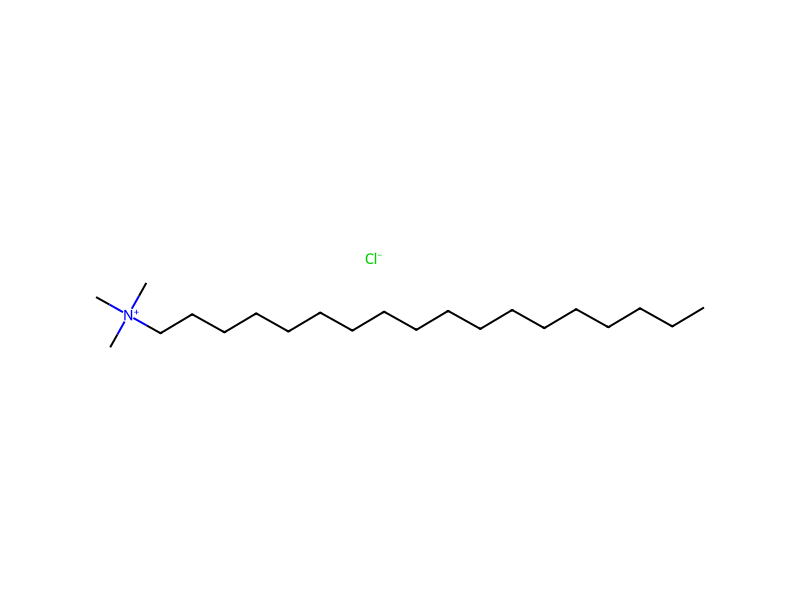
70 g of octadecyltrimethylammonium chloride are dissolved at 70° C. in 2020 g (10.5 mol) of 3,4-dichloronitrobenzene and 100 g of o-dichlorobenzene. After addition of 580 g (10 mol) of potassium fluoride, the resulting suspension is heated for 11 hours at 180° C. with stirring and under nitrogen. During this time, some of the o-dichlorobenzene is continuously distilled off. The reaction suspension is then quickly filtered off using suction, the filter cake is washed with o-dichlorobenzene and the combined filtrates are fractionated in vacuo. In this manner 1349 g (77% of theory) of 3-chloro-4-fluoronitrobenzene and 246 g of unreacted 3,4-dichloronitrobenzene are obtained.
Workup
- distillationDuring this time, some of the o-dichlorobenzene is continuously distilled off
- filtrationThe reaction suspension is then quickly filtered off
- washthe filter cake is washed with o-dichlorobenzene
Sources & evidence
- ORD record
- ord-b65c33e40523497f98424c97b0ac6ef7
- Source dataset
- uspto-grants-1995_10
- Patent number
- US05463148
Reaction notes
Loading…