Water → 3-Bromo-5-(4-methoxyphenoxy)pyridine
Reaction equation

[CH3:1][O:2][C:3]1[CH:8]=[CH:7][C:6]([OH:9])=[CH:5][CH:4]=1.[H-].[Na+].Br[C:13]1[CH:14]=[N:15][CH:16]=[C:17]([Br:19])[CH:18]=1.O>CN(C)C=O.C(OCC)(=O)C>[Br:19][C:17]1[CH:16]=[N:15][CH:14]=[C:13]([O:9][C:6]2[CH:7]=[CH:8][C:3]([O:2][CH3:1])=[CH:4][CH:5]=2)[CH:18]=1Participants

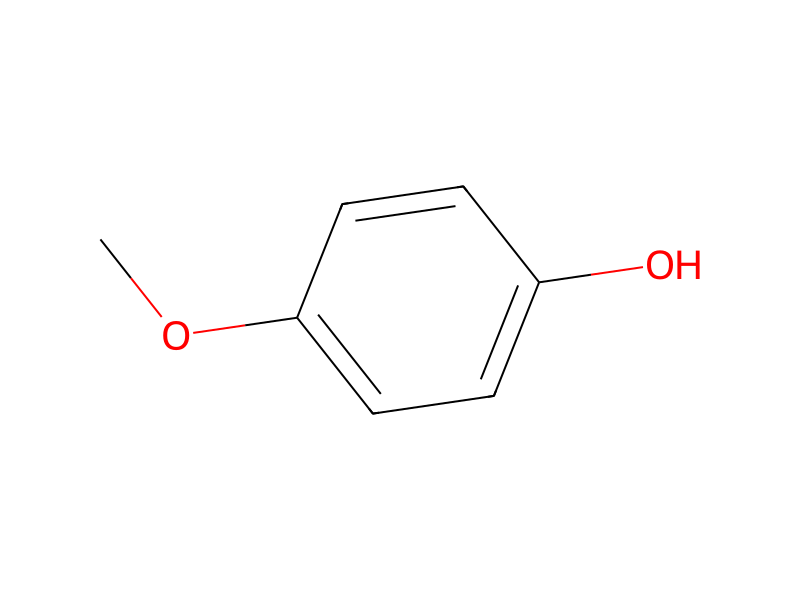





Procedure
Under an argon atmosphere, a solution of 4-methoxyphenol (15.7 g, 0.126 mol) in dimethylformamide (50 mL) was added slowly to a stirred suspension sodium hydride (3.6 g of a 80% suspension in mineral oil, 0.125 mol) in dimethylformamide (100 mL) at 3–7° C. The ice-bath was removed and the resulting mixture was stirred for 2 h at room temperature. A solution of 3,5-dibromopyridine (20 g, 0.083 mol) in dimethylformamide (120 mL) was added to the mixture, which was then heated to 100° C. for 36 h, then cooled to room temperature and poured into a mixture of water (500 mL) and ethyl acetate (500 mL). The aqueous phase was separated and extracted with ethyl acetate (2×100 mL). The combined organic phases were washed with water (3×100 mL) and then brine (100 mL), then dried (MgSO4), filtered and concentrated by rotary evaporation to give 22.5 g of an orange oil, which was purified by column chromatography, with cyclohexane/ethyl acetate (95/5, v/v) as eluant. Selected fractions containing the product were concentrated via rotary evaporation to give 18.8 g (81%) of a colorless oil.
Workup
- customThe ice-bath was removed
- temperaturewas then heated to 100° C. for 36 h
- temperaturecooled to room temperature
- customThe aqueous phase was separated
- extractionextracted with ethyl acetate (2×100 mL)
- washThe combined organic phases were washed with water (3×100 mL)
- dry with materialbrine (100 mL), then dried (MgSO4)
- filtrationfiltered
- concentrationconcentrated by rotary evaporation
Sources & evidence
- ORD record
- ord-6a662fa96aa4413cb87766841fa5bae4
- Source dataset
- uspto-grants-2006_09
- Patent number
- US07101896B2
Reaction notes
Loading…