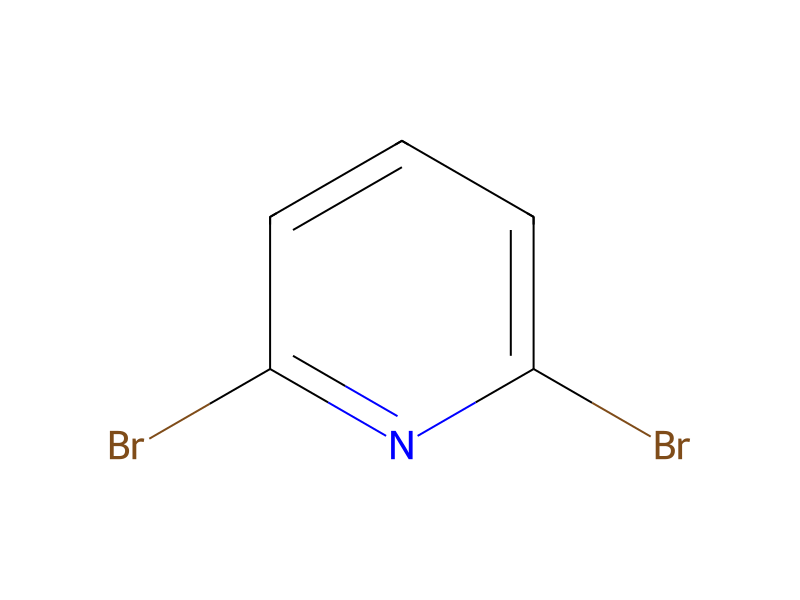
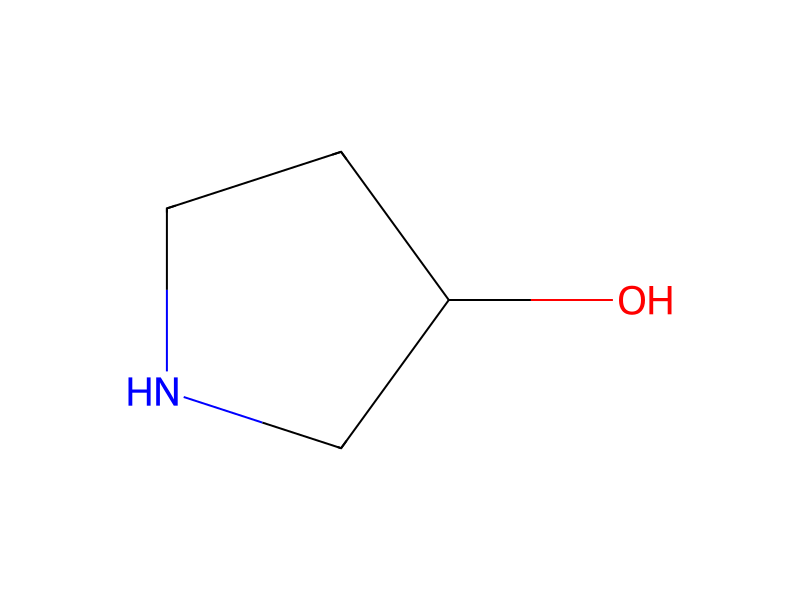
2,6-Dibromopyridine → 1-(6-Bromopyridin-2-yl)pyrrolidin-3-ol
Reaction equation

Br[C:2]1[CH:7]=[CH:6][CH:5]=[C:4]([Br:8])[N:3]=1.[OH:9][CH:10]1[CH2:14][CH2:13][NH:12][CH2:11]1.C1CCN2C(=NCCC2)CC1>O1CCCC1>[Br:8][C:4]1[CH:5]=[CH:6][CH:7]=[C:2]([N:12]2[CH2:13][CH2:14][CH:10]([OH:9])[CH2:11]2)[N:3]=1Participants
5
Reactant 3

Product 1

Reagents, catalysts & solvents 1

Conditions
- Temperature
- 70 °C
Procedure
A mixture of 5.7 g of 2,6-dibromopyridine, 2.5 g of 3-hydroxypyrrolidine, 3.6 ml of 1,8-diazabicyclo[5.4.0]-7-undecene (DBU) and 20 ml of tetrahydrofuran was heated under stirring under nitrogen atmosphere in an oil bath at 70° C. for 11 hours. The reaction mixture was separated with ethyl acetate-water. The organic layer was washed with water and brine, dried over anhydrous magnesium sulfate, and then concentrated. The residue was subjected to silicagel column chromatography with 10–30% ethyl acetate/hexane, to give 5.9 g of 2-bromo-6-(3-hydroxypyrrolidin-1-yl)pyridine.
Workup
- temperaturewas heated
- customThe reaction mixture was separated with ethyl acetate-water
- washThe organic layer was washed with water and brine
- dry with materialdried over anhydrous magnesium sulfate
- concentrationconcentrated
Sources & evidence
- ORD record
- ord-5972ed998fd5418cb95cef454b659941
- Source dataset
- uspto-grants-2006_09
- Patent number
- US07112593B2
Reaction notes
Loading…