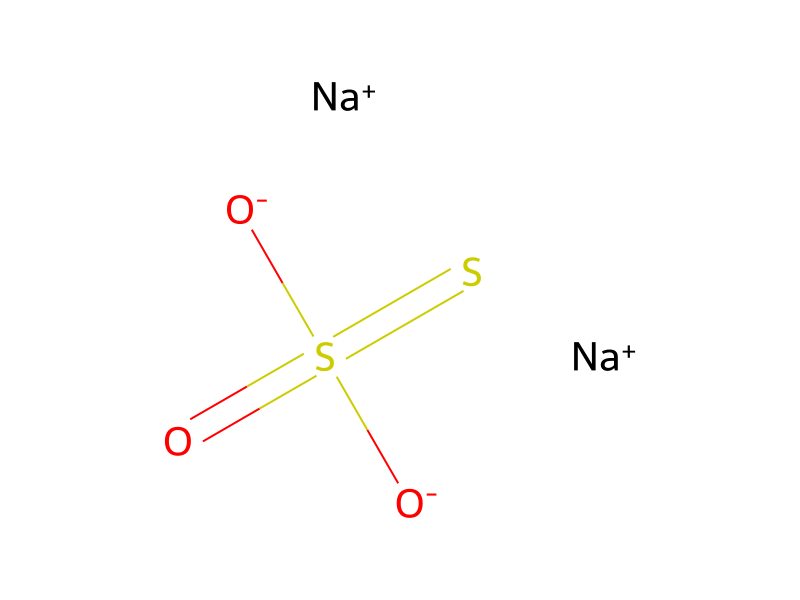
Sodium Thiosulfate → 3-(4-Nitrophenyl)pyridine-1-oxide
Reaction equation

ClC1C=CC=C(C(OO)=[O:9])C=1.[N+:12]([C:15]1[CH:20]=[CH:19][C:18]([C:21]2[CH:22]=[N:23][CH:24]=[CH:25][CH:26]=2)=[CH:17][CH:16]=1)([O-:14])=[O:13].S([O-])([O-])(=O)=S.[Na+].[Na+]>O1CCCC1>[N+:12]([C:15]1[CH:16]=[CH:17][C:18]([C:21]2[CH:22]=[N+:23]([O-:9])[CH:24]=[CH:25][CH:26]=2)=[CH:19][CH:20]=1)([O-:14])=[O:13]Participants
5
Reactant 3


Product 1

Reagents, catalysts & solvents 1

Procedure
m-Chloroperbenzoic acid (6.9 g, 40.0 mmol) was slowly added to a solution of 3-(4-nitrophenyl)pyridine (P1, 4 g, 20.0 mmol) in tetrahydrofuran (200 mL) and the reaction mixture was stirred at room temperature for 1 hour. The solution was poured into aqueous sodium thiosulfate and the resultant mixture was concentrated. Trituration with ethyl acetate afforded the title compound as a solid.
Workup
- concentrationthe resultant mixture was concentrated
Sources & evidence
- ORD record
- ord-8036eb3a600a46958acff336b710e3e7
- Source dataset
- uspto-grants-2008_08
- Patent number
- US07410984B2
Reaction notes
Loading…