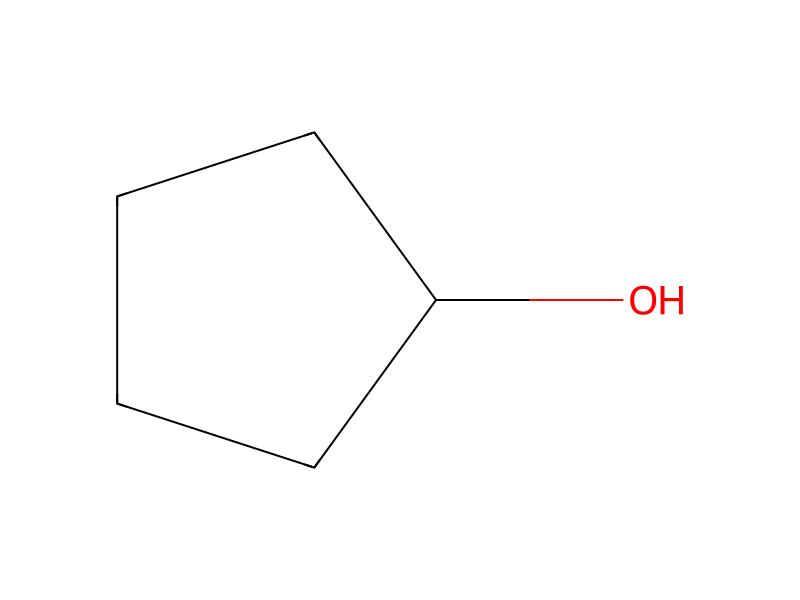
Cyclopentanol → 2,6-dichloro-9-cyclopentyl-9H-purine
Reaction equation

[CH:1]1(O)[CH2:5][CH2:4][CH2:3][CH2:2]1.[Cl:7][C:8]1[N:16]=[C:15]2[C:11]([NH:12][CH:13]=[N:14]2)=[C:10]([Cl:17])[N:9]=1.C1(P(C2C=CC=CC=2)C2C=CC=CC=2)C=CC=CC=1.N(C(OCC)=O)=NC(OCC)=O>C1COCC1>[Cl:7][C:8]1[N:16]=[C:15]2[C:11]([N:12]=[CH:13][N:14]2[CH:1]2[CH2:5][CH2:4][CH2:3][CH2:2]2)=[C:10]([Cl:17])[N:9]=1Participants
6





Conditions
- Temperature
- 0 °C
Procedure
Dissolve cyclopentanol (260 mg, 3.02 mmol), 2,6-dichloropurine (680 mg, 3.60 mmol) and triphenyl phosphine (950 mg, 3.60 mmol) in dry THF (20 mL) and cool to 0° C. Add diethyl azodicarboxylate (570 μL, 3.60 mmol) dropwise over a period of 15 minutes under a nitrogen atmosphere. Stir the resulting solution for 60 hours at room temperature. Evaporate the solvent in vacuo, charge directly onto a silica gel column, and elute with methylene chloride to give the title compound as a crude mixture.
Workup
- customEvaporate the solvent in vacuo
- additioncharge directly onto a silica gel column
- washelute with methylene chloride
Sources & evidence
- ORD record
- ord-ae8d7253552745beb89db6d3e5b3d510
- Source dataset
- uspto-grants-2002_07
- Patent number
- US06413974B1
Reaction notes
Loading…