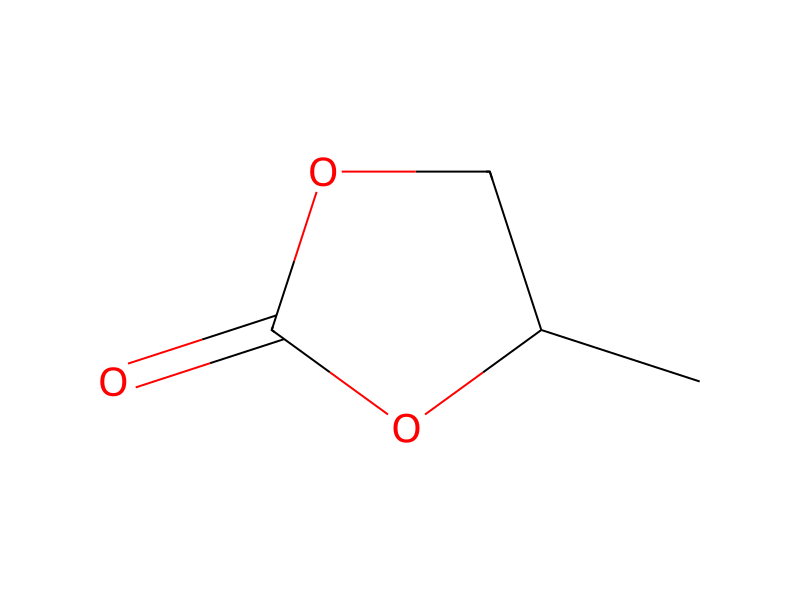
Propylene Carbonate → HCID 18469472, compound
Reaction equation

Br[C:2]1[CH:3]=[C:4]([C:8]([F:11])([F:10])[F:9])[CH:5]=[CH:6][CH:7]=1.[CH:12]([O:14]CC)=[CH2:13].C1(=O)O[CH:20](C)[CH2:19]O1>C1(P(C2C=CC=CC=2)C2C=CC=CC=2)C=CC=CC=1>[F:9][C:8]([F:11])([F:10])[C:4]1[CH2:3][C:2]([O:14][CH2:12][CH3:13])([CH:7]=[CH:6][CH:5]=1)[CH:19]=[CH2:20]Participants
5
Reactant 3

Product 1

Reagents, catalysts & solvents 1

Conditions
- Temperature
- 120 °C
Procedure
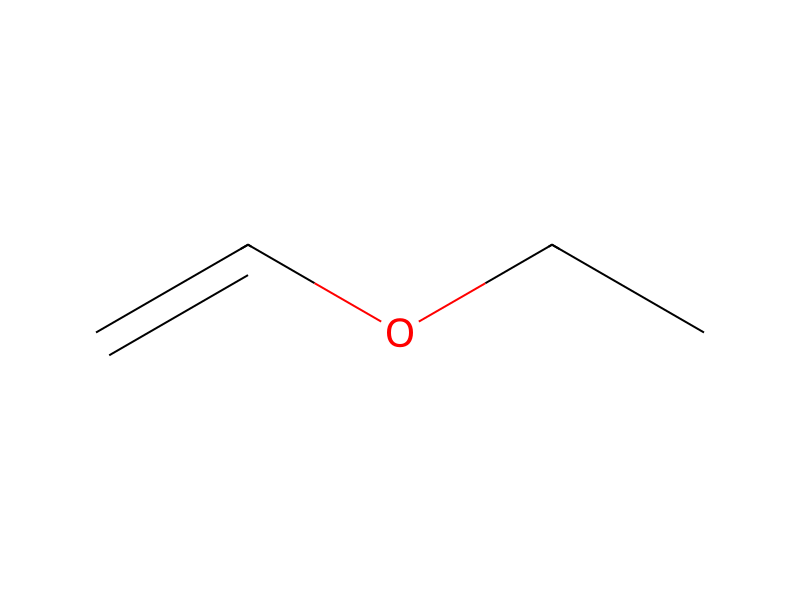
To 22.5 g (100 ml) of 3-bromo-benzotrifluoride and 80 ml propylene carbonate under argon 20.2 g (200 mmol) triethyl amine, 14.4 g (200 mmol) ethyl vinyl ether, 518 mg (0.5 mmol) bis-(dibenzalacetone)-chloroform-palladium and 525 mg (2 mmol) triphenyl phospine are added. The reaction mixture is heated in an autoclave to 120° C. for 20 hours, cooled to room temperature, filtered and the filtrate extracted twice with 50 ml hexane. The hexane phase is washed twice with 50 ml water, dried with Na2SO4 and the solvent is evaporated. The residue is distilled to give 16 g 3-trifluoromethyl-1-ethoxystyrene (b.p. 113° C./50 mbar, yield 75%). Hydrolysis according to Example 2 results in trifluoromethyl-acetophenone (76% yield).
Workup
- temperaturecooled to room temperature
- filtrationfiltered
- extractionthe filtrate extracted twice with 50 ml hexane
- washThe hexane phase is washed twice with 50 ml water
- dry with materialdried with Na2SO4
- customthe solvent is evaporated
- distillationThe residue is distilled
Sources & evidence
- ORD record
- ord-a3090c80a6244986b351d6a8f13b3574
- Source dataset
- uspto-grants-2002_07
- Patent number
- US06420608B1
Reaction notes
Loading…