Triphenylphosphine → Methyl 1-(benzo[d]oxazol-2-yl)cyclopropanecarboxylate
Reaction equation

O[C:2]1[CH:7]=[CH:6][CH:5]=[CH:4][C:3]=1[NH:8][C:9]([C:11]1([C:14]([O:16][CH3:17])=[O:15])[CH2:13][CH2:12]1)=[O:10].C1(P(C2C=CC=CC=2)C2C=CC=CC=2)C=CC=CC=1.CC(OC(/N=N/C(OC(C)C)=O)=O)C>C1COCC1>[O:10]1[C:2]2[CH:7]=[CH:6][CH:5]=[CH:4][C:3]=2[N:8]=[C:9]1[C:11]1([C:14]([O:16][CH3:17])=[O:15])[CH2:13][CH2:12]1Participants
5
Reactant 3

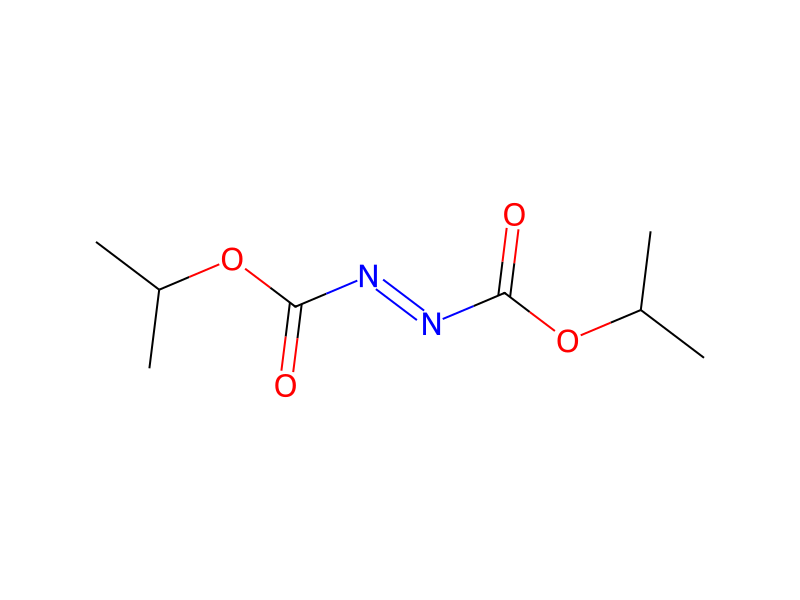

Product 1

Reagents, catalysts & solvents 1

Procedure
To a stirred suspension of methyl 1-((2-hydroxyphenyl)carbamoyl)cyclopropanecarboxylate (0.147 g, 0.62 mmol) in 2.5 mL THF at room temperature under nitrogen was added triphenylphosphine (0.361 g, 1.375 mmol) followed by DIAD (0.2663 ml, 1.375 mmol). After 2 hours, the reaction mixture was loaded directly onto a Biotage 40S column in THF and was eluted with 9/1 hexanes/EtOAc to provide the desired product as a yellow oil (132 mg, 97%).
Workup
- washwas eluted with 9/1 hexanes/EtOAc
Sources & evidence
- ORD record
- ord-ee6bd76e89ff4c8390a0cdbb0b2c345d
- Source dataset
- uspto-grants-2010_05
- Patent number
- US07723330B2
Reaction notes
Loading…