2,3-Dinitrotoluene → 4-Aminoindole
Reaction equation

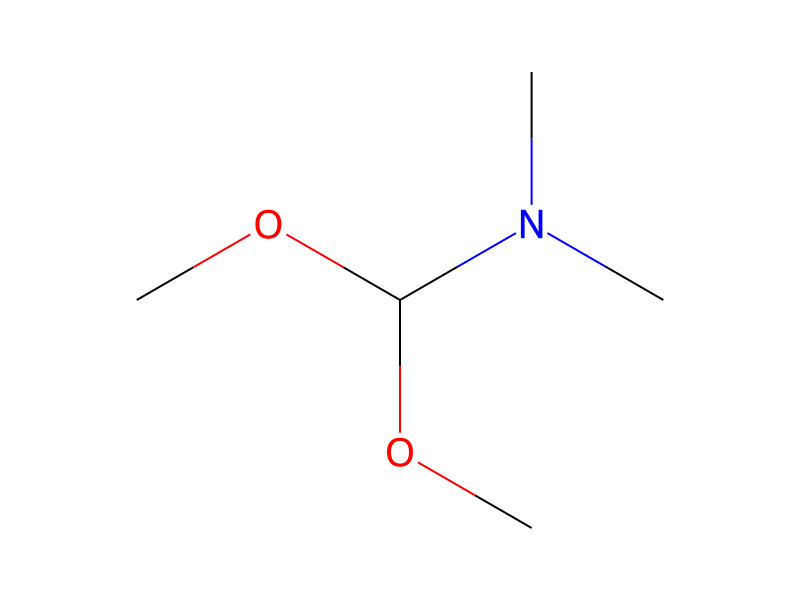
[N+]([C:4]1[C:5]([N+:11]([O-])=O)=[C:6]([CH3:10])[CH:7]=[CH:8][CH:9]=1)([O-])=O.CO[CH:16](OC)[N:17](C)C.N1CCCC1>>[NH:17]1[C:7]2[C:6](=[C:5]([NH2:11])[CH:4]=[CH:9][CH:8]=2)[CH:10]=[CH:16]1Participants



Procedure
Scheme 4 illustrates the production of a compound of Formula (In) in which R99 is an indole compound and R7, R8, R9, R10, R11, R12, R28, R29 and R30 are defined as above for Formula (III). A piperidin-4-one compound of Formula (XIVa) is produced as described above in Scheme 3. A dinitro-toluene compound of Formula (XVI) is reacted with N,N-dimethylformamide dimethyl acetal and pyrrolidine under conditions effective to bring about cyclization, thereby providing an indol-4-ylamine compound of Formula (XVII). The compound of Formula (XVII) is then reacted with a bis(2-chloroethyl)-benzylamine under conditions effective to produce the compound of Formula (XVIII). The compound of Formula (XVIII) is then reacted under conditions effective to remove the benzyl protecting group to produce a 4-piperazin-1-yl-indole of Formula (XIX). The piperazin-1-yl-indole compound of Formula (XIX) is then reacted with the piperidin-4-one compound of Formula (XIVa) as described above in Scheme 1 to produce the piperazine-piperidine compound of Formula (XX), which is a compound of Formula (III).
Sources & evidence
- ORD record
- ord-6f1f0a4d5c344311b6b25def87ab2bdc
- Source dataset
- uspto-grants-2010_03
- Patent number
- US07671056B2
Reaction notes
Loading…