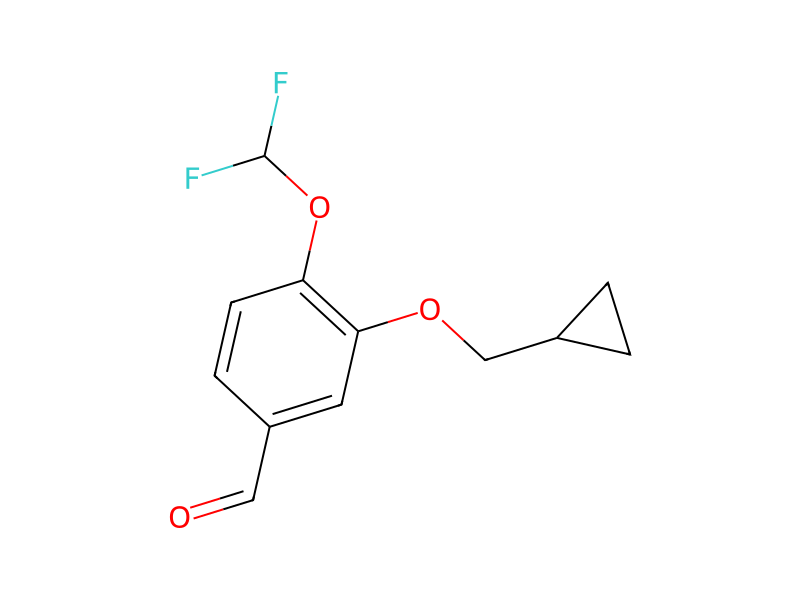
Potassium Carbonate → 3-(Cyclopropylmethoxy)-4-(difluoromethoxy)benzaldehyde
Reaction equation

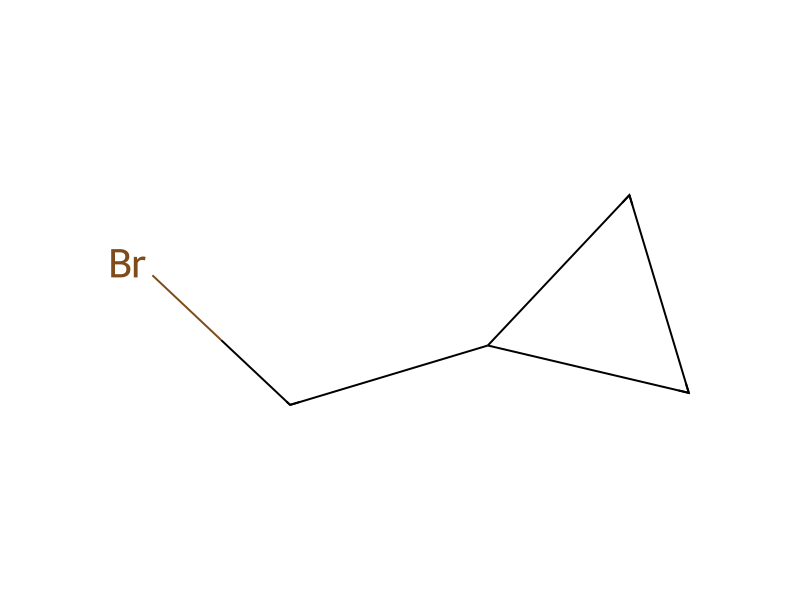
[F:1][CH:2]([F:13])[O:3][C:4]1[CH:11]=[CH:10][C:7]([CH:8]=[O:9])=[CH:6][C:5]=1[OH:12].C(=O)([O-])[O-].[K+].[K+].Br[CH2:21][CH:22]1[CH2:24][CH2:23]1>O1CCCC1>[CH:22]1([CH2:21][O:12][C:5]2[CH:6]=[C:7]([CH:10]=[CH:11][C:4]=2[O:3][CH:2]([F:13])[F:1])[CH:8]=[O:9])[CH2:24][CH2:23]1Participants



Conditions
- Temperature
- 0 °C
Procedure
4-Difluoromethoxy-3-hydroxybenzaldehyde (10 g, 52.8 mmol) was dissolved in tetrahydrofuran (100 ml) added with potassium carbonate (44 g, 105 mmol), cooled to 0° C. and added with a solution of bromomethylcyclopropane (11 ml, 116.6 mmol) in tetrahydrofuran (50 ml). The reaction mixture was heated to reflux under stirring for 7 hrs, then fresh bromomethylcyclopropane (5.5 ml, 58.3 mmol) was added and the heating continued for further 7 hrs. The solvent was removed by vacuum distillation, then the mixture was added with 2 N sodium hydroxide (100 ml) and extracted with dichloromethane (2×100 ml). The combined organic layers were dried over sodium sulphate (5 g) and the solvent removed under reduced pressure to afford 3-cyclopropylmethoxy-4-difluoromethoxybenzaldehyde (12 g, 50 mmol, 97% yield), that was used without further purification.
Workup
- temperatureThe reaction mixture was heated
- temperatureto reflux
- waitthe heating continued for further 7 hrs
- customThe solvent was removed by vacuum distillation
- additionthe mixture was added with 2 N sodium hydroxide (100 ml)
- extractionextracted with dichloromethane (2×100 ml)
- dry with materialThe combined organic layers were dried over sodium sulphate (5 g)
- customthe solvent removed under reduced pressure
Sources & evidence
- ORD record
- ord-c048088f71ce4c1e8869a792dece159a
- Source dataset
- uspto-grants-2010_03
- Patent number
- US07671066B2
Reaction notes
Loading…