Sodium hydride → HCID 19825432, compound
Reaction equation

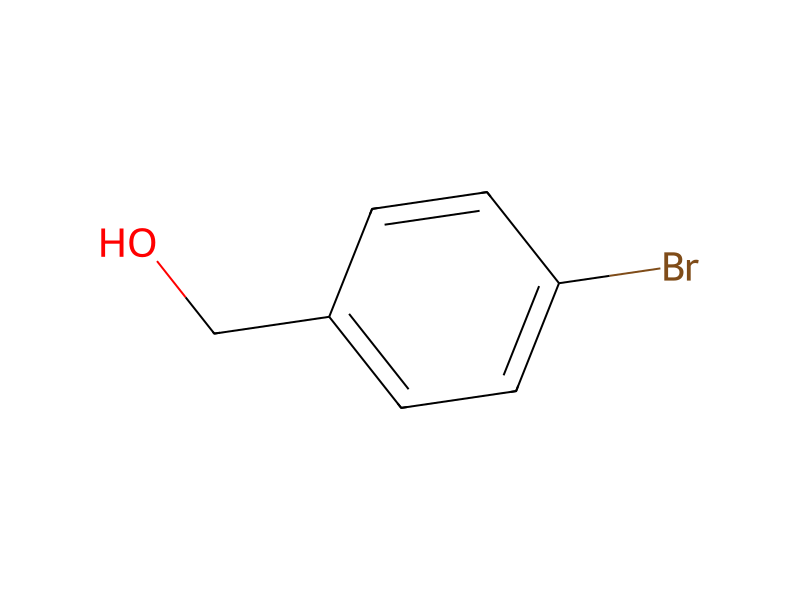
[H-].[Na+].[Br:3][C:4]1[CH:11]=[CH:10][C:7]([CH2:8][OH:9])=[CH:6][CH:5]=1.[N+:12]([C:15]1[CH:22]=[CH:21][C:18]([CH2:19]Br)=[CH:17][CH:16]=1)([O-:14])=[O:13].[Cl-].[NH4+]>CN(C)C=O>[N+:12]([C:15]1[CH:22]=[CH:21][C:18]([CH2:19][O:9][CH2:8][C:7]2[CH:10]=[CH:11][C:4]([Br:3])=[CH:5][CH:6]=2)=[CH:17][CH:16]=1)([O-:14])=[O:13]Participants
Reactant 4



Product 1

Reagents, catalysts & solvents 1

Procedure
To a solution of 812 mg (20.3 mmol) of sodium hydride contained at 60% in mineral oil in dry dimethylformamide (100 ml) was added 3.01 g (16.1 mmol) of 4-bromobenzyl alcohol in the atmosphere of argon, and the mixture was allowed to react at 40°-50° C. for 30 min. followed by addition of 2.85 g (13.2 mmol) of 4-nitrobenzyl bromide. The mixture was reacted at room temperature for 17 hours. To the reaction mixture at 0° C. was added saturated aqueous solution of ammonium chloride followed by extraction with ethyl acetate. The organic layer was washed with water and then concentrated under reduced pressure. The residue thus obtained was subjected to silica gel column chromatography for separation and purification. Elution with dichloromethane-hexane (1:1) yielded 2.76 g (8.57 mmol) of 4-bromobenzyl 4-nitrobenzyl ether.
Workup
- customto react at 40°-50° C. for 30 min.
- customThe mixture was reacted at room temperature for 17 hours
- extractionfollowed by extraction with ethyl acetate
- washThe organic layer was washed with water
- concentrationconcentrated under reduced pressure
- customThe residue thus obtained
- customwas subjected to silica gel column chromatography for separation and purification
- washElution with dichloromethane-hexane (1:1)
Sources & evidence
- ORD record
- ord-99a0a17268ce42a0814be1cb7600e7cb
- Source dataset
- uspto-grants-1991_08
- Patent number
- US05043142
Reaction notes
Loading…