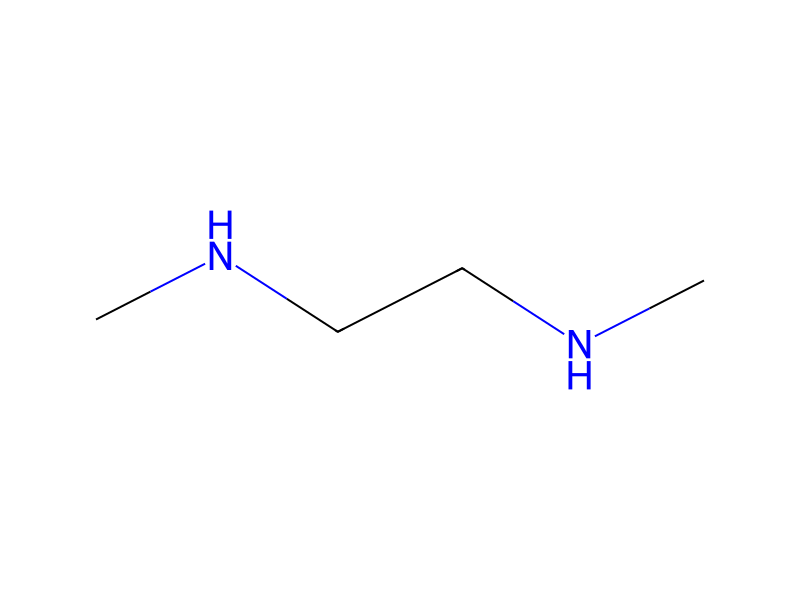
N,N'-Dimethylethylenediamine → alpha,alpha,alpha-Trifluoro-m-tolunitrile
Reaction equation

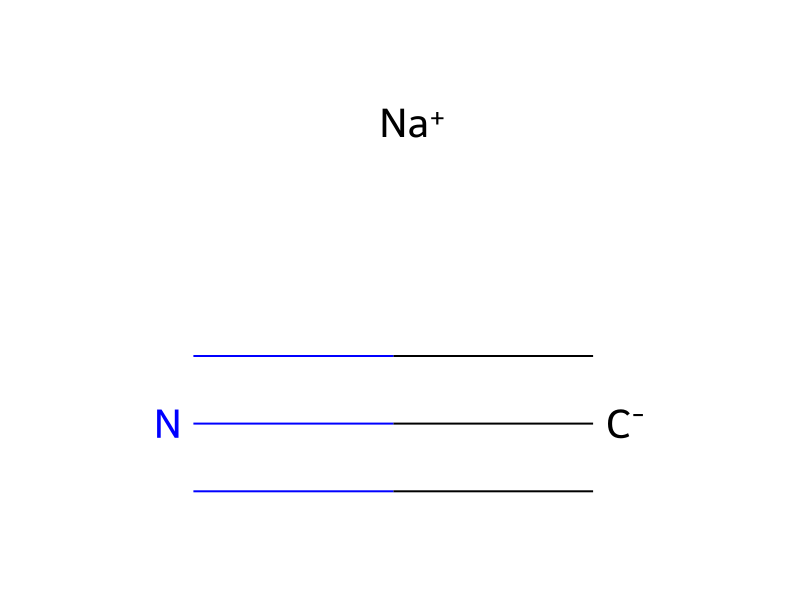
[C-]#N.[Na+].Br[C:5]1[CH:10]=[CH:9][CH:8]=[C:7]([C:11]([F:14])([F:13])[F:12])[CH:6]=1.[CH3:15][NH:16]CCNC.[OH-].[NH4+]>[Cu]I.O.C(OCC)(=O)C.C1(C)C=CC=CC=1>[F:12][C:11]([F:14])([F:13])[C:7]1[CH:6]=[C:5]([CH:10]=[CH:9][CH:8]=1)[C:15]#[N:16]Participants
Reactant 4


Product 1

Reagents, catalysts & solvents 4




Conditions
- Temperature
- 110 °C
Procedure
An oven dried screw cap test tube was charged with NaCN (125 mg, 2.551 mmol), dried KI (60 mg, 0.361 mmol, 17 mol %) and CuI (40 mg, 0.210 mmol, 10 mol %), evacuated and backfilled with argon three times. 1-Bromo-3-trifluoromethylbenzene (295 μL, 2.115 mmol), N,N′-dimethylethylenediamine (225 μL, 2.110 mmol) and anhydrous toluene (1.4 mL) were added under argon. The tube was sealed and the reaction mixture was stirred magnetically at 110 ° C. for 24 h. The resulting yellow suspension was cooled to room temperature, 2 mL of ethyl acetate, 1 mL of ammonium hydroxide (30%) and 1 mL of water were added. The mixture was stirred at 25° C. for 10 min, then the organic layer was washed with 1 mL of water and dried over MgSO4. The GC analysis showed essentially complete consumption of the starting material, and formation of the title compound (as confirmed by GC-MS).
Workup
- customAn oven dried screw
- customcap test tube
- customevacuated
- customThe tube was sealed
- temperatureThe resulting yellow suspension was cooled to room temperature
- stirringThe mixture was stirred at 25° C. for 10 min
- washthe organic layer was washed with 1 mL of water
- dry with materialdried over MgSO4
- customconsumption of the starting material, and formation of the title compound (as confirmed by GC-MS)
Sources & evidence
- ORD record
- ord-cd51f910ddcc4b49b32b1479d2deef23
- Source dataset
- uspto-grants-2008_01
- Patent number
- US07323608B2
Reaction notes
Loading…