Ethylene Glycol → HCID 642868, compound
Reaction equation

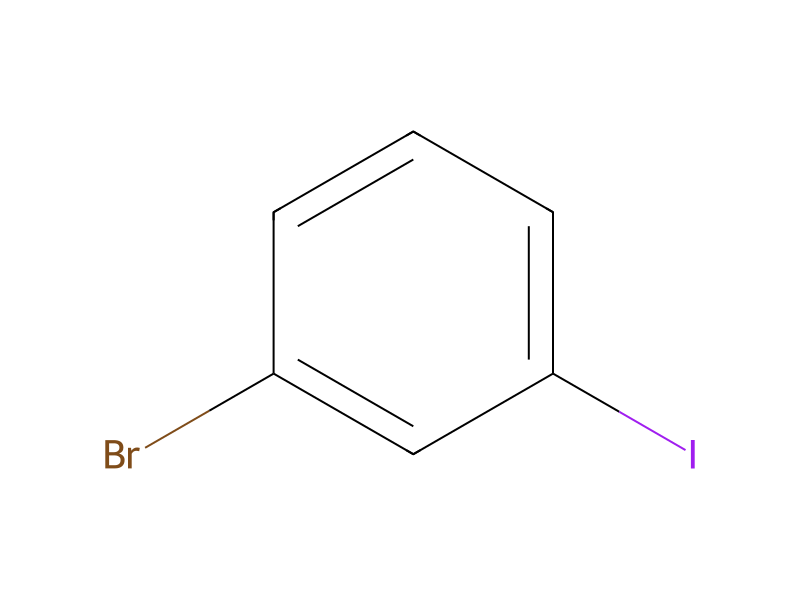
[Br:1][C:2]1[CH:3]=[C:4](I)[CH:5]=[CH:6][CH:7]=1.[C:9]1([SH:15])[CH:14]=[CH:13][CH:12]=[CH:11][CH:10]=1.C([O-])([O-])=O.[K+].[K+].C(O)CO>[Cu]I.CC(O)C>[C:9]1([S:15][C:4]2[CH:5]=[CH:6][CH:7]=[C:2]([Br:1])[CH:3]=2)[CH:14]=[CH:13][CH:12]=[CH:11][CH:10]=1Participants
7
Reactant 4



Product 1

Reagents, catalysts & solvents 2


Procedure
The general procedure in example 39 was followed. 3-bromoiodobenzene (283 mg, 1.0 mmol), thiophenol (103 μL, 1.0 mmol), CuI (10 mg, 0.05 mmol), K2CO3 (276 mg, 2.0 mmol), ethylene glycol (111 μL, 2.0 mmol) and 2-Propanol (1.0 mL) were used to obtain the 3-bromophenyl phenyl sulfide (240 mg, 91% yield) as colorless liquid. Column chromatography solvent (hexane). Rf=0.6 (hexane). 1H NMR (CDCl3, 300 MHz) δ 7.11-7.22 (m, 2 H), 7.28-7.40 (m, 7 H). 13C NMR (CDCl3, 75 MHz) δ 139.2, 134.1, 132.5, 132.4, 130.6, 129.8, 129.7, 128.6, 128.2, 123.2. MS (EI) m/z (relative intensity) 266 (40), 264 (40).
Sources & evidence
- ORD record
- ord-1236e7e2756741c19ddedb4b73d82465
- Source dataset
- uspto-grants-2008_01
- Patent number
- US07323608B2
Reaction notes
Loading…