Ethylene Glycol → HCID 11736687, compound
Reaction equation

I[C:2]1[CH:3]=[N:4][CH:5]=[CH:6][CH:7]=1.[C:8]([NH:11][C:12]1[CH:17]=[CH:16][C:15]([SH:18])=[CH:14][CH:13]=1)(=[O:10])[CH3:9].C([O-])([O-])=O.[K+].[K+].C(O)CO>[Cu]I.CC(O)C>[C:8]([NH:11][C:12]1[CH:17]=[CH:16][C:15]([S:18][C:2]2[CH:3]=[N:4][CH:5]=[CH:6][CH:7]=2)=[CH:14][CH:13]=1)(=[O:10])[CH3:9]Participants
Reactant 4


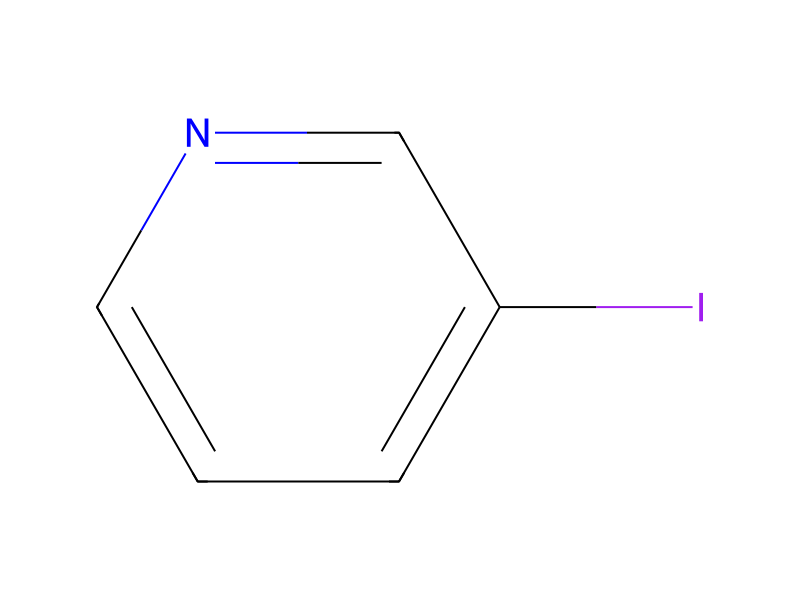

Product 1

Reagents, catalysts & solvents 2


Procedure
The general procedure in example 39 was followed. 3-Iodopyridine (205 mg, 1.0 mmol), 4-acetamidothiophenol (167 mg, 1.0 mmol), CuI (10 mg, 0.05 mmol), K2CO3 (276 mg, 2.0 mmol), ethylene glycol (111 μL, 2.0 mmol) and 2-Propanol (1.0 mL) were used to obtain the 3-(4-acetamidophenyl)sulfanylpyridine (202 mg, 83% yield) as white solid. Column chromatographic solvent (ethyl acetate). Rf=0.4 (ethyl acetate). Melting point; 138-140° C. 1H NMR (CDCl3, 300 MHz) δ 8.42 (d, 1 H, J=1.8 Hz), 8.38 (dd, 1 H, J=0.9 Hz, 4.5 Hz), 8.29 (s, 1 H), 7.52 (d, 2 H, J=8.7 Hz), 7.35 (d, 2 H, J=8.4 Hz), 7.18 (dd, 1 H, J=3.0 Hz, 7.8 Hz), 2.17 (s, 3 H). 13C NMR (CDCl3, 75 MHz) δ 169.0, 149.5, 147.1, 138.9, 136.8, 135.3, 134.0, 127.3, 124.2, 120.9, 24.9. IR (neat, cm−1) 3286, 3245, 3176, 3105, 2360, 2342, 1650. MS (EI) m/z (relative intensity) 244 (100), 202 (100). Anal. Cald. for C13H12N2OS, Cald. C: 63.91, H: 4.95; Found C: 63.80, H: 4.93.
Sources & evidence
- ORD record
- ord-a68c16cf30824579955dad32ca0fa361
- Source dataset
- uspto-grants-2008_01
- Patent number
- US07323608B2
Reaction notes
Loading…