Trimethylsilylacetylene → Trimethylsilyl (4,4,7-trimethyl-thiochroman-6-yl) ethyne
Reaction equation

[CH3:1][C:2]1([CH3:14])[C:11]2[C:6](=[CH:7][C:8]([CH3:13])=[C:9](Br)[CH:10]=2)[S:5][CH2:4][CH2:3]1.[CH3:15][Si:16]([C:19]#[CH:20])([CH3:18])[CH3:17]>[Pd+2].[Pd](Cl)Cl.C1(P(C2C=CC=CC=2)C2C=CC=CC=2)C=CC=CC=1.C1(P(C2C=CC=CC=2)C2C=CC=CC=2)C=CC=CC=1.C(N(CC)CC)C>[CH3:1][C:2]1([CH3:14])[C:11]2[C:6](=[CH:7][C:8]([CH3:13])=[C:9]([C:20]#[C:19][Si:16]([CH3:18])([CH3:17])[CH3:15])[CH:10]=2)[S:5][CH2:4][CH2:3]1Participants
6
Reactant 2


Product 1

Reagents, catalysts & solvents 3
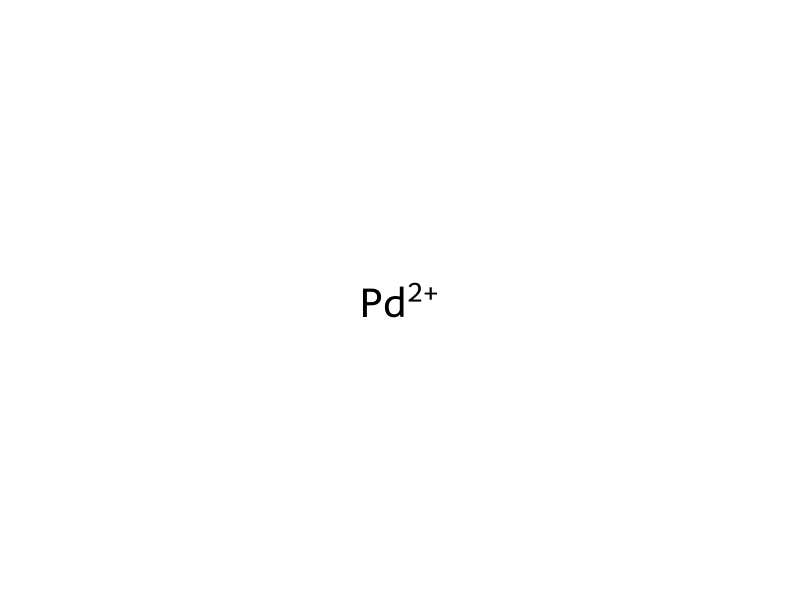


Conditions
- Temperature
- 85 °C
Procedure
A mixture of 624 mg (3.0 mmol) of 4,4,7-trimethyl-6-bromothiochroman, 314 mg (3.2 mmol) of trimethylsilylacetylene, 40 mg (0.21 mmol) of cuprous iodide, 80 mg (0.11 mmol) of bis-(triphenylphosphine) palladium (II) chloride and 1 ml of triethylamine was degassed under nitrogen and heated in a sealed tube at 85° C. for 15 hours. The mixture was then treated with a further 20 mg (0.11 mmol) of cuprous iodide and 40 mg (0.06 mmol) of the palladium (II) catalyst. The mixture was then heated under a nitrogen atmosphere in the sealed tube at 100° C. for a further 64 hours. The triethylamine was then removed under vacuum and the residue purified by flash chromatography (silica; hexanes) to give the title compound as a yellow oil.
Workup
- customwas degassed under nitrogen
- temperatureThe mixture was then heated under a nitrogen atmosphere in the sealed tube at 100° C. for a further 64 hours
- customThe triethylamine was then removed under vacuum
- customthe residue purified by flash chromatography (silica; hexanes)
Sources & evidence
- ORD record
- ord-31f8e2a4dfe14736b21363cc6d6ece44
- Source dataset
- uspto-grants-1993_08
- Patent number
- US05234926
Reaction notes
Loading…