Acetic Acid → Benzaldehyde
Reaction equation

BrBr.[C:3]([OH:6])(=[O:5])[CH3:4].OO.[C:9]1([CH3:15])[CH:14]=[CH:13][CH:12]=[CH:11][CH:10]=1>O.O.O.O.C([O-])(=O)C.[Co+2].C([O-])(=O)C>[CH2:3]([OH:6])[C:4]1[CH:13]=[CH:14][CH:9]=[CH:10][CH:11]=1.[CH:15](=[O:5])[C:9]1[CH:14]=[CH:13][CH:12]=[CH:11][CH:10]=1.[C:3]([OH:6])(=[O:5])[C:4]1[CH:13]=[CH:14][CH:9]=[CH:10][CH:11]=1Participants
8







Procedure
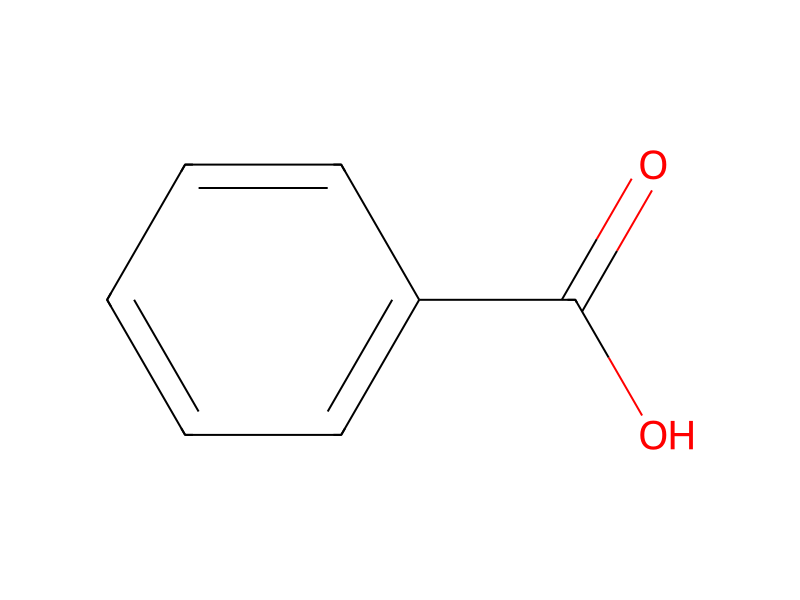
The procedure of Example I was repeated, but this time Cobalt (II) acetate tetrahydrate (0.5 g, 0,002 moles), bromine (0.5 g, 0,003 moles), toluene (2.58 g, 0.028 moles), acetic acid (25 g) and hydrogen peroxide (35%, 0.22 moles) were used. The total reaction time was 3 hours. The analysis of the reaction mixture revealed that 79.2% of the toluene had been consumed, yielding products including benzylalcohol (6.6% yield), benzaldehyde (31.54% yield) and benzoic acid (25.18% yield).
Workup
- customhad been consumed
- customyielding products
Sources & evidence
- ORD record
- ord-13ea0da26cf546538b4213b520b61602
- Source dataset
- uspto-grants-1995_12
- Patent number
- US05473101
Reaction notes
Loading…