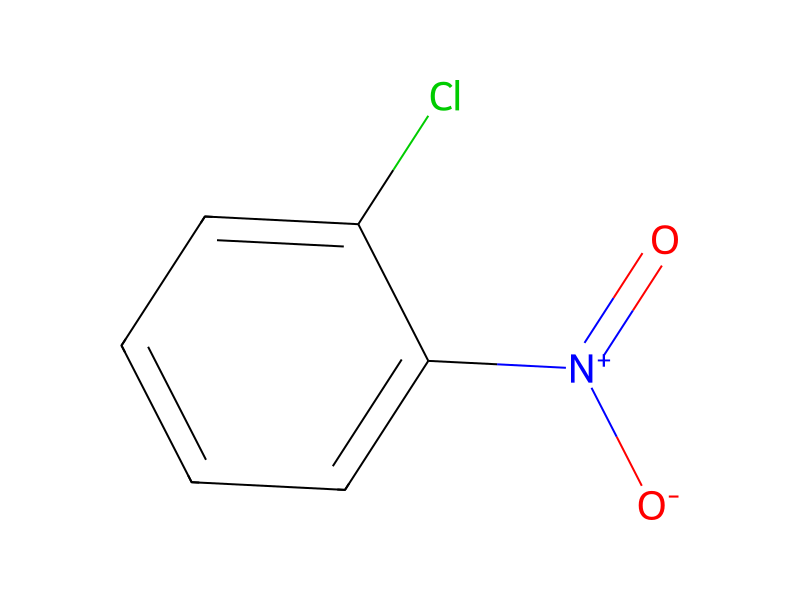
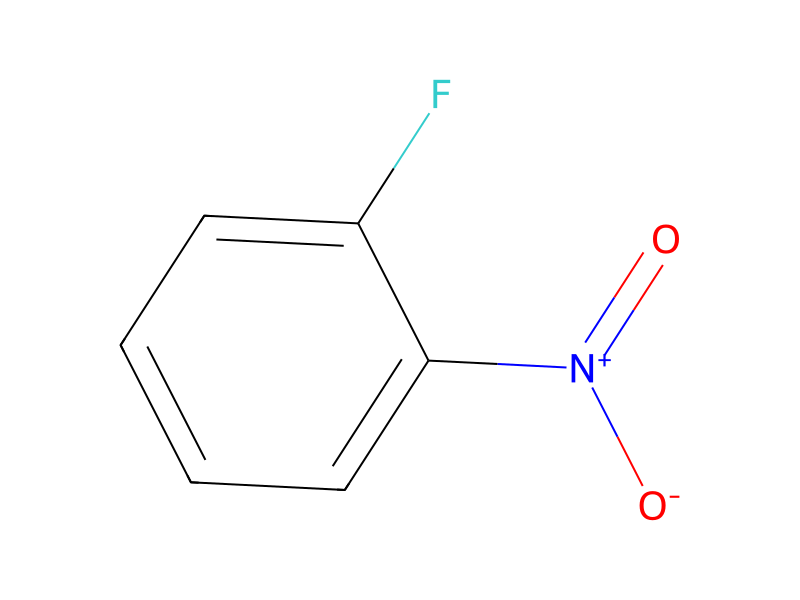
1-Chloro-2-nitrobenzene → 1-Fluoro-2-nitrobenzene
Reaction equation

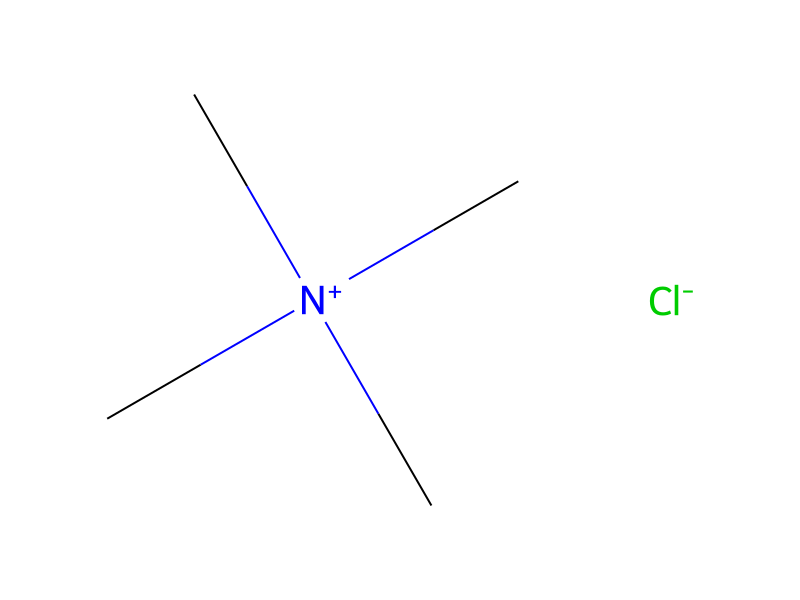
[F-:1].[K+].Cl[C:4]1[CH:9]=[CH:8][CH:7]=[CH:6][C:5]=1[N+:10]([O-:12])=[O:11].C1(C)C(C)=CC=CC=1>[Cl-].C[N+](C)(C)C>[F:1][C:4]1[CH:9]=[CH:8][CH:7]=[CH:6][C:5]=1[N+:10]([O-:12])=[O:11]Participants
Reactant 3


Product 1
Reagents, catalysts & solvents 1
Conditions
- Temperature
- 150 °C
Procedure
In a 2-liter flange flask fitted with a distillation bridge and impeller stirrer, 290.5 g (5.0 mol) of potassium fluoride, 71.1 g (0.1 mol) of trimethyl(ethoxypolyoxypropyl)ammonium chloride and 17.0 g (0.16 mol) of tetramethylammonium chloride were introduced at 120° C. into the melt of 630 g (4.0 mol) of 2-chloronitrobenzene. Subsequently, 100 g (0.38 mol) of xylene were added and the reaction suspension was heated to 150° C., the xylene was removed under reduced pressure and the mixture was stirred for 21 hours at this temperature. Subsequently, the reaction suspension was cooled to 70° C. and filtered with suction. The salts separated off were washed twice with a total of 360 g of xylene and the combined organic 35 phases were fractionated. 417 g (74% of theory) of 2-fluoronitrobenzene were isolated. Amount of 2-fluoronitrobenzene formed, according to GC analysis:
Workup
- customthe xylene was removed under reduced pressure
- temperatureSubsequently, the reaction suspension was cooled to 70° C.
- filtrationfiltered with suction
- customThe salts separated off
- washwere washed twice with a total of 360 g of xylene
Sources & evidence
- ORD record
- ord-c093dec232ff4975939773396d97aa00
- Source dataset
- uspto-grants-1995_12
- Patent number
- US05476976
Reaction notes
Loading…