4-Fluorobenzaldehyde → HCID 60204545, compound
Reaction equation

[S:1]1[CH:5]=[CH:4][C:3]([CH2:6][CH2:7][N:8]2[CH2:12][CH2:11][CH2:10][CH2:9]2)=[CH:2]1.C([Li])CCC.[F:18][C:19]1[CH:26]=[CH:25][C:22]([CH:23]=[O:24])=[CH:21][CH:20]=1>C1COCC1.C([O-])(O)=O.[Na+].CCOC(C)=O>[F:18][C:19]1[CH:26]=[CH:25][C:22]([CH:23]([C:2]2[S:1][CH:5]=[CH:4][C:3]=2[CH2:6][CH2:7][N:8]2[CH2:12][CH2:11][CH2:10][CH2:9]2)[OH:24])=[CH:21][CH:20]=1Participants
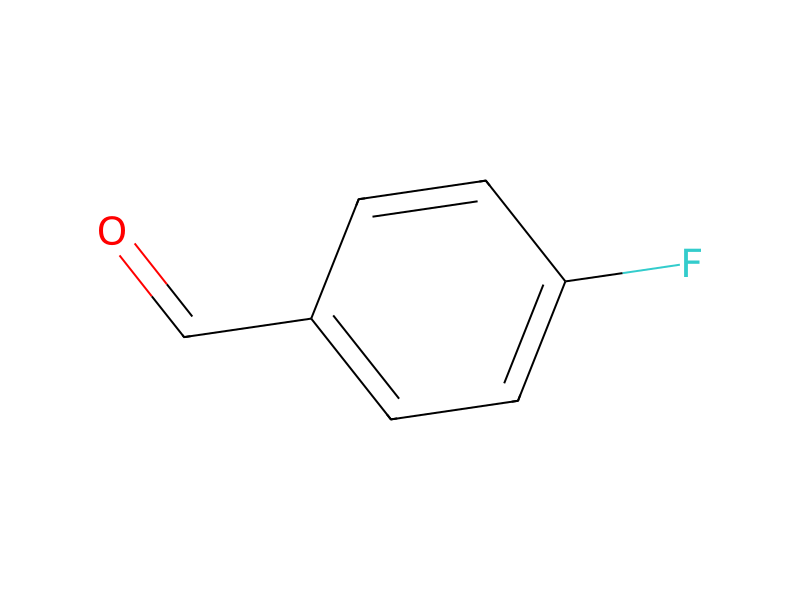






Conditions
- Temperature
- -78 °C
Procedure
A solution of 1-(2-(thiophen-3-yl)ethyl)pyrrolidine (1.0 g, 5.5 mmol) in THF (11.0 mL) was cooled to −78° C. in a dry-ice acetone bath before dropwise addition of n-butyllithium solution (2.5 M in hexanes, 2.4 mL, 6.0 mmol). The reaction mixture was stirred at −78° C. for 1 h and then neat p-fluorobenzaldehyde (0.65 mL, 6.1 mmol) was added dropwise via syringe. The mixture was allowed to warm to room temperature over 16 h and subsequently diluted with saturated aqueous NaHCO3 and EtOAc. The organic layer was separated, washed with brine, and dried over Na2SO4. The residue remaining after solvent removal in vacuo was purified by flash chromatography to afford the desired alkylation product as a white solid (353 mg, 1.16 mmol, 21% yield). MS (M+H)+ 306.
Workup
- temperatureto warm to room temperature over 16 h
- customThe organic layer was separated
- washwashed with brine
- dry with materialdried over Na2SO4
- customafter solvent removal in vacuo
- customwas purified by flash chromatography
Sources & evidence
- ORD record
- ord-560873c70bf84214a9db8d975bd8c946
- Source dataset
- uspto-grants-2010_12
- Patent number
- US07858785B2
Reaction notes
Loading…