Indole → 2-(1-methyl-1H-indol-3-yl)acetonitrile
Reaction equation

[NH:1]1[C:9]2[C:4](=[CH:5][CH:6]=[CH:7][CH:8]=2)[C:3]([CH2:10][C:11]#[N:12])=[CH:2]1.[CH3:13]N(C)C=O.C(=O)(OC)OC.N1C2C(=CC=CC=2)C=C1>[Br-].C([N+](CCCC)(CCCC)CCCC)CCC.O>[CH3:13][N:1]1[C:9]2[C:4](=[CH:5][CH:6]=[CH:7][CH:8]=2)[C:3]([CH2:10][C:11]#[N:12])=[CH:2]1Participants
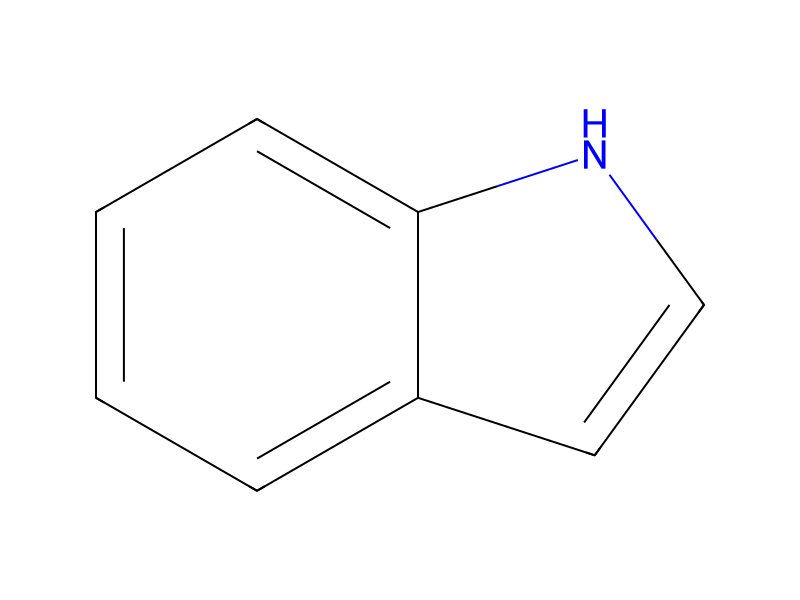

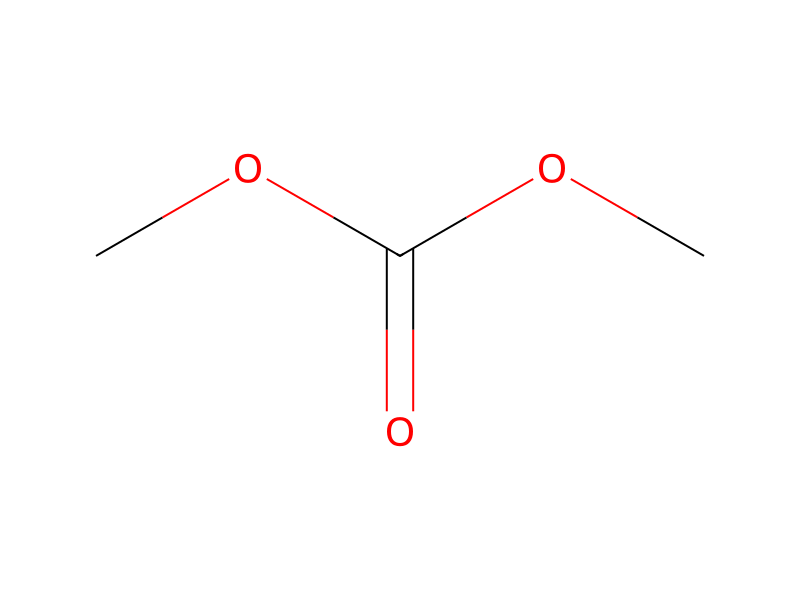




Conditions
- Temperature
- 126 °C
Procedure
A 1 L, three-necked flask equipped with a thermocouple, condenser, and addition funnel was charged with indole-3-acetonitrile (58.0 g, 90% pure=0.334 mol), tetrabutylammonium bromide (11.6 g, 36 mmol), N,N-dimethylformamide (348 mL) and dimethyl carbonate (92.8 mL, 1.10 mol) and the resulting mixture was heated to 126±1° C. The progress of the reaction was monitored by HPLC and after 3 h at this temperature, the presence of remaining starting indole could not be detected. After the reaction mixture was then cooled to zero to −5° C., water (696 mL) was added which resulted in the formation of a precipitate. The mixture was stirred at −5° C. for 1 hour, then the solid was collected by filtration, washed with water (150 mL) and dried under high vacuum at 45° C. for 24 h to give 1-methylindole-3-acetonitrile (52.0 g, 91.5%) as a brown solid.
Workup
- customA 1 L, three-necked flask equipped with a thermocouple, condenser, and addition funnel
- temperatureAfter the reaction mixture was then cooled to zero to −5° C.
- customresulted in the formation of a precipitate
- filtrationthe solid was collected by filtration
- washwashed with water (150 mL)
- customdried under high vacuum at 45° C. for 24 h
Sources & evidence
- ORD record
- ord-f1a5ef64b99149b287a9862112239c1c
- Source dataset
- uspto-grants-2001_12
- Patent number
- US06326501B1
Reaction notes
Loading…