4-Methylmorpholine → HCID 178501296, compound
Reaction equation

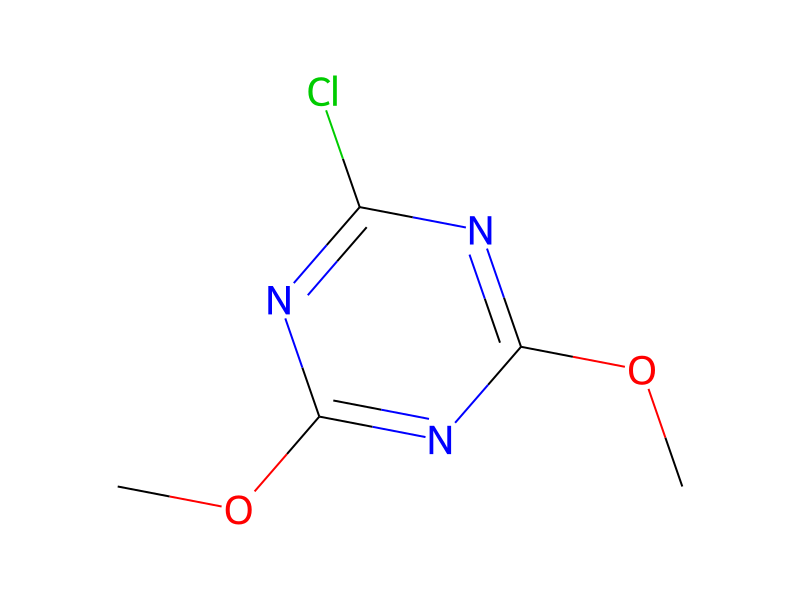
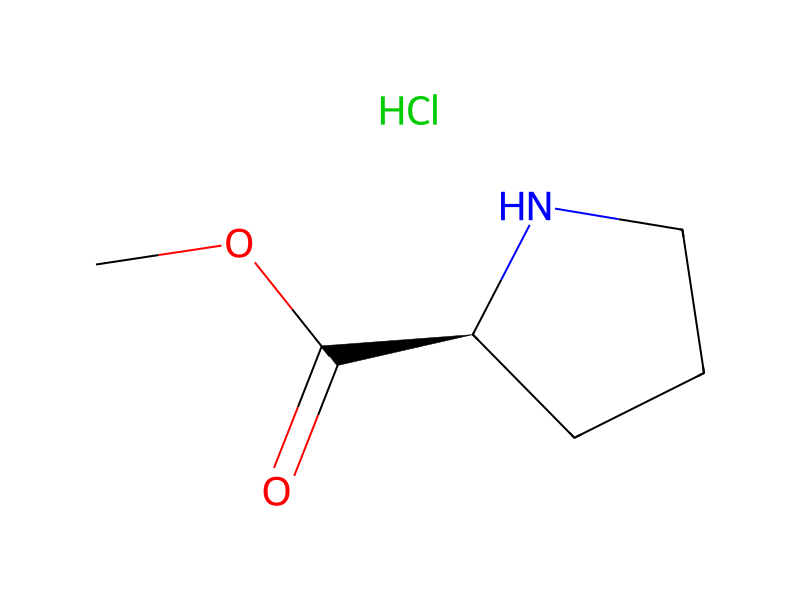
CN1CCOCC1.[N+:8]([C:11]1[N:12]=[C:13]([CH:16]([C:20]2[CH:25]=[CH:24][CH:23]=[CH:22][CH:21]=2)[C:17]([OH:19])=O)[NH:14][CH:15]=1)([O-:10])=[O:9].ClC1N=C(OC)N=C(OC)N=1.Cl.[CH3:38][O:39][C:40](=[O:46])[C@@H:41]1[CH2:45][CH2:44][CH2:43][NH:42]1>O1CCCC1.C(OC)(C)(C)C.CO.C(Cl)Cl>[N+:8]([C:11]1[N:12]=[C:13]([CH:16]([C:20]2[CH:25]=[CH:24][CH:23]=[CH:22][CH:21]=2)[C:17]([N:42]2[CH2:43][CH2:44][CH2:45][C@H:41]2[C:40]([O:39][CH3:38])=[O:46])=[O:19])[NH:14][CH:15]=1)([O-:10])=[O:9]Participants
Reactant 4


Product 1

Reagents, catalysts & solvents 4




Procedure
N-Methyl morpholine (17.79 ml, 2 eq) was added to a stirred solution of 2-(4-nitroimidazolyl)-2-phenylacetic acid (1) (20 g, 80.9 mm) and 2-chloro-4,6-dimethoxy-1,3,5-triazine (14.45 g,80.1 mm, 1.0 eq) in 175 ml of anhydrous tetrahydrofuran at 25° C. After stirring the reaction mixture at ambient temperature for 1.5 h, 14.45g (80.9 mm, 1.0 eq) of proline methyl ester hydrochloride was added. The reaction was stirred overnight at room temperature and the solvent was evaporated under a stream of nitrogen. The residue was partitioned between 200 Ml of 1M HCl and 200 mL of deionized water. The layers were separated and the organic layer was washed with saturated sodium bicarbonate solution. A quantity of water sufficient to dissolve the resulting solids was added. The organic layer was washed with brine, dried over magnesium sulfate, filtered and the volatiles were removed under vacuum to give a brown foam. The foam was dissolved in methyl t-butyl ether, methylene chloride and methanol to effect crystallization. The resulting slurry was filtered and dried under vacuum to give 17.45 g (60%) of a cream colored product MS: 358 (M+) IR (cm−1): 1744, 1668; H1 nmr d (d6 DMSO): 1.42-1.46 (m, 3H), 1.6-1.9 (m, 1H), 2.42-2.63 (m,1H), 3.21 (s, 1.5H), 3.25 (s, 1.5H), 3.30-3.36 (m, 1H), 4.01-4.06 (m, 1H), 6.36 (s, 0.5H), 6.43 (s, 0.5h), 7.0-7.2 (m, 5H), 7.38 (s, 0.5H), 7.41 (s, 0.5H), 7.75 (s, 0.5H), 7.83 (s, 0.5H)
Workup
- stirringThe reaction was stirred overnight at room temperature
- customthe solvent was evaporated under a stream of nitrogen
- customThe residue was partitioned between 200 Ml of 1M HCl and 200 mL of deionized water
- customThe layers were separated
- washthe organic layer was washed with saturated sodium bicarbonate solution
- dissolutionA quantity of water sufficient to dissolve the resulting solids
- additionwas added
- washThe organic layer was washed with brine
- dry with materialdried over magnesium sulfate
- filtrationfiltered
- customthe volatiles were removed under vacuum
- customto give a brown foam
- customcrystallization
- filtrationThe resulting slurry was filtered
- customdried under vacuum
Sources & evidence
- ORD record
- ord-0b1de089a245466aa1d80cc20360200b
- Source dataset
- uspto-grants-2001_12
- Patent number
- US06329342B1
Reaction notes
Loading…