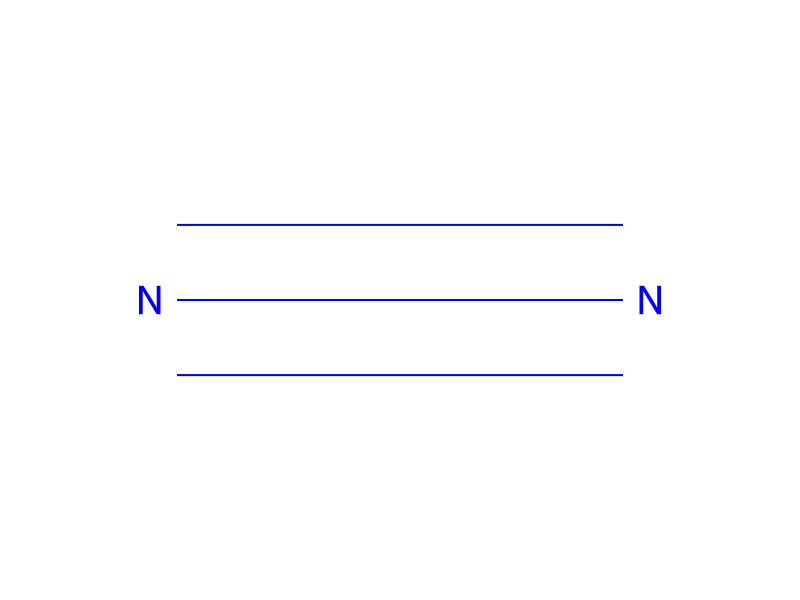
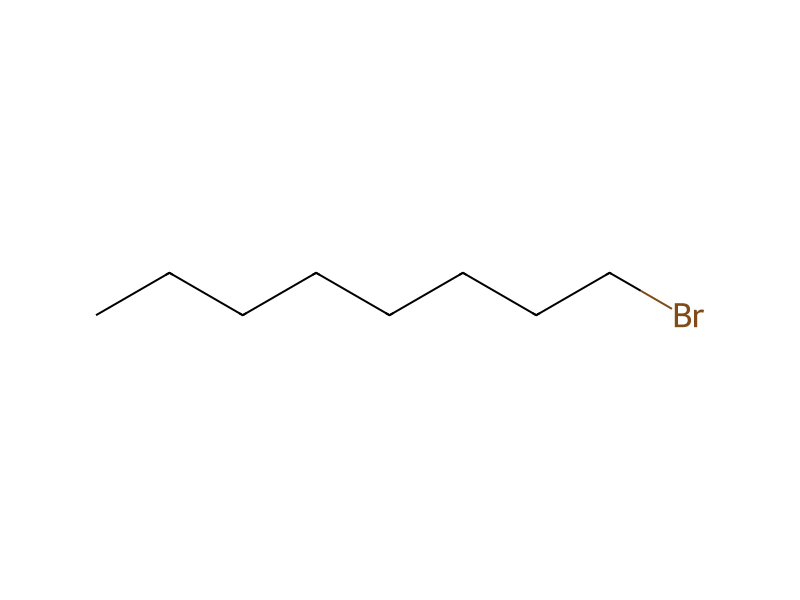
Nitrogen → Benzylamine, N-methyl-N-octyl-
Reaction equation

[CH3:1][NH:2][CH2:3][C:4]1[CH:9]=[CH:8][CH:7]=[CH:6][CH:5]=1.N#N.Br[CH2:13][CH2:14][CH2:15][CH2:16][CH2:17][CH2:18][CH2:19][CH3:20]>C(#N)C>[CH2:3]([N:2]([CH2:13][CH2:14][CH2:15][CH2:16][CH2:17][CH2:18][CH2:19][CH3:20])[CH3:1])[C:4]1[CH:9]=[CH:8][CH:7]=[CH:6][CH:5]=1Participants
Reactant 3

Product 1

Reagents, catalysts & solvents 1

Conditions
- Temperature
- 80 °C
Procedure
254.5 g Freshly distilled N-methylbenzylamine (2.1 mole, fw=121.18, ˜271 mL) is added to 350 mL stirring acetonitrile in a 1 L 4-neck round-bottom flask that is equipped with a heating mantle, mechanical stirrer, 250 mL addition funnel, reflux condensor and teflon-coated thermocouple. The reaction is carried out under a nitrogen atmosphere with a slow N2 purge. 135.2 g Freshly distilled 1-bromooctane (0.70 mole, fw=221.19, ˜121 mL) is added to the stirring mixture in a dropwise fashion at such a rate that the reaction exotherm maintains the reaction temperature in the range 55-65° C. Under these conditions, the bromooctane addition requires about 2 hours. After the entire bromodecane is added and the reaction temperature drops below 45° C., the stirring reaction mixture is heated to 80° C. for 2 hr and then allowed cool. The reaction mixture is periodically monitored by HPLC in order to ensure that the bromooctane is entirely consumed. As the reaction cools, a less dense upper layer of the product begins to form. Upon cooling as the reaction to ambient temperature, 100 mL distilled water is added portionwise to the stirring mixture in order to facilitate phase separation and prevent crystallization of amine hydrobromide. The reaction mixture is transferred to a 1 L separatory funnel and them cooled to about −20° C. for 2 hours in order to achieve full phase separation. The lower phase is discarded and the upper phase is retained in the funnel. 1.0 L 10% w/w NaOH in distilled water is added, the mixture is thoroughly mixed and then allowed to settle for about 1 hour. The phases are again separated, the upper product phase is retained, 1.0 L distilled water is added to the mixture that is through mixed. The phases are separated after about 2 hours, and the upper product phase is placed in a rotary evaporator (80° C. bath temp.) in order to remove water, acetonitrile and some residual starting amine. This procedure yields 143 g (88%) of a pale yellow viscous liquid with a purity of 96-98% (GC, HPLC). The major impurity is the starting amine (2-4%). This material is vacuum distilled (172-175° C., 1 torr) giving a 90% distillation yield of a colorless liquid (99.8% purity). This is a clean reaction that produces good quality product if the starting secondary amine and primary alkyl halide are themselves pure.
Workup
- customis equipped with a heating mantle, mechanical stirrer, 250 mL addition funnel
- custompurge
- addition135.2 g Freshly distilled 1-bromooctane (0.70 mole, fw=221.19, ˜121 mL) is added to the stirring mixture in a dropwise fashion at such a rate that the reaction exotherm
- customin the range 55-65° C
- additionUnder these conditions, the bromooctane addition
- additionAfter the entire bromodecane is added
- customdrops below 45° C.
- customthe stirring reaction mixture
- temperatureallowed cool
- customis entirely consumed
- customto form
- temperatureUpon cooling as the reaction to ambient temperature
- distillation100 mL distilled water
- additionis added portionwise to the stirring mixture in order
- customphase separation
- customcrystallization of amine hydrobromide
- customThe reaction mixture is transferred to a 1 L separatory funnel
- temperaturethem cooled to about −20° C. for 2 hours in order
- customphase separation
- addition1.0 L 10% w/w NaOH in distilled water is added
- additionthe mixture is thoroughly mixed
- waitto settle for about 1 hour
- customThe phases are again separated
- distillation1.0 L distilled water
- additionis added to the mixture that
- additionthrough mixed
- customThe phases are separated after about 2 hours
- customthe upper product phase is placed in a rotary evaporator (80° C. bath temp.) in order
- customto remove water, acetonitrile
Sources & evidence
- ORD record
- ord-140d7a96e1a34a209bb26fbfa1426c2b
- Source dataset
- uspto-grants-2015_09
- Patent number
- US09120846B2
Reaction notes
Loading…