Benzyl Alcohol → HCID 11446713, compound
Reaction equation

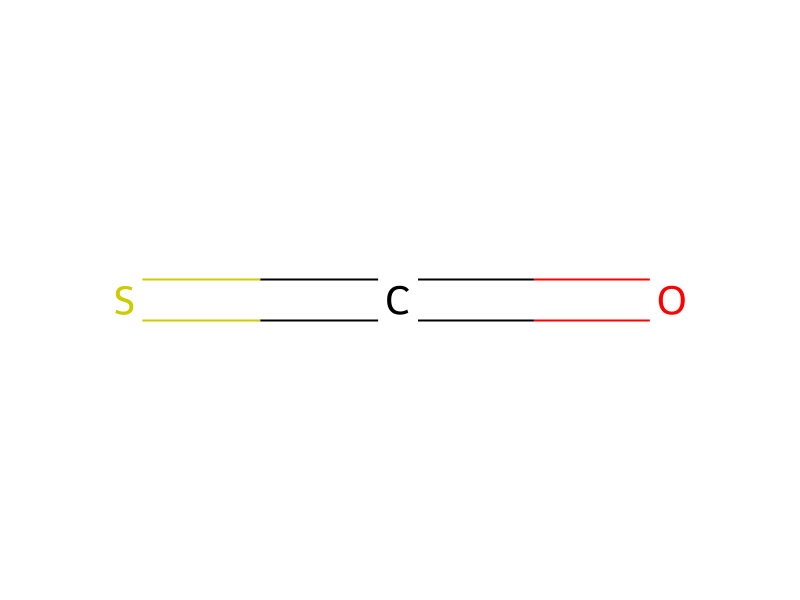
[CH2:1]([OH:8])[C:2]1[CH:7]=[CH:6][CH:5]=[CH:4][CH:3]=1.[C:9](=[S:11])=[O:10].[CH2:12]1CCN2C(=NCCC2)CC1>C1COCC1>[C:9](=[O:10])([O:8][CH2:1][C:2]1[CH:7]=[CH:6][CH:5]=[CH:4][CH:3]=1)[S:11][CH3:12]Participants
Reactant 3


Product 1

Reagents, catalysts & solvents 1

Conditions
- Temperature
- 20 °C
Procedure
Carbonyl sulfide may provide an effective reagent for the carbonylation reaction. The carbonylation of benzyl alcohol with carbonyl sulfide may be done under an ambient pressure and at about 20° C. for about 1 hour in the presence of DBU in THF. The formed carbonothioate salt may be quenched by methyl iodide at about 0° C., and the resulting mixture may be stirred under an ambient pressure, at about 20° C. for an additional about 2 hours to provide S-methyl O-benzyl carbonothioate at a yield of about 87%. Next, the chlorination of S-methyl O-benzyl carbonothioate by sulfuryl chloride may be done by the slow addition of sulfuryl chloride to the S-methyl O-benzyl carbonothioate at about 0° C. with vigorous stirring at about 20° C. for about 1 hour to provide the benzyl chloroformate in a quantitative yield and in an almost pure form. Additional purification may be done by vacuum distillation.
Workup
- customfor the carbonylation reaction
- customThe formed carbonothioate salt may be quenched by methyl iodide at about 0° C.
Sources & evidence
- ORD record
- ord-47e9aae268e34a998e77f10b1600fd30
- Source dataset
- uspto-grants-2015_09
- Patent number
- US09120958B2
Reaction notes
Loading…