Calcium Acetate → Tricalcium Phosphate
Reaction equation

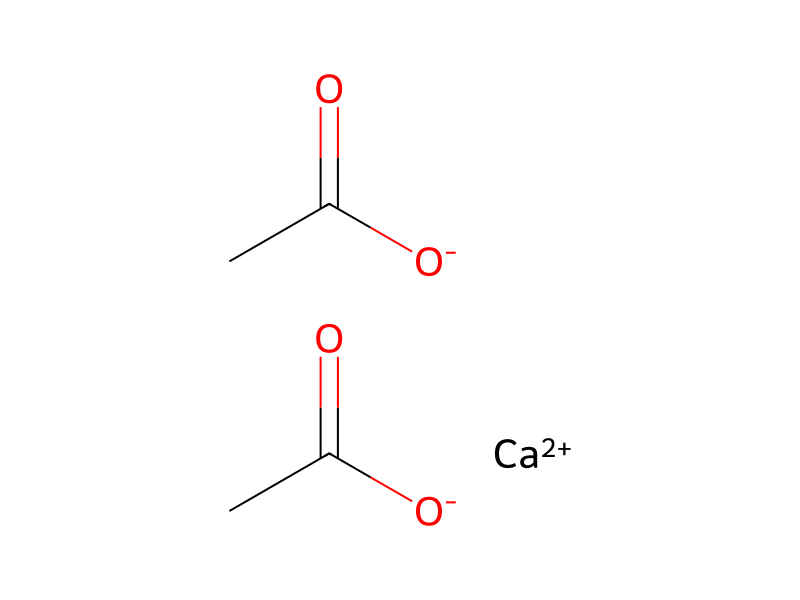
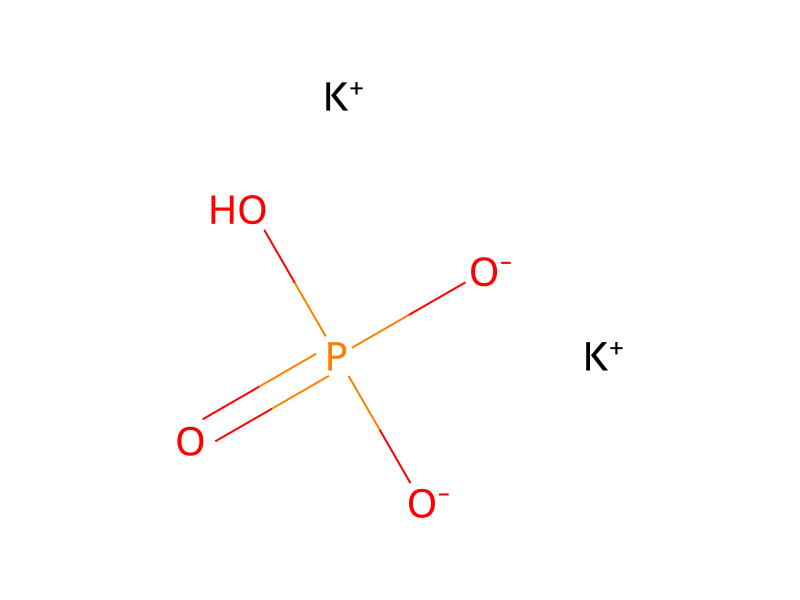
[P:1]([O-:5])([O-:4])([OH:3])=[O:2].[K+].[K+].C([O-])(=O)C.[Ca+2:12].C([O-])(=O)C>>[P:1]([O-:5])([O-:4])([O-:3])=[O:2].[Ca+2:12].[P:1]([O-:5])([O-:4])([O-:3])=[O:2].[Ca+2:12].[Ca+2:12]Participants

Procedure
This example illustrates the preparation of a catalyst suitable for use in the invention hydrogenation process. The catalyst, referred to as catalyst A in Example II below, was prepared by adding an aqueous solution of dipotassium hydrogen phosphate (1.0 mole) with vigorous stirring to an aqueous solution of calcium acetate (1.67 moles) to obtain a calcium phosphate gel having a Ca:P atomic ratio of 1.67. The gel was allowed to stand overnight and was recovered by filtration and was washed by slurrying in a 3500 mL portion of water 3 times, with filtering after each wash. The filter cake was additionally washed by pulling 10 liters of distilled water through it. About one quarter of the wet cake was reslurried in 1000 mL of distilled water, and to the stirred slurry was added 16 grams of barium nitrate dissolved in 300 mL of distilled water. The mixture was allowed to stand for 2 days with occasional stirring. Then to the well-stirred slurry was slowly added a mixture of 145 g nickel nitrate and 16 g barium nitrate dissolved in 600 mL of hot distilled water and 100 g potassium carbonate dissolved in 250 mL of distilled water. The resulting mixture was filtered to obtain a cake which was reslurried in about 3500 mL of distilled water and filtered. This operation was repeated and then about 3 liters of distilled water was pulled through the filter cake. The cake was dried overnight at 220° F., crushed to pass a 40-mesh screen and calcined in air at 800° F. for 3 hours. The cooled product was mixed with 3 weight percent polyethylene powder and pilled to 1/8-inch size at 100 psig. The pills were heated at about 800° F. in hydrogen for about 20 minutes to obtain the finished catalyst. The catalyst, as analyzed, contained 16.3 weight percent barium and 26.9 weight percent nickel based on the total weight of the catalyst. The surface area of the catalyst was about 80 square meters per gram, as determined by nitrogen absorption, the pore volume was about 0.2 mL per gram as determined by water absorption, and the apparent bulk density was 0.94 gram per mL.
Workup
- customthe preparation of a catalyst suitable for use in the invention hydrogenation process
- customwas prepared
Sources & evidence
- ORD record
- ord-28efda1745a24e2fac5b598fc336f4ff
- Source dataset
- uspto-grants-1982_04
- Patent number
- US04327234
Reaction notes
Loading…