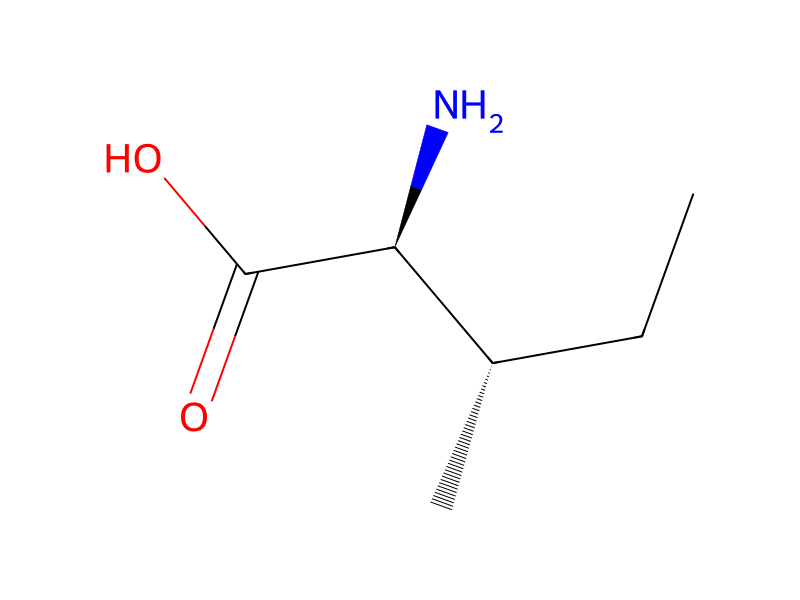
Triethylamine → L-Isoleucine
Reaction equation

C(CN1CCC[C@H]1C(N(CC1C=CC=CC=1)[C:10](=[O:17])[C@H:11]([C@H:13]([CH2:15][CH3:16])[CH3:14])[NH2:12])=O)(O)=O.C(N(CC)CC)C.ClC(OCC(C)C)=[O:37].N1CCCC1>C(#N)C>[NH2:12][C@H:11]([C:10]([OH:17])=[O:37])[C@H:13]([CH2:15][CH3:16])[CH3:14]Participants
6





Procedure
A -5° C. solution of L-isoleucine, N-[1-(carboxymethyl)-L-prolyl] benzylamide (0.212 g, 0.56 mmol, 1.0 eq), and triethylamine (96 uL, 65 mg, 0.65 mmol, 1.15 eq), in acetonitrile (10 mL) was treated with isobutyl chloroformate (77 uL, 80 mg, 0.59 mmol, 1.05 eq) followed by pyrrolidine (94 uL, 80 mg, 1.13 mmol, 2.0 eq). Workup as above provided 205 mg (85%) of L-isoleucine, N-[1-[2-(1-pyrrolidine)-2-oxoethyl]-L-prolyl] benzylamide.
Sources & evidence
- ORD record
- ord-745d89d6d3144c2189f581f6e1c315a1
- Source dataset
- uspto-grants-1997_11
- Patent number
- US05686424
Reaction notes
Loading…