Phosphorus oxychloride → ethyl 5-bromo-3-formyl-1H-indole-2-carboxylate
Reaction equation

P(Cl)(Cl)(Cl)=O.CN([CH:14]=[O:15])C1C=CC=CC=1.[Br:16][C:17]1[CH:18]=[C:19]2[C:23](=[CH:24][CH:25]=1)[NH:22][C:21]([C:26]([O:28][CH2:29][CH3:30])=[O:27])=[CH:20]2>ClCCCl>[Br:16][C:17]1[CH:18]=[C:19]2[C:23](=[CH:24][CH:25]=1)[NH:22][C:21]([C:26]([O:28][CH2:29][CH3:30])=[O:27])=[C:20]2[CH:14]=[O:15]Participants
5




Procedure
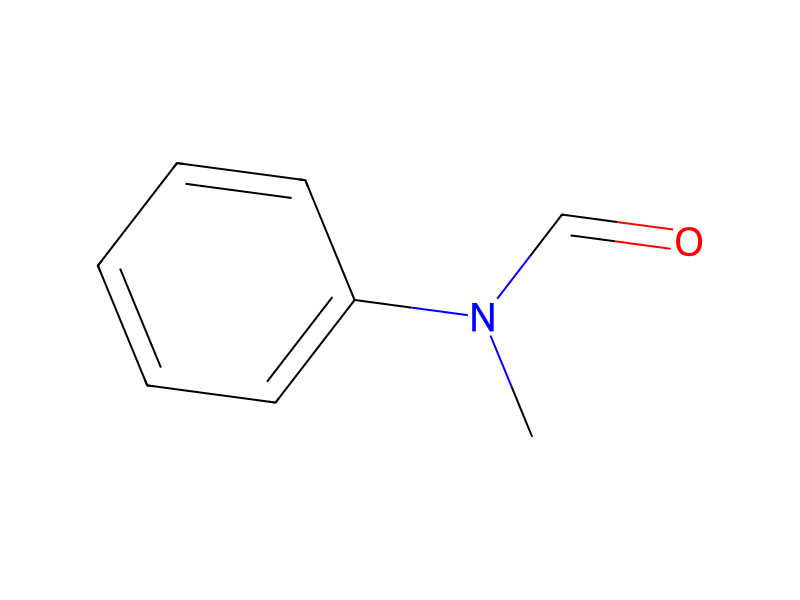
In a 1 L round bottom flask 10.5 mL of phosphorus oxychloride was added to 15.5 g of N-methylformanilide at room temperature that resulted in a yellow solid after 15 min. At this time, 170 mL of 1,2-dichloroethane and 20.1 g of ethyl 5-bromoindole-2-carboxylate were added. The resulting suspension was heated under reflux for 4 hours and then concentrated to remove the organic solvent. 75 g of sodium acetate in 750 mL of water were added and the solid suspension was stirred for 30 min at room temperature, filtered and washed 3 times with water. The crude material was dried under vacuum for 1 hour and swished with 500 mL of EtOH to yield 21.2 g of the title compound as off-white solid.
Workup
- customresulted in a yellow solid after 15 min
- temperatureThe resulting suspension was heated
- temperatureunder reflux for 4 hours
- concentrationconcentrated
- customto remove the organic solvent
- addition75 g of sodium acetate in 750 mL of water were added
- filtrationfiltered
- washwashed 3 times with water
- dry with materialThe crude material was dried under vacuum for 1 hour
Sources & evidence
- ORD record
- ord-93a02132d4ef49cf93f783faf08cdec1
- Source dataset
- uspto-grants-2002_08
- Patent number
- US06436965B1
Reaction notes
Loading…