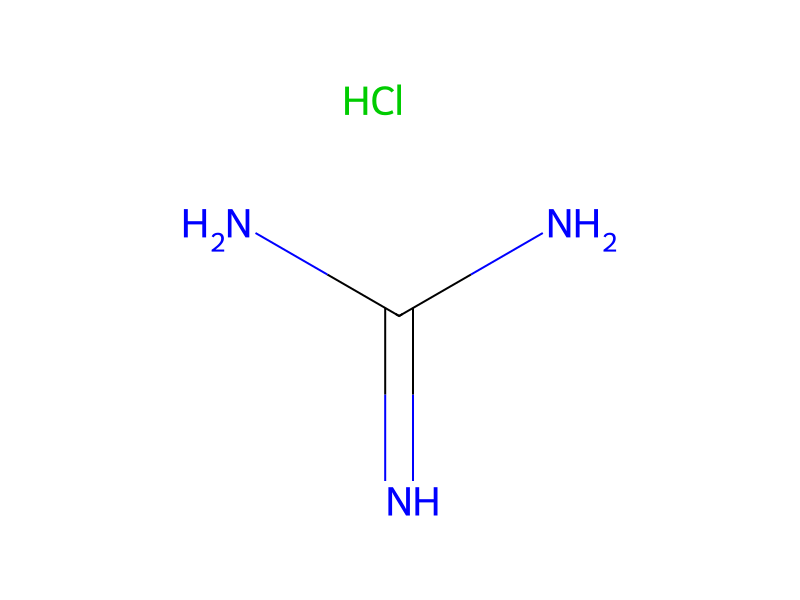
Guanidine Hydrochloride → HCID 178513081, compound
Reaction equation

Cl.[NH2:2][C:3]([NH2:5])=[NH:4].[OH-].[Na+].[CH:8]1([C:11]2[N:15]([C:16]3[CH:25]=[CH:24][CH:23]=[C:22]4[C:17]=3[CH:18]=[CH:19][CH:20]=[N:21]4)[N:14]=[CH:13][C:12]=2[C:26](Cl)=[O:27])[CH2:10][CH2:9]1>O1CCCC1>[CH:8]1([C:11]2[N:15]([C:16]3[CH:25]=[CH:24][CH:23]=[C:22]4[C:17]=3[CH:18]=[CH:19][CH:20]=[N:21]4)[N:14]=[CH:13][C:12]=2[C:26]([NH:4][C:3]([NH2:5])=[NH:2])=[O:27])[CH2:10][CH2:9]1Participants
5
Reactant 3


Product 1

Reagents, catalysts & solvents 1

Procedure
combining guanidine hydrochloride and sodium hydroxide with a suspension of 5-cyclopropyl-1-quinolin-5-yl-1H-pyrazole4-carboxylic acid chloride in tetrahydrofuran at a temperature of about −10° C. to about 10° C. for about 1 hour to about 3 hours to form N-(5-cyclopropyl-1-quinolin-5-yl-1H-pyrazole4-carbonyl)-guanidine; and
Sources & evidence
- ORD record
- ord-470f417b3b7b47578eb72dd6ebb31ab6
- Source dataset
- uspto-grants-2002_08
- Patent number
- US06441176B1
Reaction notes
Loading…