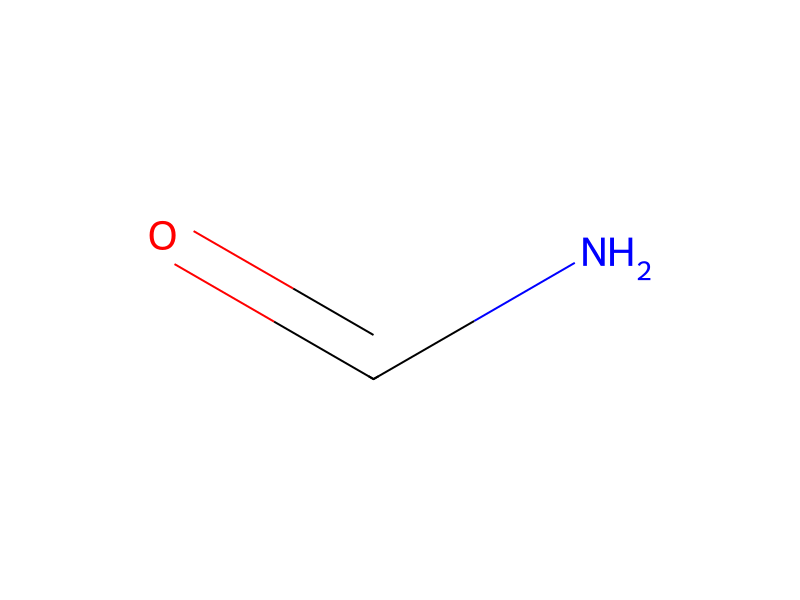
Formamide → 4-Acetylbenzamide
Reaction equation

[CH3:1][C:2]([C:4]1[CH:9]=[CH:8][C:7](Br)=[CH:6][CH:5]=1)=[O:3].[CH:11]([NH2:13])=[O:12]>CN(C)C1C=CN=CC=1.Cl[Pd](Cl)([P](C1C=CC=CC=1)(C1C=CC=CC=1)C1C=CC=CC=1)[P](C1C=CC=CC=1)(C1C=CC=CC=1)C1C=CC=CC=1.CN1CCCC1=O>[C:2]([C:4]1[CH:9]=[CH:8][C:7]([C:11]([NH2:13])=[O:12])=[CH:6][CH:5]=1)(=[O:3])[CH3:1]Participants
Reactant 2
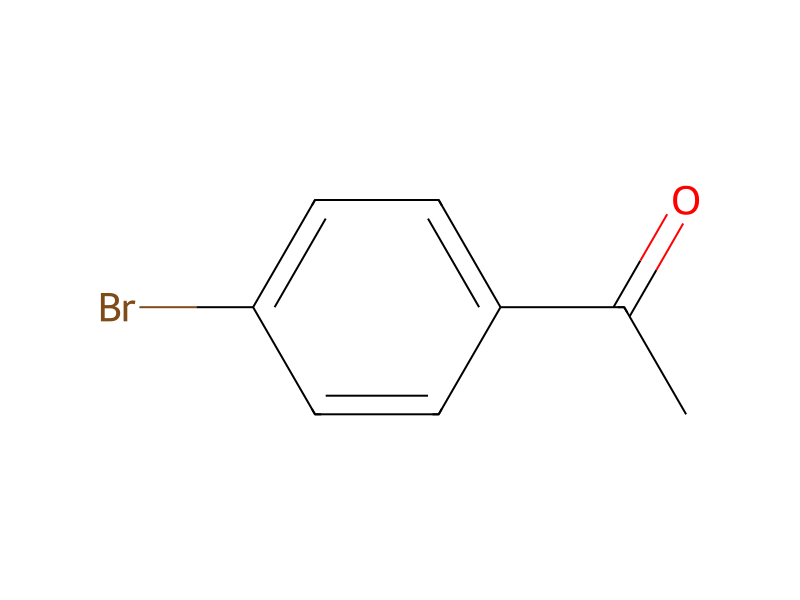
Product 1

Reagents, catalysts & solvents 3



Conditions
- Temperature
- 120 °C
Procedure
0.122 g of bis(triphenylphosphine)-palladium(II) chloride, 3.439 g of 4-bromoacetophenone, 3.12 g of formamide, 2.37 g of 4-dimethylamino-pyridine and 20 ml of 1-methyl-2-pyrrolidinone are placed in a 200 ml glass autoclave. The autoclave is closed, flushed with nitrogen three times and then 5 bars carbon monoxide are applied. The reaction mixture is heated to 120° C. and stirred for 18 hours. It is then cooled, and the solution is diluted with ethyl acetate and water, and extracted. The aqueous phase is extracted by shaking 3 times with ethyl acetate, and afterwards the organic phases are collected, dried over magnesium sulphate and concentrated. The oil obtained is chromatographed over silica gel. The yield of title compound is 35% (part of the product remains in the water phase).
Workup
- customThe autoclave is closed
- customflushed with nitrogen three times
- temperatureIt is then cooled
- additionthe solution is diluted with ethyl acetate and water
- extractionextracted
- extractionThe aqueous phase is extracted
- stirringby shaking 3 times with ethyl acetate
- customafterwards the organic phases are collected
- dry with materialdried over magnesium sulphate
- concentrationconcentrated
- customThe oil obtained
- customis chromatographed over silica gel
Sources & evidence
- ORD record
- ord-7ec90f09f80f4d00b4a81c88f16b120d
- Source dataset
- uspto-grants-2002_08
- Patent number
- US06441233B1
Reaction notes
Loading…