Hydrochloric Acid → 6-Bromo-1-cyanomethyl-1H-indole-3-carboxylic Acid
Reaction equation

[Br:1][C:2]1[CH:10]=[C:9]2[C:5]([C:6]([C:11]([OH:13])=[O:12])=[CH:7][NH:8]2)=[CH:4][CH:3]=1.[H-].[Na+].Br[CH2:17][C:18]#[N:19].Cl>CN(C)C=O.O>[Br:1][C:2]1[CH:10]=[C:9]2[C:5]([C:6]([C:11]([OH:13])=[O:12])=[CH:7][N:8]2[CH2:17][C:18]#[N:19])=[CH:4][CH:3]=1Participants
7

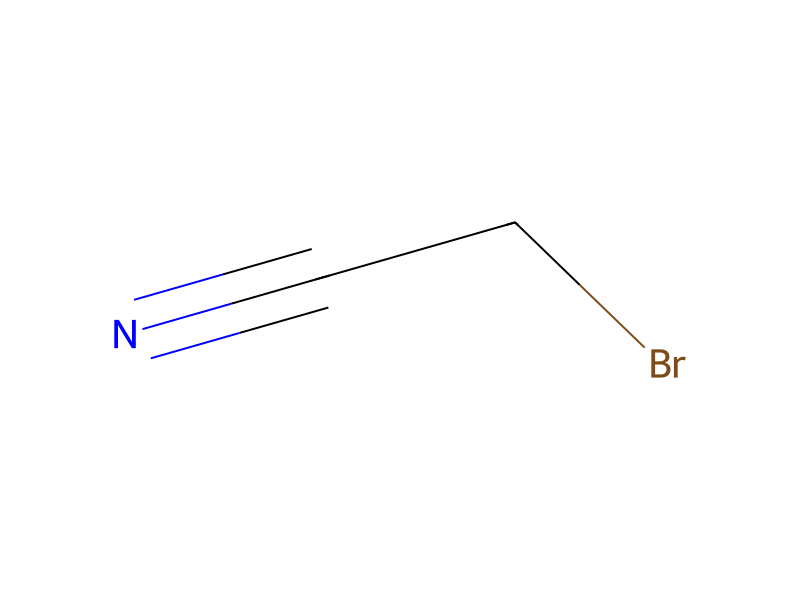





Conditions
- Temperature
- 0 °C
Procedure
6-Bromo-1H-indole-3-carboxylic acid (0.24 g, 1 mmole) was dissolved in anhydrous dimethylformamide (2 ml) and cooled to 0° C. in a nitrogen atmosphere. With stirring, sodium hydride (60% in oil, 0.088 g, 2.2 mmole) was added all at once and the mixture was stirred at this temperature until no more bubbles evolved (ca. 20-30 minutes). Bromoacetonitrile (0.132 g, 1.1 mmole) was added to the reaction mixture which was then allowed to warm to room temperature over the next hour. The reaction mixture was poured into water, acidified with HCl and a precipitate formed. When dried the product weighed 0.190 g (68% yield) and was sufficiently pure to be used directly in the next step without further purification.
Workup
- stirringwas stirred at this temperature until no more bubbles
- custom(ca. 20-30 minutes)
- temperatureto warm to room temperature over the next hour
- customa precipitate formed
- customWhen dried the product
- customto be used directly in the next step without further purification
Sources & evidence
- ORD record
- ord-e4124114688942ac9062624f8cc731ac
- Source dataset
- uspto-grants-2005_02
- Patent number
- US06852726B2
Reaction notes
Loading…