Pyridine → 4-Nitrophenyl 1,3-thiazol-2-ylcarbamate
Reaction equation

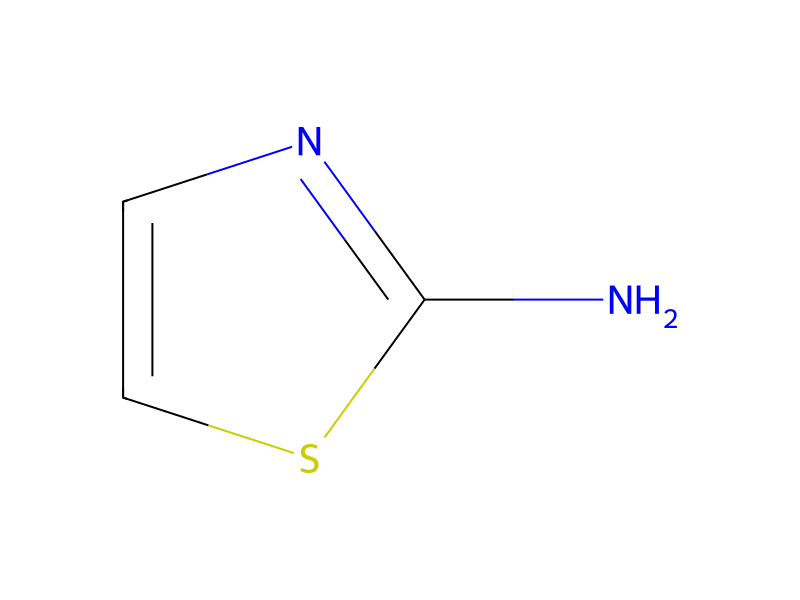
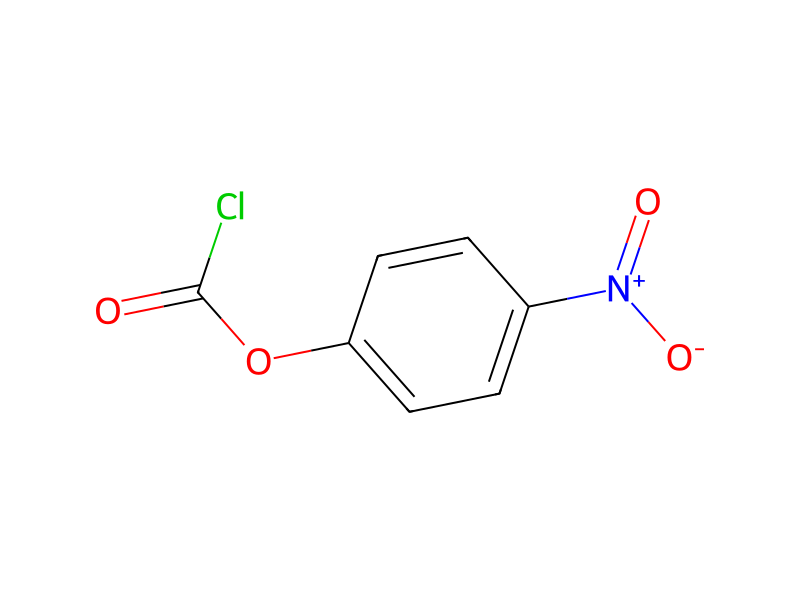
Cl[C:2]([O:4][C:5]1[CH:10]=[CH:9][C:8]([N+:11]([O-:13])=[O:12])=[CH:7][CH:6]=1)=[O:3].[NH2:14][C:15]1[S:16][CH:17]=[CH:18][N:19]=1.N1C=CC=CC=1>C(OCC)(=O)C>[N+:11]([C:8]1[CH:9]=[CH:10][C:5]([O:4][C:2]([NH:14][C:15]2[S:16][CH:17]=[CH:18][N:19]=2)=[O:3])=[CH:6][CH:7]=1)([O-:13])=[O:12]Participants
5
Reactant 3

Product 1

Reagents, catalysts & solvents 1

Procedure
A solution of 4-nitrophenyl chloroformate, 5.04 g (25 mMole), in 25 ml of dry ethyl acetate was added dropwise to an ice cooled, stirred solution of 2-aminothiazole, 5.01 g (50 mMole) in dry ethyl acetate, 25 ml, and dry pyridine, 50 ml. The ice bath was removed as the reaction mixture became viscous. Stirring was continued at 22° C. for three hours. Ethyl acetate was added. The insolubles were filtered, rinsed with ethyl acetate, with water, with acetone, dried and recrystallized from acetone furnishing 3.55 g of 2-(4-nitrophenoxycarbonyl)aminothiazole, m.p 211°-212° C. dec, which was characterized by nuclear magnetic resonance, mass spectra, infrared spectra and elemental analyses.
Workup
- temperaturecooled
- customThe ice bath was removed as the reaction mixture
- additionEthyl acetate was added
- filtrationThe insolubles were filtered
- washrinsed with ethyl acetate, with water, with acetone
- customdried
- customrecrystallized from acetone furnishing 3.55 g of 2-(4-nitrophenoxycarbonyl)aminothiazole, m.p 211°-212° C. dec, which
Sources & evidence
- ORD record
- ord-68d24fad69394ff1aa9610ea71269b01
- Source dataset
- uspto-grants-1989_10
- Patent number
- US04873224
Reaction notes
Loading…