Water → HCID 66633644, compound
Reaction equation

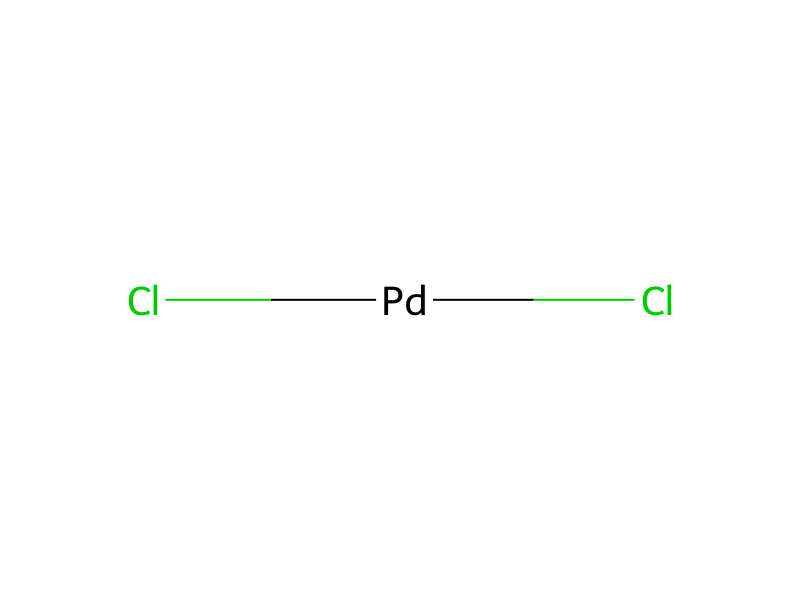
[F:1][C:2]1[CH:3]=[N:4][CH:5]=[C:6]([C:8]2[S:9][CH:10]=[CH:11][N:12]=2)[CH:7]=1.Br[C:14]1[N:19]=[C:18]([C:20]#[N:21])[CH:17]=[CH:16][CH:15]=1.CC1C=CC=CC=1P(C1C=CC=CC=1C)C1C=CC=CC=1C.O>CN(C=O)C.[Pd](Cl)Cl.C(OCC)(=O)C>[F:1][C:2]1[CH:7]=[C:6]([C:8]2[S:9][C:10]([C:14]3[N:19]=[C:18]([C:20]#[N:21])[CH:17]=[CH:16][CH:15]=3)=[CH:11][N:12]=2)[CH:5]=[N:4][CH:3]=1Participants
Reactant 4




Product 1

Reagents, catalysts & solvents 3


Conditions
- Temperature
- 130 °C
Procedure
Under argon, 3-fluoro-5-(1,3-thiazol-2-yl)pyridine (0.99 g, 5.47 mmol) and 6-bromopyridin-2-carbonitrile (1.0 g, 5.47 mmol) were initially charged in DMF (15 ml). After 10 min, at room temperature, tris(2-methylphenyl)phosphine (0.13 g, 0.23 mmol) and palladium(II) chloride (0.1 g, 0.55 mmol) were added. The reaction mixture was stirred at 130° C. for 14 h. After cooling, water and ethyl acetate were added and the precipitated product was filtered off with suction. The organic phase of the filtrate was removed and the aqueous phase was extracted three times with ethyl acetate. The combined organic phases were dried over magnesium sulphate and the solvent was removed under reduced pressure. The residue was stirred with dichloromethane and filtered off with suction. This gave a total of 0.94 g (61% of theory) of 6-[2-(5-fluoropyridin-3-yl)-1,3-thiazol-5-yl]pyridine-2-carbonitrile.
Workup
- temperatureAfter cooling
- filtrationthe precipitated product was filtered off with suction
- customThe organic phase of the filtrate was removed
- extractionthe aqueous phase was extracted three times with ethyl acetate
- dry with materialThe combined organic phases were dried over magnesium sulphate
- customthe solvent was removed under reduced pressure
- stirringThe residue was stirred with dichloromethane
- filtrationfiltered off with suction
Sources & evidence
- ORD record
- ord-0d459e53a06446209f855044d348dc03
- Source dataset
- uspto-grants-2014_04
- Patent number
- US08686004B2
Reaction notes
Loading…