Butyl bromide → HCID 18318112, compound
Reaction equation

[NH:1]1[CH2:11][CH2:10][CH:4]([C:5]([O:7][CH2:8][CH3:9])=[O:6])[CH2:3][CH2:2]1.C(=O)([O-])[O-].[K+].[K+].Br[CH2:19][CH2:20][CH2:21][CH3:22]>C(O)C>[CH2:19]([C:4]1([C:5]([O:7][CH2:8][CH3:9])=[O:6])[CH2:3][CH2:2][NH:1][CH2:11][CH2:10]1)[CH2:20][CH2:21][CH3:22]Participants
Reactant 3


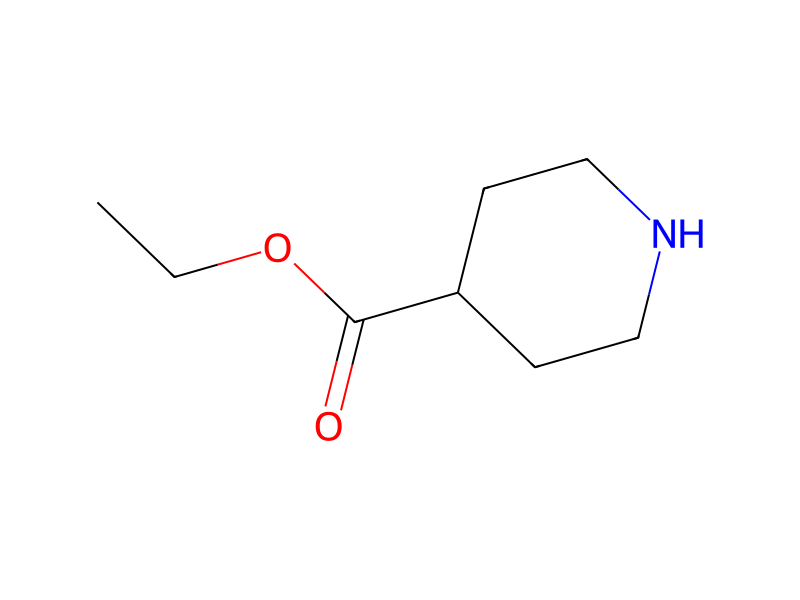
Product 1

Reagents, catalysts & solvents 1

Procedure
A mixture of ethyl isonipecotate (31.8 mmol; 5.0 g), anhydrous potassium carbonate (63.6 mmol; 8.8 g) and 1-bromobutane (31.8 mmol; 4.36 g) in absolute ethanol (63 ml) was stirred at reflux for 3 hours. After cooling, the carbonate was removed by filtration and the filtrate evaporated under reduced pressure. 7.68 g of ethyl 4-butylisonipecotate were obtained in the form of an oil, which was used for the following reaction without further purification. This product was dissolved in anhydrous ethyl ether (32 ml) and added dropwise to a suspension of lithium aluminium hydride (41.3 mmol; 1.57 g) in the same solvent (20 ml) cooled to 0° C. The reaction mixture was stirred at room temperature for 15 hours. After cooling to 0° C., ice was added cautiously and the hydroxides thus formed were removed by filtration. After separating the two phases, the ether phase was dried over anhydrous sodium sulfate and evaporated under reduced pressure to give 5.1 g (94%) of final compound as a clear oil.
Workup
- temperatureat reflux for 3 hours
- temperatureAfter cooling
- customthe carbonate was removed by filtration
- customthe filtrate evaporated under reduced pressure
Sources & evidence
- ORD record
- ord-0791464398044b108a3aecb3ef7a14ec
- Source dataset
- uspto-grants-2014_04
- Patent number
- US08686147B2
Reaction notes
Loading…