Hexamethyldisilazane → Hexamethyldisilazane
Reaction equation

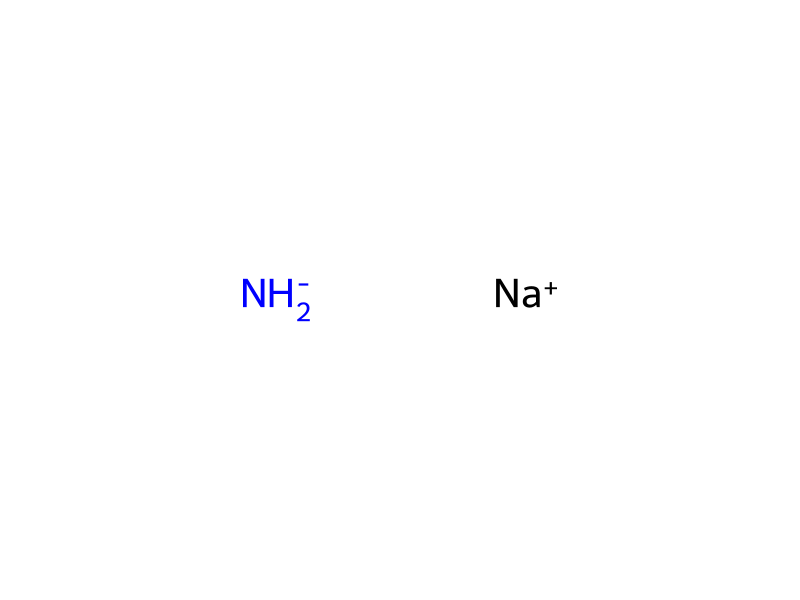
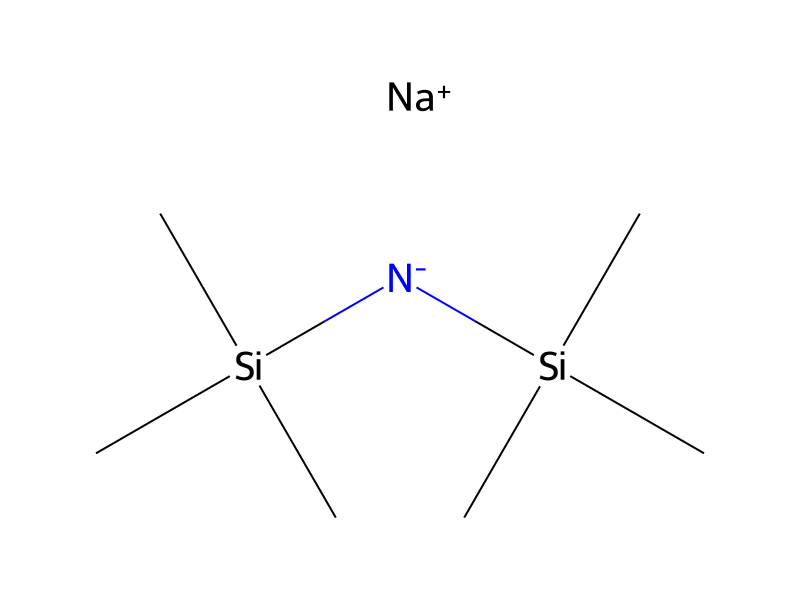
[Cl-].[NH4+:2].[NH2-].[Na+:4].[CH3:5][Si:6]([NH:9][Si:10]([CH3:13])([CH3:12])[CH3:11])([CH3:8])[CH3:7]>C1C=CC=CC=1>[CH3:5][Si:6]([N-:9][Si:10]([CH3:13])([CH3:12])[CH3:11])([CH3:8])[CH3:7].[Na+:4].[NH2-:2].[Na+:4].[CH3:5][Si:6]([NH:9][Si:10]([CH3:13])([CH3:12])[CH3:11])([CH3:8])[CH3:7]Participants
Reactant 3


Product 3
Reagents, catalysts & solvents 1

Procedure
The chemistry of the final HMDS filtrate treatment step is complex. The reactions occurring in the final amide treatment and distillation steps are, however, not fully understood. Thus, the following description should be understood as presently incomplete and partly hypothetical. In liquid anhydrous ammonia, sodium amide reacts rapidly with ammonium chloride to form ammonia and sodium chloride according to the formula: ##STR1## This reaction proceeds slowly, if at all, in HMDS. The ammonium chloride appears to react with a reaction product formed when crude HMDS is "treated" with sodium amide. In this regard, literature reports that sodium bis(trimethylsilyl)amide is formed from the reaction of sodium amide and HMDS in benzene as follows: ##STR2## This reaction proceeds moderately at 25°-30° C. with evolution of ammonia without benzene as a solvent.
Workup
- customto react with a reaction product
- customformed when crude HMDS
Sources & evidence
- ORD record
- ord-21ffdfdd15734c3ea56443603e78848e
- Source dataset
- uspto-grants-1987_02
- Patent number
- US04644076
Reaction notes
Loading…