Hydrochloric Acid → HCID 21315543, compound
Reaction equation

[N:1]1[CH:6]=[CH:5][C:4]([CH3:7])=[CH:3][CH:2]=1.[ClH:8].[CH:9]([C:11]1[CH:16]=[CH:15][N:14]=[CH:13][CH:12]=1)=[CH2:10]>C(O)(C)C>[ClH:8].[Cl-:8].[N:14]1[CH:15]=[CH:16][C:11]([CH2:9][CH2:10][N+:1]2[CH:6]=[CH:5][C:4]([CH3:7])=[CH:3][CH:2]=2)=[CH:12][CH:13]=1Participants
5
Reactant 3

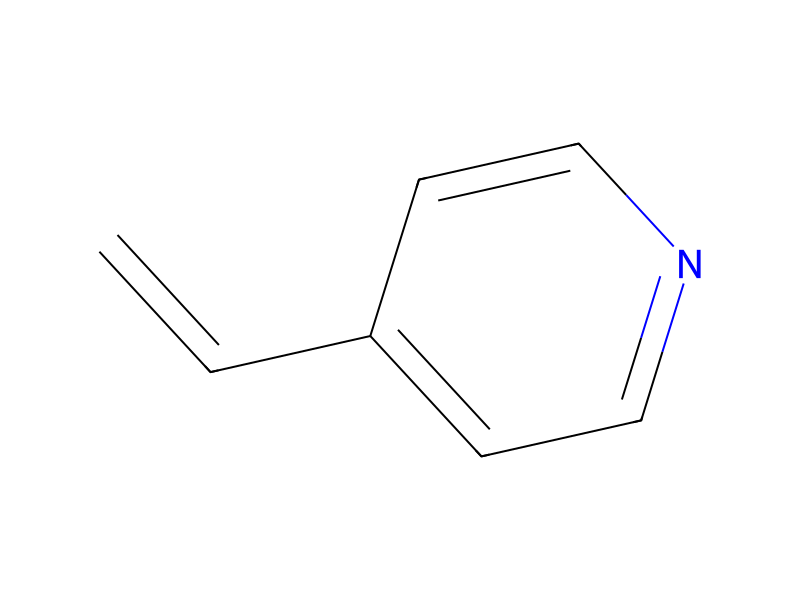

Product 1

Reagents, catalysts & solvents 1

Conditions
- Temperature
- 60 °C
Procedure
To 70 parts of 4-picoline, also called 4-methylpyridine, was added 270 parts of a 21.5% solution of hydrogen choride in isopropanol, then 118 parts 4-vinylpyridine was added and the resulting solution heated to 60° C. for 10 hours. The mixture was cooled to 30° C. and filtered to give 148 parts 1-[2-(4-pyridyl)ethyl]-4-picolinium chloride hydrochloride. The 1-[2-(4-pyridyl)ethyl]-4-picolinium chloride hydrochloride was then reacted with acrylontrile as in Example 13 to give 4-[tris(2-carboxyethyl)methyl]pyridine.
Workup
- temperatureThe mixture was cooled to 30° C.
- filtrationfiltered
Sources & evidence
- ORD record
- ord-e87d84607e6949df97a9aa997097a516
- Source dataset
- uspto-grants-1979_06
- Patent number
- US04158093
Reaction notes
Loading…