Ethyl Acetate → HCID 54250138, compound
Reaction equation

[CH2-]C(C)=O.C1N2CCN(CC2)C1.CCN(C(C)C)C(C)C.[CH3:22][Si:23]([CH2:26][CH2:27][O:28][CH2:29]Cl)([CH3:25])[CH3:24].[CH3:31][CH2:32][O:33][C:34](C)=[O:35]>C1(C)C=CC=CC=1.C(Cl)Cl>[CH3:22][Si:23]([CH2:26][CH2:27][O:28][CH2:29][O:35][CH2:34][O:33][CH2:32][CH2:31][Si:23]([CH3:25])([CH3:24])[CH3:22])([CH3:25])[CH3:24]Participants
Reactant 5



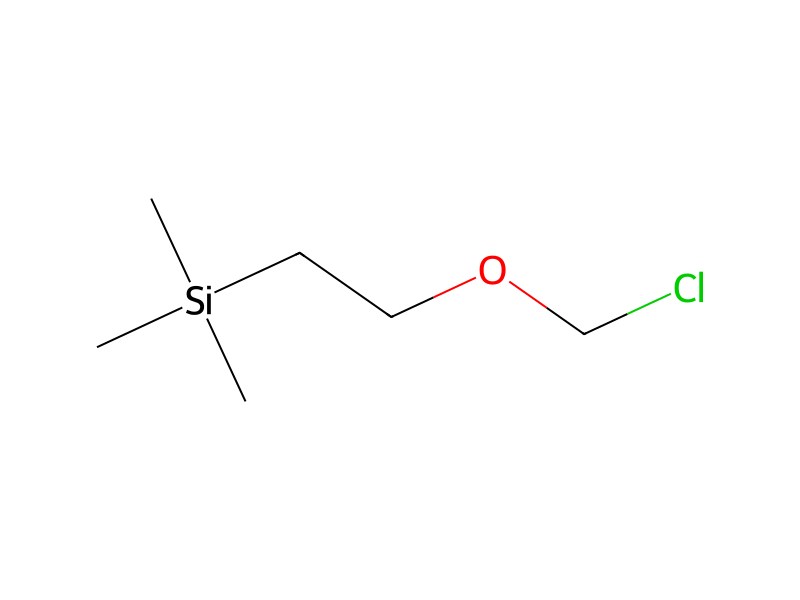

Product 1

Reagents, catalysts & solvents 2


Conditions
- Temperature
- 40 °C
Procedure
The glycal alcohol 10 was prepared as described above by the irradiation of alkynyl diol 7 (2.0 g, 8.5 mmol) in toluene (0.20 M, 43 mL) with DABCO (1.9 g, 17 mmol) and W(CO)6 (750 mg, 2.1 mmol) for 20 hours. The crude mixture containing 10 was then dissolved in CH2Cl2 (1.0 M, 8.5 mL), and DIPEA (7.4 mL, 43 mmol) was added to the solution all at once. Then SEMCl (3.0 mL, 17 mmol) was carefully added to the reaction. The reaction was stirred at 40° C. for 3 hours. The reaction was then diluted with EtOAc (100 mL) and washed with H2O (3×50 mL). The organic layer was dried with MgSO4. After filtration, the volatiles were evaporated under reduced pressure, and chromatography (9:1 hexanes:EtOAc) provided glycal 13 (3:1 mixture of benzylidene acetal diastereomers) as a yellow oil (2.3 g, 75%).
Workup
- washwashed with H2O (3×50 mL)
- dry with materialThe organic layer was dried with MgSO4
- filtrationAfter filtration
- customthe volatiles were evaporated under reduced pressure, and chromatography (9:1 hexanes:EtOAc)
Sources & evidence
- ORD record
- ord-1b2887bb6901478e9d17c5ecf476b579
- Source dataset
- uspto-grants-2014_04
- Patent number
- US08703977B2
Reaction notes
Loading…