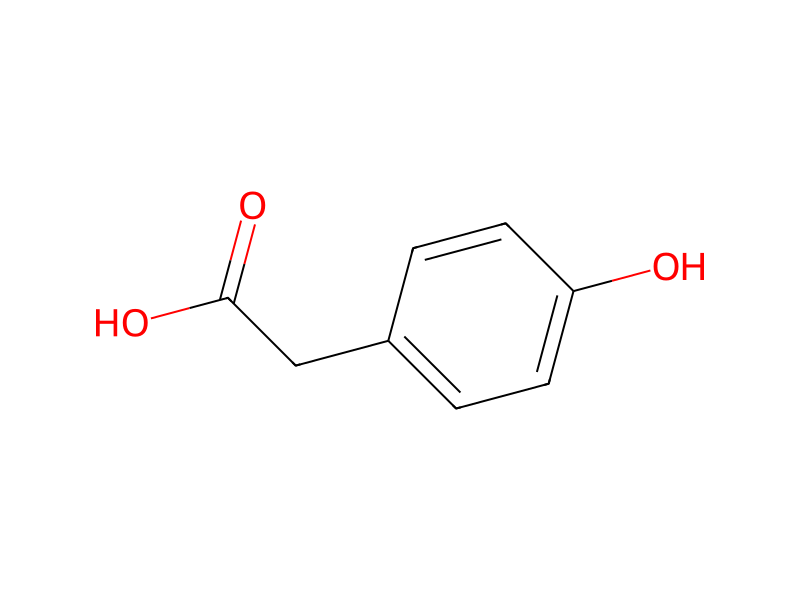
Hydroxyphenylacetic acid → HCID 10882152, compound
Reaction equation

[OH:1][C:2]1[CH:7]=[CH:6][C:5]([CH2:8][C:9]([OH:11])=[O:10])=[CH:4][CH:3]=1.C([O-])([O-])=O.[Cs+].[Cs+].[CH2:18](Br)[C:19]1[CH:24]=[CH:23][CH:22]=[CH:21][CH:20]=1>CN(C=O)C>[CH2:18]([O:10][C:9](=[O:11])[CH2:8][C:5]1[CH:4]=[CH:3][C:2]([O:1][CH2:8][C:5]2[CH:6]=[CH:7][CH:2]=[CH:3][CH:4]=2)=[CH:7][CH:6]=1)[C:19]1[CH:24]=[CH:23][CH:22]=[CH:21][CH:20]=1Participants
Reactant 3


Product 1

Reagents, catalysts & solvents 1

Procedure
To a stirred solution of 4-hydroxy-phenyl acetic acid (10.0 g, 65.72 mmol) in DMF (70 mL) at rt were added Cs2CO3 (47.11 g, 144.5 mmol) and benzyl bromide (17.29 mL, 144.5 mmol). The reaction mixture was stirred overnight at room temperature, heated at 100° C. for 1 h and cooled to rt. The solvent was removed under reduced pressure and poured into H2O. The aqueous solution was extracted with ethyl acetate and the combined organic layers were washed with brine, dried over Na2SO4, filtered and concentrated under reduced pressure. The crude product was recrystallization in hexanes to afford (4-benzyloxy-phenyl)acetic acid benzyl ester as a yellow solid. (20.5 g, 94%): 1H NMR (300 MHz, CDCl3): δ 7.25-7.34 (m, 10H), 7.14 (d, J=8.4 Hz, 2H), 7.02 (d, J=8.4 Hz, 2H), 5.50 (s, 2H), 5.12 (s, 2H), 3.61 (s, 2H); TLC conditions: Uniplate silica gel, 250 microns; mobile phase=ethyl acetate-hexanes (1:5); Rf=0.8.
Workup
- temperatureheated at 100° C. for 1 h
- temperaturecooled to rt
- customThe solvent was removed under reduced pressure
- additionpoured into H2O
- extractionThe aqueous solution was extracted with ethyl acetate
- washthe combined organic layers were washed with brine
- dry with materialdried over Na2SO4
- filtrationfiltered
- concentrationconcentrated under reduced pressure
- customrecrystallization in hexanes
Sources & evidence
- ORD record
- ord-3ee850882d89429b8c4126612eb87491
- Source dataset
- uspto-grants-2014_04
- Patent number
- US08710236B2
Reaction notes
Loading…