Hydrochloric Acid → HCID 58638077, compound
Reaction equation

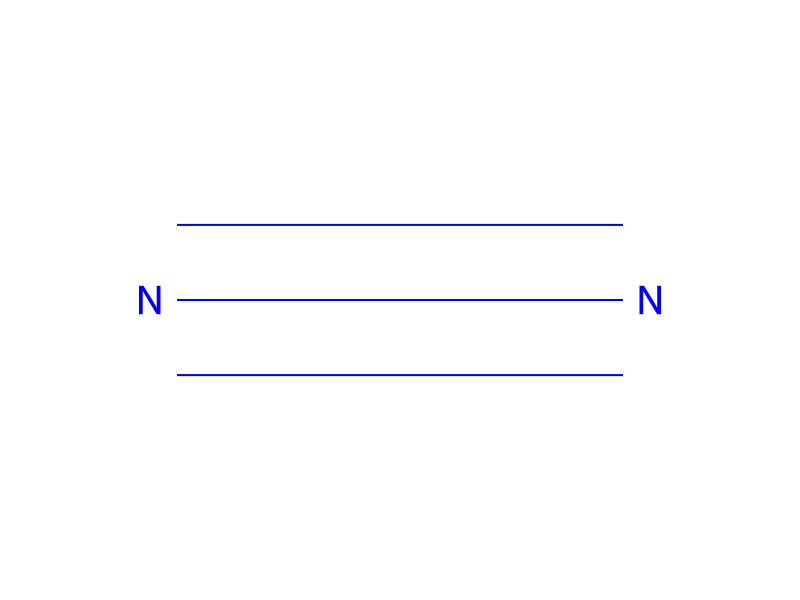
[F:1][C:2]1[CH:7]=[CH:6][C:5]([F:8])=[CH:4][C:3]=1[C:9]1[CH2:17][N:12]2C(=O)[O:14][CH2:15][C:11]2([C:18]2[CH:23]=[CH:22][CH:21]=[CH:20][CH:19]=2)[CH:10]=1.[OH-].[Na+].Cl.N1C=CN=C1.[CH3:32][C:33]([Si:36](Cl)([CH3:38])[CH3:37])([CH3:35])[CH3:34].N#N>CCO.CN(C=O)C.C(Cl)Cl.O>[Si:36]([O:14][CH2:15][C:11]1([C:18]2[CH:23]=[CH:22][CH:21]=[CH:20][CH:19]=2)[CH:10]=[C:9]([C:3]2[CH:4]=[C:5]([F:8])[CH:6]=[CH:7][C:2]=2[F:1])[CH2:17][NH:12]1)([C:33]([CH3:35])([CH3:34])[CH3:32])([CH3:38])[CH3:37]Participants
Reactant 6





Product 1

Reagents, catalysts & solvents 4




Conditions
- Temperature
- 60 °C
Procedure
A suspension of 109.4 g (349 mmol) 1-7 in 2.2 L of EtOH and 105 mL (1.05 moles) of 10 M NaOH in a 10 L round bottom was heated at 60° C. for 4 h, cooled to room temperature and aged overnight. To this mixture was added 90.2 mL (1.08 moles) of concentrated HCl and the solvents were removed by rotary evaporation. The residue was suspended in 2 L of acetonitrile and again taken to dryness by rotary evaporation. The solids were suspended in 3.8 L of CH2Cl2 and 200 mL of DMF, 118.7 g (1.75 moles) of imidazole was added, followed by 110.5 (733 mmol) of TBSCl. After stirring for 15 h under a gentle stream of N2, the reaction was dumped into 4 L of water and 2 L of CH2Cl2, the layers were separated, and the aqueous layer was extracted with 2 L of CH2Cl2. The combined organic extracts were then washed with 4×4 L of water, dried over Na2SO4, and concentrated by rotary evaporation. The residue was dissolved in 500 mL of MeOH and 500 mL of 2M MeNH2 in MeOH, stirred for 4 h, and then concentrated by rotary evaporation. The residue was placed under high vacuum until a constant weight was obtained, and the material was crushed with a mortar and pestle to provide 1-8 as a beige solid. Data for 1-8: 1HNMR (500 MHz, CDCl3) δ 7.6-7.3 (m, 5H), 7.1-6.9 (m, 3H), 6.75 (s, 1H), 4.25 (d, 1H), 4.1 (d, 1H), 3.95 (d, 1H), 3.75 (d, 1H), 0.9 (s, 9H), 0.1 (s, 3H), 0.05 (s, 3H) ppm.
Workup
- temperaturecooled to room temperature and aged overnight
- customthe solvents were removed by rotary evaporation
- customagain taken to dryness by rotary evaporation
- customthe layers were separated
- extractionthe aqueous layer was extracted with 2 L of CH2Cl2
- washThe combined organic extracts were then washed with 4×4 L of water
- dry with materialdried over Na2SO4
- concentrationconcentrated by rotary evaporation
- dissolutionThe residue was dissolved in 500 mL of MeOH
- concentrationconcentrated by rotary evaporation
- customwas obtained
- customthe material was crushed with a mortar and pestle
Sources & evidence
- ORD record
- ord-97afe185d2364871952b22c951e52ece
- Source dataset
- uspto-grants-2008_12
- Patent number
- US07465746B2
Reaction notes
Loading…