Ammonia → HCID 67234620, compound
Reaction equation

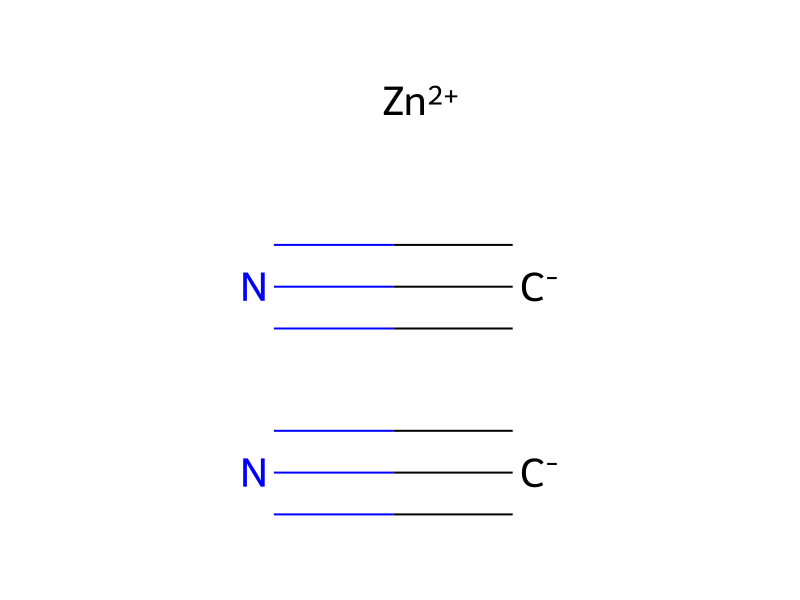
Cl[C:2]1[N:7]=[CH:6][C:5]([OH:8])=[CH:4][C:3]=1[F:9].N.Cl.[CH3:12][N:13](C)C(=O)C>C1(P(C2C=CC=CC=2)[C-]2C=CC=C2)C=CC=CC=1.[C-]1(P(C2C=CC=CC=2)C2C=CC=CC=2)C=CC=C1.[Fe+2].[Zn].[C-]#N.[Zn+2].[C-]#N>[C:12]([C:2]1[N:7]=[CH:6][C:5]([OH:8])=[CH:4][C:3]=1[F:9])#[N:13]Participants
Reactant 4




Product 1

Reagents, catalysts & solvents 3


Conditions
- Temperature
- 140 °C
Procedure
A mixture of 2.94 g (20 mmol) of 6-chloro-5-fluoro-3-pyridinol, 360 mg (0.4 mmol) of tris(benzylideneacetone)dipalladium(0), 440 mg (0.8 mmol) 1,1′-bis(diphenylphosphino)ferrocene, 156 mg (2.4 mmol) of zinc powder and 1.4 g (12 mmol) of zinc cyanide in 40 ml of N,N-dimethylacetamide is prepared and the reaction mixture is then stirred at 140° C. for 5 hours. It is left to stand overnight at room temperature. 40 ml of 2 N aqueous ammonia are added slowly and the pH is then adjusted to about 4.5 with 5 N hydrochloric acid. The mixture is extracted 3 times with 100 ml of ethyl acetate and the organic phase obtained is dried over magnesium sulfate and concentrated under reduced pressure. The evaporation residue is purified by chromatography on silica gel using a methylcyclohexane/ethyl acetate mixture (in a gradient of 8/2 to 5/5; v/v) as the eluent to give 1.8 g of the expected compound in the form of an orange oil (yield=67%).
Workup
- customis prepared
- waitIt is left
- waitto stand overnight at room temperature
- extractionThe mixture is extracted 3 times with 100 ml of ethyl acetate
- customthe organic phase obtained
- dry with materialis dried over magnesium sulfate
- concentrationconcentrated under reduced pressure
- customThe evaporation residue is purified by chromatography on silica gel using a methylcyclohexane/ethyl acetate mixture (in a gradient of 8/2 to 5/5
Sources & evidence
- ORD record
- ord-b8a6c6dd0033435e9bdfe73761aa5d08
- Source dataset
- uspto-grants-2008_12
- Patent number
- US07470671B2
Reaction notes
Loading…