Acetic Acid → 4-[(R)-((2S,5R)-2,5-dimethyl-4-(3-fluorobenzyl)-1-piperazinyl)(3-hydroxyphenyl)-methyl]-N,N-diethylbenzamide
Reaction equation

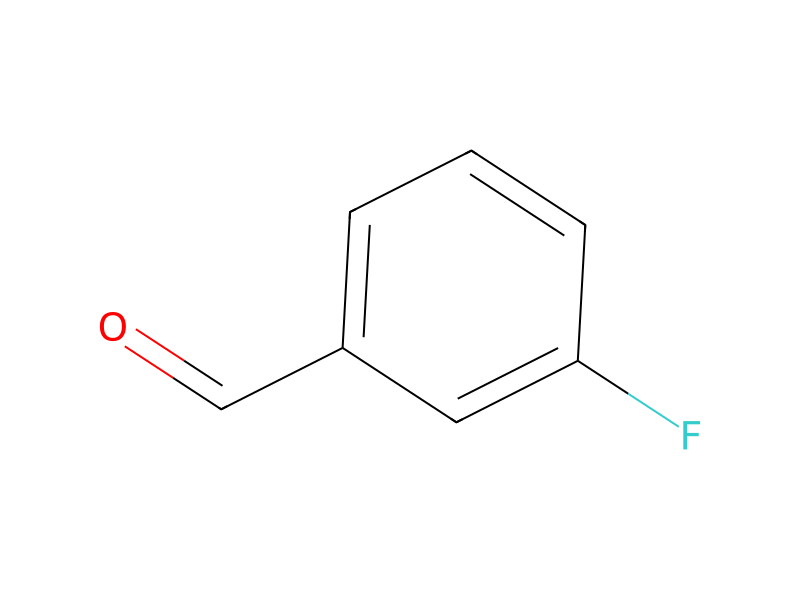
C(O)(=O)C.[CH3:5][C@H:6]1[CH2:11][NH:10][C@H:9]([CH3:12])[CH2:8][N:7]1[C@@H:13]([C:27]1[CH:32]=[CH:31][CH:30]=[C:29]([OH:33])[CH:28]=1)[C:14]1[CH:26]=[CH:25][C:17]([C:18]([N:20]([CH2:23][CH3:24])[CH2:21][CH3:22])=[O:19])=[CH:16][CH:15]=1.[F:34][C:35]1[CH:36]=[C:37]([CH:40]=[CH:41][CH:42]=1)[CH:38]=O.C(O[BH-](OC(=O)C)OC(=O)C)(=O)C.[Na+]>O1CCCC1.C(OCC)(=O)C>[CH3:5][C@H:6]1[CH2:11][N:10]([CH2:38][C:37]2[CH:40]=[CH:41][CH:42]=[C:35]([F:34])[CH:36]=2)[C@H:9]([CH3:12])[CH2:8][N:7]1[C@@H:13]([C:27]1[CH:32]=[CH:31][CH:30]=[C:29]([OH:33])[CH:28]=1)[C:14]1[CH:26]=[CH:25][C:17]([C:18]([N:20]([CH2:23][CH3:24])[CH2:21][CH3:22])=[O:19])=[CH:16][CH:15]=1Participants
Reactant 4



Product 1

Reagents, catalysts & solvents 2


Procedure
Glacial acetic acid (0.635 mL, 11.1 mmol) was added to a solution of 4-[(R)-((2S,5R)-2,5-dimethyl-1-piperazinyl)-(3-hydroxyphenyl)methyl]-N,N-diethylbenzamide (1.98 g, 5 mmol) and 3-fluorobenzaldehyde (1.24 g, 10 mmol) in anhydrous tetrahydrofuran (35 mL). While stirring briskly, sodium triacetoxyborohydride (2.12 g, 10 mmol) was added in 50-100 mg portions, allowing effervescence to subside after each addition. The reaction was monitored for absence of starting material by HPLC. After stirring at room temperature for 16 hours, additional 3-fluorobenzaldehyde (0.62 g, 5 mmol), acetic acid (0.318 mL, 5 mmol), and sodium triacetoxyborohydride (1.06 g, 5 mmol) were added. After stirring an additional 4 hours, the reaction mixture was concentrated under reduced pressure and the residue was partitioned between ethyl acetate (50 mL) and 3 M hydrochloric acid (25 mL). The layers were separated and the organic layer was extracted again with 3 M hydrochloric acid (25 mL). The aqueous solution was adjusted to pH 9-10 with 5 M sodium hydroxide solution, resulting in the formation of chunky white precipitate. Brief sonication followed by continuous stirring for 60 hours allowed hydrolysis of any residual ethyl acetate, as well as complete precipitation of product. The white solid was filtered, washed with cold water, and further dried under reduced pressure to yield 4-[(R)-((2S,5R)-2,5-dimethyl-4-(3-fluorobenzyl)-1-piperazinyl)(3-hydroxyphenyl)-methyl]-N,N-diethylbenzamide (1.78 g, 82.3% yield from 4-[(R)-((2S,5R)-4-allyl-2,5-dimethyl-1-piperazinyl)-(3-hydroxyphenl)-methyl]-N,N-diethyl-benzamide). The product showed a single peak on HPLC (Zorbax C-8, isocratic 40% 0.01 M NH4OAc in MeOH, 3 min; linear gradient to 100% MeOH, 45 min; isocratic MeOH, 25 min; 1.0 mL/min; δobs=210 nm, Rt=43.51 min). Calc. for C31H38FN3O2.0.5H2O: % C, 72.63; H, 7.67; N, 8.20; F, 3.71. Found: % C, 72.77; H, 7.52; N, 8.18; F, 3.61.
Workup
- additionafter each addition
- stirringAfter stirring at room temperature for 16 hours
- stirringAfter stirring an additional 4 hours
- concentrationthe reaction mixture was concentrated under reduced pressure
- customthe residue was partitioned between ethyl acetate (50 mL) and 3 M hydrochloric acid (25 mL)
- customThe layers were separated
- extractionthe organic layer was extracted again with 3 M hydrochloric acid (25 mL)
- customresulting in the formation of chunky white precipitate
- customBrief sonication
- stirringby continuous stirring for 60 hours
- customas well as complete precipitation of product
- filtrationThe white solid was filtered
- washwashed with cold water
- customfurther dried under reduced pressure
Sources & evidence
- ORD record
- ord-3551efe8c0294d4db102dbdb4ae4dc08
- Source dataset
- uspto-grants-2014_02
- Patent number
- US08642599B2
Reaction notes
Loading…