Sodium Chloride → L-Lysine
Reaction equation

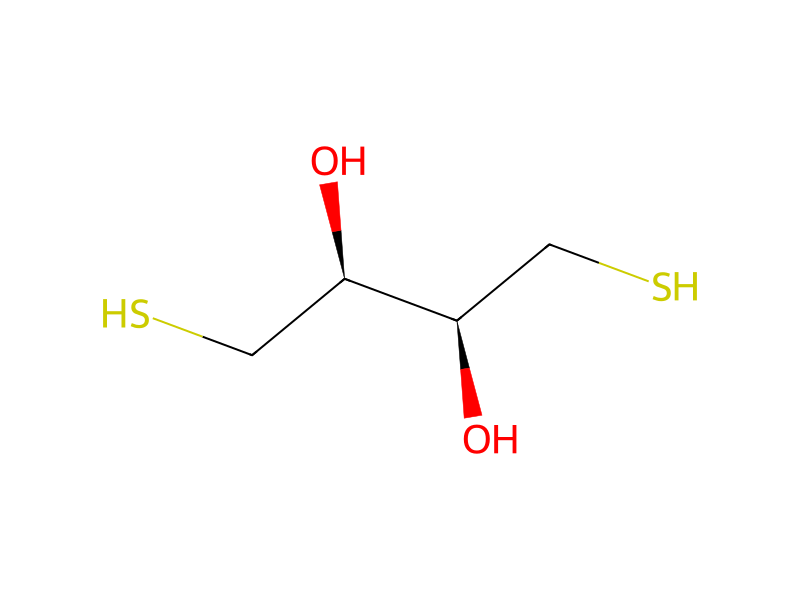
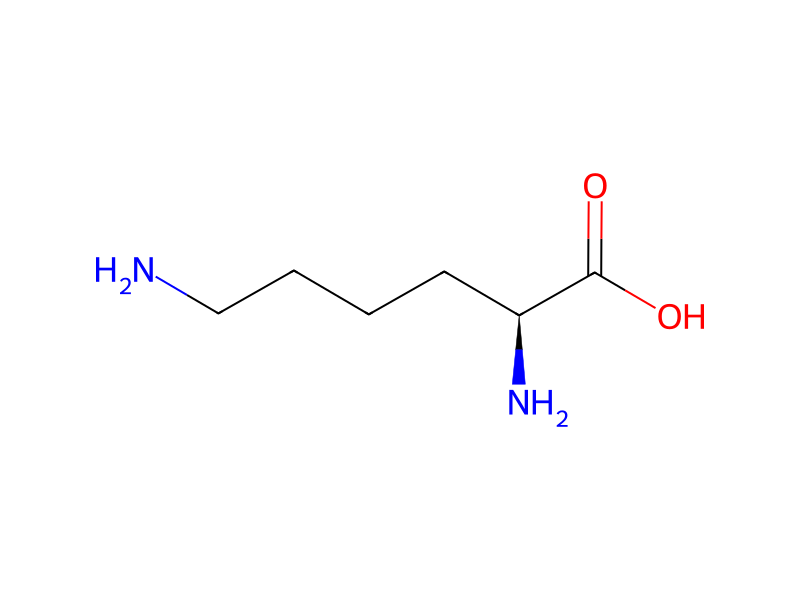
C(O)[C:2]([NH2:7])([CH2:5][OH:6])[CH2:3]O.Cl.[Cl-].[Na+].[Cl-].[Mg+2].[Cl-].SC[C@H]([C@@H](CS)O)[OH:18].P(OC[C@H]1O[C@@H:40]([N:42]2C3N=CN=C(N)C=3N=C2)[C@H:39](O)[C@@H:38]1O)(OP(OP(O)(O)=O)(O)=O)(=O)O.CC1(C)S[C@@H]2[C@H](NC([C@H](N)C3C=CC=CC=3)=O)C(=O)N2[C@H]1C(O)=O.CC(S[C@@H]1O[C@H](CO)[C@H](O)[C@H](O)[C@H]1O)C>>[NH2:7][C@H:2]([C:5]([OH:18])=[O:6])[CH2:3][CH2:38][CH2:39][CH2:40][NH2:42]Participants





Procedure
This fragment was recloned into the EcoRI site of the E. coli plasmid vector pUC13. Vector DNA and λgt10-lysin 4 DNA were both digested with restriction endonuclease EcoRI, using a buffer consisting of 100 mM Tris hydrochloride, 50 mM sodium chloride, 10 mM magnesium chloride, pH 7.5. The reaction was stopped by phenol extraction and a mixture of the cleaved DNAs was incubated overnight at 15° C. with 1 unit of DNA ligase in a reaction buffer consisting of 50 mM Tris-hydrochloride, 7 mM magnesium chloride, 1 mM dithiothreitol, 1 mM ATP, pH 8. Ligated DNA was transformed into competent cells of E. coli strain TBI and ampicillin-resistant colonies were selected on B agar containing IPTG and "Bluogal" (BRL). Vectors with cloned DNA were identified by their white colour. Their ability to produce bacteriophage φvML3 lysin was tested by overlaying colonies with a suspension of Lactococcus lactis subscp. cremoris NCDO 1196 cells in 0.1 M potassion phosphate buffer, pH 6.7, with 0.7% agarose. Zones of clearing, as illustrated in FIG. 3, for one isolated clone were detected. (In FIG. 3, colonies Escherichia coli carrying plasmid pFI 106 are overlayed with Lactococcus lactis subsp. cremoris cells. Expression of lysin causes a clear zone of lysin in the cloudy lawn of Lactococcus cells.) The plasmid from this clone named pFI106 was isolated and analysed by restriction endonuclease mapping. It had the structure shown in FIG. 4.
Workup
- extractionThe reaction was stopped by phenol extraction
- additiona mixture of the cleaved DNAs
- customwas incubated overnight at 15° C. with 1 unit of DNA ligase in a reaction
Sources & evidence
- ORD record
- ord-dbebefdcc3ff4bd49e1155d8a8a5bb60
- Source dataset
- uspto-grants-1994_11
- Patent number
- US05360617
Reaction notes
Loading…