Carbon Dioxide → HCID 44481202, compound
Reaction equation

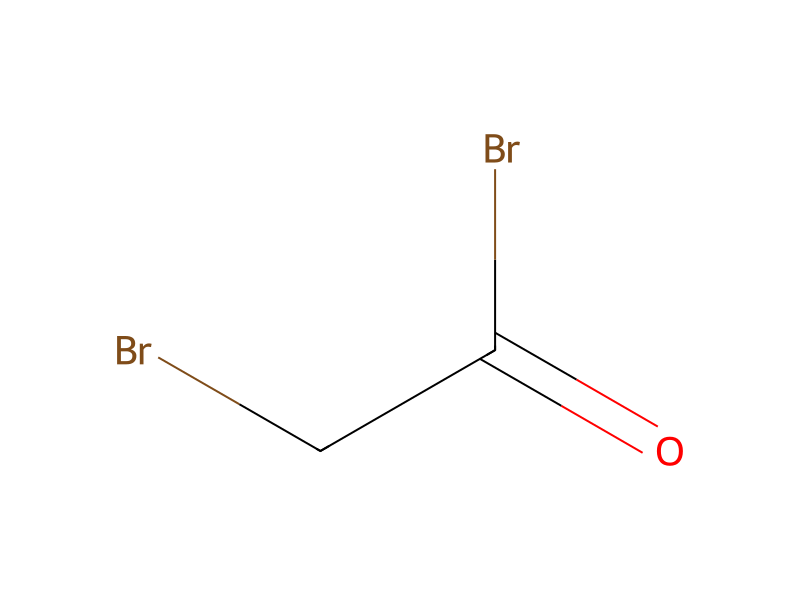
C1C(N)=CC=C([As](O)(O)=O)C=1.BrCC(Br)=O.C(=O)=O.[Br:20][CH2:21][C:22]([NH:24][C:25]1[CH:30]=[CH:29][C:28]([As:31](O)(=[O:33])[OH:32])=[CH:27][CH:26]=1)=[O:23]>C([O-])([O-])=O.[Na+].[Na+].O.C(Cl)Cl.Br.CO.[Na+].[I-]>[Br:20][CH2:21][C:22]([NH:24][C:25]1[CH:26]=[CH:27][C:28]([As:31]([OH:33])[OH:32])=[CH:29][CH:30]=1)=[O:23]Participants
Reactant 4



Product 1

Reagents, catalysts & solvents 5





Conditions
- Temperature
- 4 °C
Procedure
p-Arsanilic acid (10 g, 46.07 mmol) was dissolved in a 1.18 M Na2CO3 solution, made from Na2CO3 (15 g, 141.5 mmol) dissolved in H2O (120 mL) in a 500 mL round-bottom flask. The solution was cooled in a 4° C. fridge for 2 hours and then placed in an ice bath upon a magnetic stirrer. A solution of bromoacetyl bromide (9 mL, 101.4 mmol) in CH2Cl2 (14 mL) was added in 4 aliquots to the flask while the mixture was vigorously stirred. Addition took about 1 min with CO2 evolution. The mixture was allowed to stir in the ice-bath for 5 min, and then at room temperature for 30 min till CO2 evolution ceased. The mixture was decanted into a 250 mL separatory funnel. Additional CH2Cl2 (10 mL) was added and the layers were allowed to separate for about 10 min. The CH2Cl2 layer was separated and the aqueous layer was placed in a 400 mL beaker. The solution was stirred and acidified with 98% H2SO4 (2.8 mL) to pH 4. A white precipitate resulted which was collected by filtration (14.83 g, 95% yield). The resulting 4-(2-bromoacetylamino)benzenearsonic acid (“BRAO”) (14.83 g, 43.88 mmol) was dissolved in 1:1 HBr/MeOH (210 mL) in a 500 mL 3-neck round bottom flask. NaI (5 mg) was added and the mixture was stirred. SO2 was bubbled through at ca. 2 bubbles/second and after 10 min a white precipitate started to form. SO2 was bubbled through for a further 20 h and the mixture was stirred at a medium speed. The solid was collected by filtration, washed with the filtrate then water (30 mL×3), and placed on the rotary evaporator at 50° C. for 5 h to give 4-(2-bromoacetylamino)benzenearsonous acid (6.04 g, 38.8% yield). A portion of the 4-(2-bromoacetylamino)benzenearsonous acid (500 mg, 1.553 mmol) was dissolved in nitrogen-flushed DMSO (10 mL) and added drop-wise over about 1 min to an solution of S-penicillamine (265 mg, 1.77 mmol) in an aqueous NaHCO3 solution (840 mg, 10 mmol) which used nitrogen-saturated H2O (20 mL). The addition took place in a 100 mL round-bottom flask and the clear solution was stirred on a low speed under argon for 4 h. The solution was acidified with 98% H2SO4 (about 0.2 mL) to pH 5. Acetone (500 mL) was stirred vigorously, and the acidified solution was added drop-wise over about 5 min to yield a white precipitate. The supernatant was centrifuged, decanted, and the resulting white solid was further washed and re-centrifuged with acetone (20 mL×2), transferred with acetone (40 mL) into a 100 mL pear-shaped flask and dried on the rotary evaporator at 25° C. for 2 h. Crude Penicillamine-arsenoxide was found to be about 30% pure by internal standard 1H-NMR.
Workup
- customplaced in an ice bath upon a magnetic stirrer
- additionAddition
- customThe mixture was decanted into a 250 mL separatory funnel
- additionAdditional CH2Cl2 (10 mL) was added
- customto separate for about 10 min
- customThe CH2Cl2 layer was separated
- stirringThe solution was stirred
- customA white precipitate resulted which
- filtrationwas collected by filtration (14.83 g, 95% yield)
- stirringthe mixture was stirred
- customSO2 was bubbled through at ca. 2 bubbles/second
- customto form
- customSO2 was bubbled through for a further 20 h
- stirringthe mixture was stirred at a medium speed
- filtrationThe solid was collected by filtration
- washwashed with the filtrate
- customwater (30 mL×3), and placed on the rotary evaporator at 50° C. for 5 h
Sources & evidence
- ORD record
- ord-c8957de16603479f8ded2f1b17e2f2e6
- Source dataset
- uspto-grants-2012_09
- Patent number
- US08268883B2
Reaction notes
Loading…