Potassium Phosphate, Tribasic → HCID 59458802, compound
Reaction equation

Br[C:2]1[CH:3]=[C:4]([C@@:9]([NH:31][C:32](=[O:44])[C:33]2[CH:38]=[CH:37][C:36]([F:39])=[C:35]([C:40]([F:43])([F:42])[F:41])[CH:34]=2)([C:17]2[CH:22]=[C:21]([O:23][C:24]([F:29])([F:28])[CH:25]([F:27])[F:26])[CH:20]=[C:19]([F:30])[CH:18]=2)[CH2:10][C:11]2[CH:16]=[CH:15][CH:14]=[CH:13][CH:12]=2)[CH:5]=[CH:6][C:7]=1[F:8].[CH:45]1(B(O)O)[CH2:47][CH2:46]1.C1(P(C2CCCCC2)C2CCCCC2)CCCCC1.[O-]P([O-])([O-])=O.[K+].[K+].[K+]>C1(C)C=CC=CC=1.C([O-])(=O)C.[Pd+2].C([O-])(=O)C>[CH:45]1([C:2]2[CH:3]=[C:4]([C@@:9]([NH:31][C:32](=[O:44])[C:33]3[CH:38]=[CH:37][C:36]([F:39])=[C:35]([C:40]([F:42])([F:41])[F:43])[CH:34]=3)([C:17]3[CH:22]=[C:21]([O:23][C:24]([F:28])([F:29])[CH:25]([F:26])[F:27])[CH:20]=[C:19]([F:30])[CH:18]=3)[CH2:10][C:11]3[CH:16]=[CH:15][CH:14]=[CH:13][CH:12]=3)[CH:5]=[CH:6][C:7]=2[F:8])[CH2:47][CH2:46]1Participants
Reactant 4


Product 1

Reagents, catalysts & solvents 2


Conditions
- Temperature
- 100 °C
Procedure
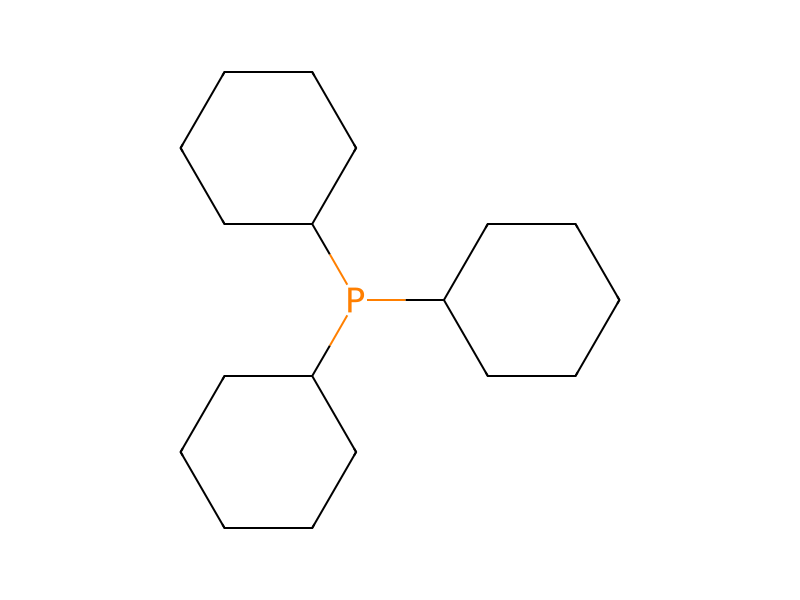
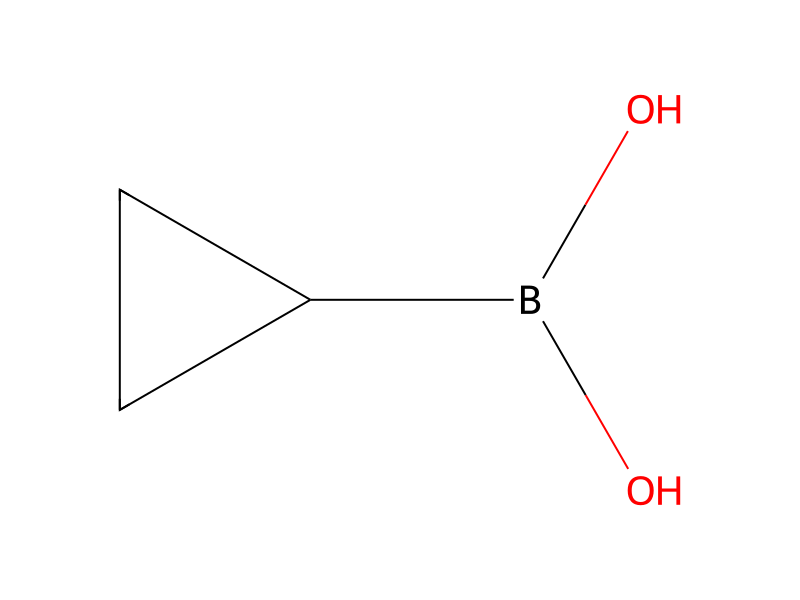
To a mixture of (S)—N-(1-(3-bromo-4-fluorophenyl)-1-(3-fluoro-5-(1,1,2,2-tetrafluoroethoxy)phenyl)-2-phenylethyl)-4-fluoro-3-(trifluoromethyl)benzamide, prepared as described in Procedures 3, 62, 5, 6 and 7, (50 mg, 0.07 mmol), (50 mg, 0.07 mmol), cyclopropylboronic acid (6 mg, 0.07 mmol), palladium (II) acetate (1 mg, 0.004 mmol) and tricyclohexylphosphine (2 mg, 0.007 mmol) in toluene (2 mL) was added K3PO4 (0.072 mL, 0.22 mmol). The reaction mixture was heated at 100° C. under microwave irradiation for 15 min. The reaction mixture was filtered, concentrated and the resulting residue was purified by preparative HPLC (Sunfire-S5-C18 18×50 mm column, eluting with 10-90% MeOH/H2O gradient over 8 min, with flow rate 20 mL/min and UV detection at 220 nm) to yield (R)—N-(1-(3-cyclopropyl-4-fluorophenyl)-1-(3-fluoro-5-(1,1,2,2-tetrafluoroethoxy)phenyl)-2-phenylethyl)-4-fluoro-3-(trifluoromethyl)benzamide (Example 309, 14 mg, 30% yield). LCMS: RT=4.37 min [M+H] 656.38 (Waters Sunfire-S5-C18 4.6×50 mm, eluting with 10-90% MeOH/H2O over 4 minutes containing 0.1% TFA; 4 mL/min, monitoring at 220 nm). 1H NMR (500 MHz, CDCl3) δ ppm 7.90 (1H, dd, J=6.60, 1.92 Hz), 7.81-7.84 (1H, m), 7.22-7.30 (5H, m), 7.16 (2H, t, J=7.56 Hz), 6.93-7.00 (4H, m), 6.77-6.81 (1H, m), 6.68 (2H, d, J=7.42 Hz), 6.62 (1H, s), 6.54 (1H, dd, J=6.87, 2.47 Hz), 5.88 (1H, t, J=52.73 Hz), 4.08 (1H, d, J=13.20 Hz), 3.66 (1H, d, J=13.20 Hz), 2.03 (1H, ddd, J=13.75, 8.52, 5.22 Hz), 0.92-0.96 (2H, m), 0.52-0.56 (1H, m), 0.43-0.47 (1H, m).
Workup
- customprepared
- filtrationThe reaction mixture was filtered
- concentrationconcentrated
- customthe resulting residue was purified by preparative HPLC (Sunfire-S5-C18 18×50 mm column, eluting with 10-90% MeOH/H2O gradient over 8 min, with flow rate 20 mL/min and UV detection at 220 nm)
Sources & evidence
- ORD record
- ord-6a39686f61e448c3b6fc81ec5c7c4ef3
- Source dataset
- uspto-grants-2014_02
- Patent number
- US08642576B2
Reaction notes
Loading…