Dabco → Indole
Reaction equation

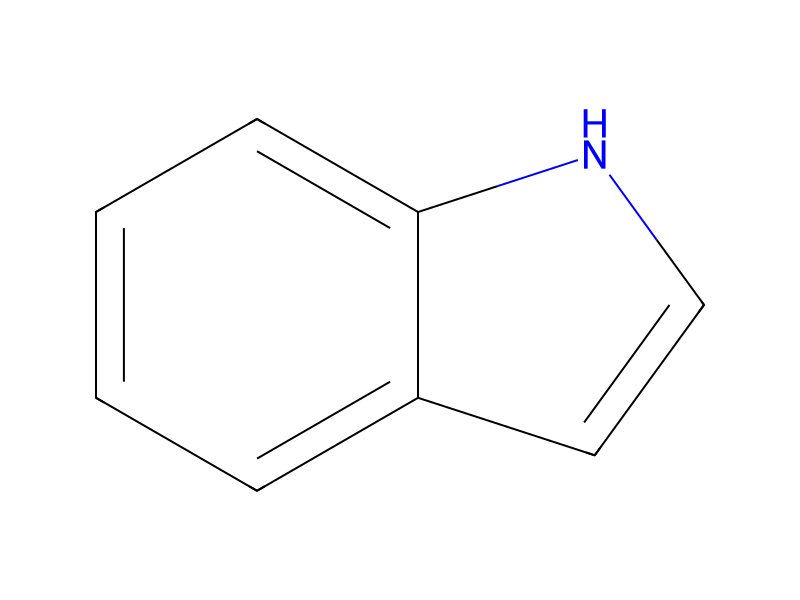
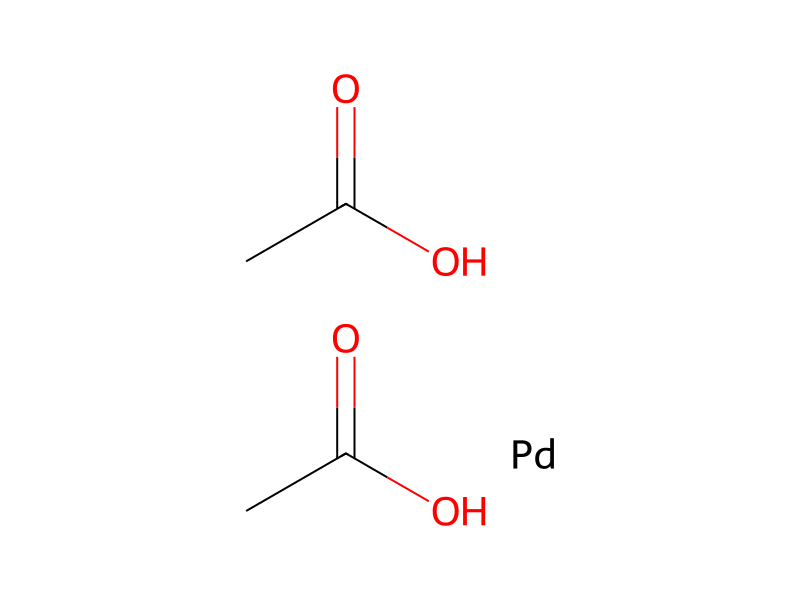
[CH3:1][Si:2]([CH3:13])([CH3:12])[C:3]1[NH:4][C:5]2[C:10]([CH:11]=1)=[CH:9][CH:8]=[CH:7][CH:6]=2.INC1C=CC=CC=1.C1N2CCN(CC2)C1>CN(C=O)C.CC(O)=O.CC(O)=O.[Pd]>[CH3:1][Si:2]([CH3:13])([CH3:12])[C:3]1[NH:4][C:5]2[C:10]([CH:11]=1)=[CH:9][CH:8]=[CH:7][CH:6]=2.[NH:4]1[C:5]2[C:10](=[CH:9][CH:8]=[CH:7][CH:6]=2)[CH:11]=[CH:3]1Participants
7
Reactant 3


Product 2
Reagents, catalysts & solvents 2

Conditions
- Temperature
- 105 °C
Procedure
Preparation of 2-trimethylsilyl indole ##STR15## A mixture of iodoaniline (2.19 g, 10 mmol), acyl silane (2.36 g, 20 mmol, prepared according to the procedures of reference example A), DABCO (1,4-diazabicyclo[2.2.2]octane, 3.36 g, 30 mmol) and Pd(OAC)2 (112.25 mg, 0.5 mmol) in 30 mL DMF was degassed via N2 /vacuum and heated at 105° C. for 36 h. The mixture was cooled to room temperature, diluted with IPAc (isopropyl acetate, 100 mL) and washed with 2×50 mL of water. The IPAc layer was concentrated in vacuum and chromatographed over silica gel to give 2-trimethylsilyl indole and indole.
Workup
- customprepared
- customwas degassed via N2 /vacuum
- temperatureThe mixture was cooled to room temperature
- additiondiluted with IPAc (isopropyl acetate, 100 mL)
- washwashed with 2×50 mL of water
- concentrationThe IPAc layer was concentrated in vacuum
- customchromatographed over silica gel
Sources & evidence
- ORD record
- ord-99d336822b7447189a1c0074f7ea2fb5
- Source dataset
- uspto-grants-1998_09
- Patent number
- US05808064
Reaction notes
Loading…