Hydrochloric Acid → HCID 18987723, compound
Reaction equation

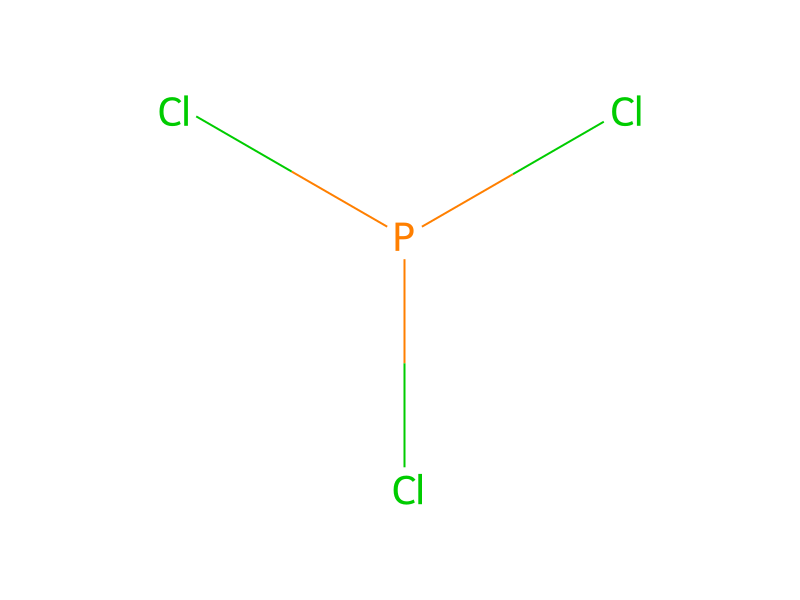
P(Cl)(Cl)Cl.[ClH:5].[CH3:6][O:7][C:8](=[O:23])[C:9](Cl)([C:20]#[N:21])[CH2:10][CH:11]([C:14]1[CH:19]=[CH:18][CH:17]=[CH:16][CH:15]=1)[CH:12]=O>CN(C=O)C>[Cl:5][C:20]1[C:9]([C:8]([O:7][CH3:6])=[O:23])=[CH:10][C:11]([C:14]2[CH:19]=[CH:18][CH:17]=[CH:16][CH:15]=2)=[CH:12][N:21]=1Participants
5
Reactant 3


Product 1

Reagents, catalysts & solvents 1

Conditions
- Temperature
- 90 °C
Procedure
5 g of PCl3 were added to 25 mL of DMF at room temperature. The resulting yellow solution was saturated with anhydrous HCl while keeping the temperature below 90° C. 5 g (18 mmol) of methyl-2-chloro-2-cyano-4-phenyl-5-oxopentanoate in 5 mL DMF were added at 80° C. and the resulting solution heated at 90° C. for 90 min. The reaction mixture was cooled to room temperature, quenched with water, extracted with toluene, dried and distilled to give methyl 2-chloro-5-phenyl-3-pyridine carboxylate.
Workup
- customthe temperature below 90° C
- temperatureThe reaction mixture was cooled to room temperature
- customquenched with water
- extractionextracted with toluene
- customdried
- distillationdistilled
Sources & evidence
- ORD record
- ord-d32c7f81ed8a4721a617071308ed88cc
- Source dataset
- uspto-grants-1996_02
- Patent number
- US05493028
Reaction notes
Loading…